



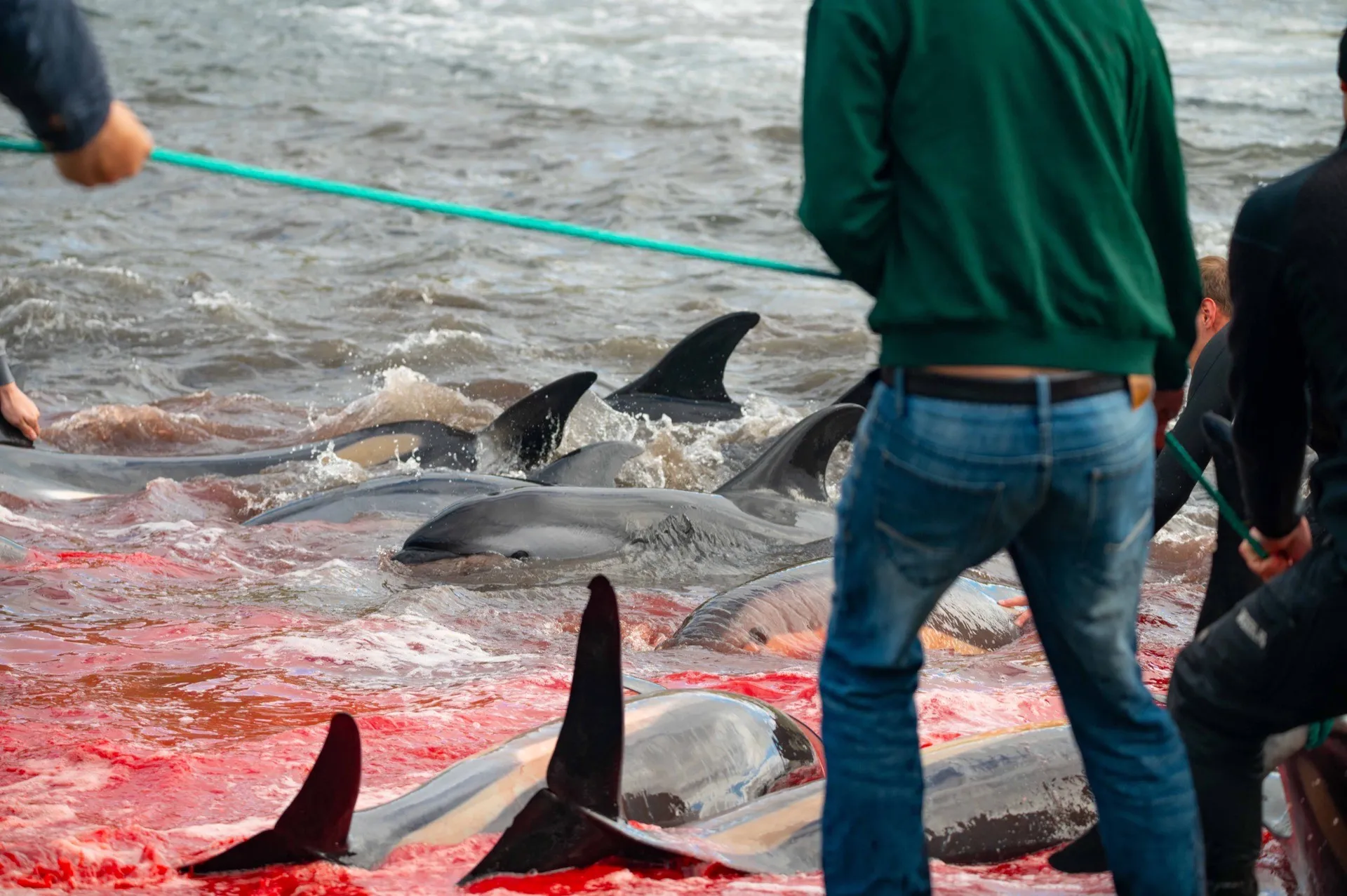
The cetacean hunts in the Faroe Islands claimed the lives of 825 animals in May, during five drives. Among the victims were pilot whales, Atlantic white-sided dolphins, and bottlenose dolphins, social and intelligent species that depend on stable family bonds.
The grindadráp involves herding cetaceans with boats until they are driven into shallow waters, where they become trapped and are slaughtered with special knives that sever the spinal cord. The meat and blubber are distributed for free among the local community.
Impact on species
The method affects entire family groups, including calves and pregnant females. The physical and emotional suffering is enormous for animals that have complex social structures and cooperative behaviors.
The mass killing destroys entire communities and jeopardizes the survival of local populations.
Cultural heritage vs. animal ethics
Faroese authorities defend the practice as part of their cultural identity. However, today there are dietary alternatives that make this hunt unnecessary. The preservation of traditions cannot justify animal suffering or the loss of biodiversity.
Animal protection organizations have been calling for the end of the grindadráp for years and are urging a move towards a coexistence model that respects the lives of cetaceans.
Main consequences
- Ecological impact: annual death of hundreds or thousands of cetaceans, including pilot whales and white-sided dolphins.
- Harm to human health: the meat contains high levels of mercury and heavy metals, which are toxic to the brain and kidneys. Local health authorities advise against its consumption.
- International rejection: strong criticism from environmental and animal rights organizations that consider the practice cruel and unnecessary.
- Social tension: division between the defense of Faroese cultural identity and global pressure for animal rights.
Historical context
The grindadráp has been practiced since the 9th century as a non-commercial hunt. Originally, it represented a source of food in a territory with limited resources.
Today, in a globalized world with access to safe and sustainable alternatives, the practice generates a deep debate about the relationship between tradition and ethics.
International rejection
The international community has repeatedly condemned these hunts. Organizations like Sea Shepherd and various European NGOs have documented the cruelty of the method and demanded its prohibition. Global pressure increases every year, especially after episodes with such high death tolls as those recorded in May.
The grindadráp exposes a contradiction: while science demonstrates the intelligence and sensitivity of cetaceans, an ancestral tradition continues to cause their mass death.
The international community demands that this practice be abandoned and that progress be made towards a model that respects marine life, protects human health, and preserves biodiversity.



