



Starfish, known for their radial symmetry and multiple arms, inhabit the world’s oceans, from warm tropical waters to icy depths. These echinoderms play essential roles in the balance of marine ecosystems. Their ability to regenerate limbs and adapt to various environments makes them a resilient species, although not invulnerable.
Without a brain or blood, they use a hydraulic vascular system to move around, capture prey, and adhere to underwater surfaces. Their diet mainly consists of mollusks such as clams and mussels, although some species also recycle organic matter. Thus, they help regulate the populations of their prey and clean the seabeds.
Their presence is an indication of a healthy environment, especially in reefs and rocky areas. However, their survival is compromised by indirect threats such as pollution, accidental capture, and habitat alteration due to human activity.
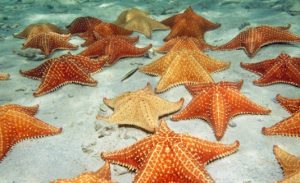
A Warning Sign Underwater
Recent phenomena such as the “sea star wasting syndrome” have decimated starfish populations in various regions, especially in the northern Pacific. This disease causes the breakdown of their tissues, impairing their basic functions and leading to mass die-offs.
In addition to this, the impact of microplastics and unsustainable fishing practices is significant. Trawl nets, poorly placed anchors, and traps can irreversibly damage habitats where these species thrive. The lack of regulations in some coastal areas also contributes to their vulnerability.
In regions like the Gulf of California, more responsible fishing is being promoted, understanding that protecting non-commercial species is also key to conserving marine biodiversity. Protecting starfish is preserving ocean health. Every action counts in building a more balanced and resilient sea.
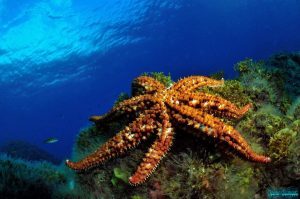
Starfish, Animals with Unique Abilities
Starfish, also known as asteroid, are marine animals that belong to the group of echinoderms. They are characterized by their radial shape, usually with five arms, although some species may have more. They do not have a brain or blood, but they have a hydraulic vascular system that allows them to move, adhere to surfaces, and manipulate objects with precision.
One of their most amazing abilities is regeneration: they can regrow lost arms and even regenerate their entire body from a single limb, under suitable conditions. They mainly feed on mollusks such as clams and mussels, making them key predators in the marine ecosystem.
Their presence in reefs and rocky bottoms indicates good environmental health, as they play a vital role in the balance of marine food chains. However, they face threats such as pollution, intensive fishing, and emerging diseases that compromise their populations in various regions of the world.


