



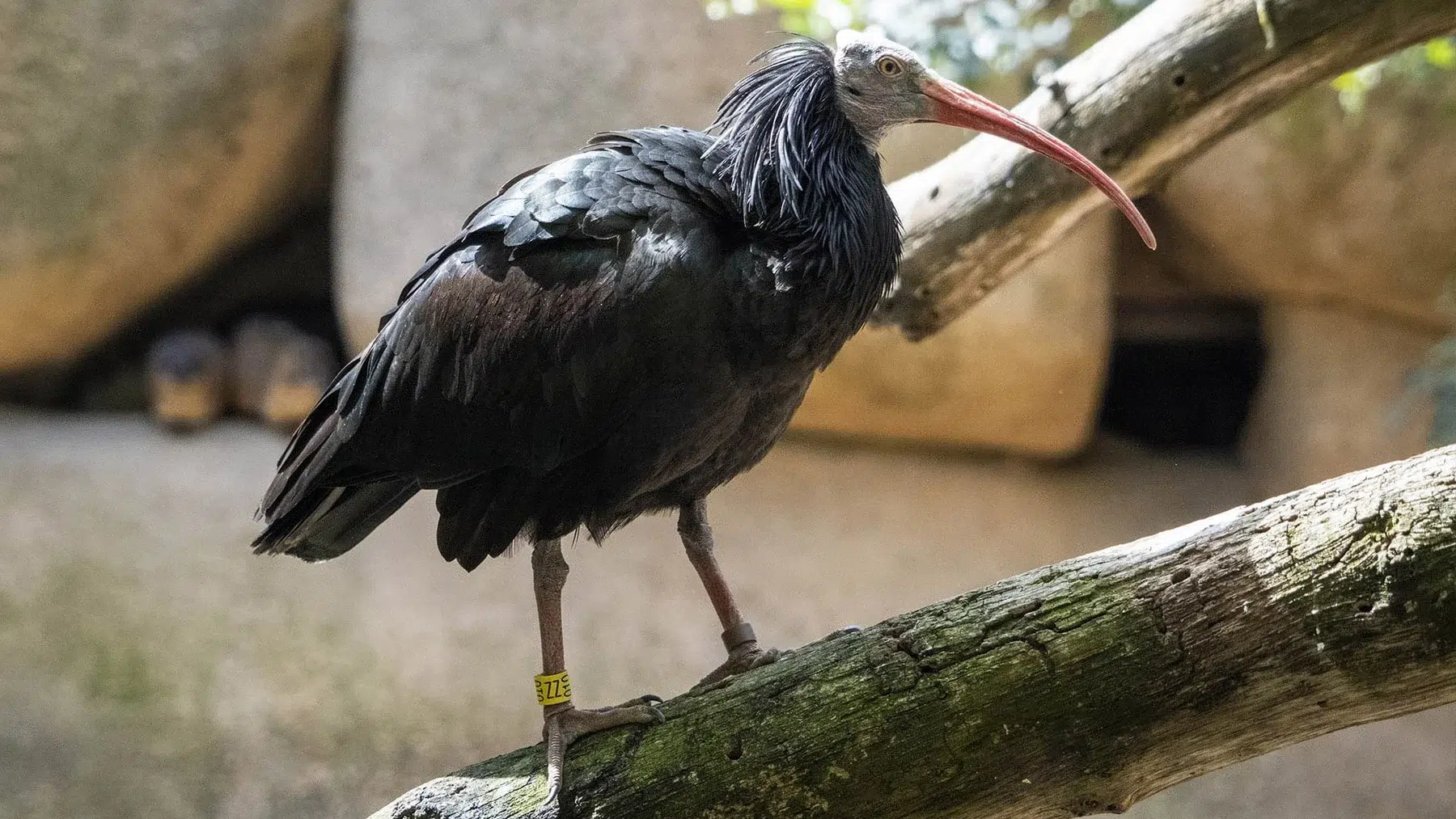
In the surroundings of the Cabañeros National Park (Ciudad Real, Spain), a specimen of northern bald ibis was located, one of the rarest and most threatened birds on the planet, with barely 1,100 individuals in the wild. The bird, named Ennyl, was born in 2024 in Central Europe and belongs to the European project Waldrappteam, which seeks to reintroduce the species in Europe.
Thanks to the GPS transmitter it carried, it was identified and transferred to the El Chaparrillo Wildlife Recovery Center, where a deep wound was detected in the uropygial gland, probably caused by an attack from an aerial predator. The veterinary team administered medication, and if the recovery is favorable, it could be released in three or four weeks in the same environment where it was found.
International Conservation Programs
The northern bald ibis disappeared from Europe in the Middle Ages and today survives thanks to reintroduction projects:
- Eremita Project in Andalusia: since 2004 it has maintained a stable population of about 300 specimens in Cádiz.
- Waldrappteam in Central Europe: trains the birds to recover ancient migratory routes to the Iberian Peninsula.
- Morocco and Syria: historical refuges of the species, which today concentrate a large part of its population.
These programs aim not only to increase the population but also to restore safe migratory routes and promote international cooperation in conservation.
Key Reasons for Its Conservation
The northern bald ibis (Geronticus eremita) is classified as critically endangered and its protection is vital for multiple reasons:
- Ecological Role: controls pests by consuming insects and small invertebrates, helping to clean pastures and soils.
- Environmental Indicator: its presence signals healthy and balanced habitats.
- Historical and Cultural Value: in ancient Egypt, it was a sacred symbol; protecting it means recovering natural and cultural heritage.
- Ecological Balance: by dispersing seeds and maintaining the dynamics of arid ecosystems, it contributes to environmental resilience.
Current Threats
Specialists warn that the species faces constant risks:
- Poaching.
- Electrocutions on power lines.
- Predator attacks.
- Climate change, which alters their migratory routes and habitats.
These threats add to human pressure on their habitat, making it essential to reinforce conservation measures.
Cooperation and Citizenship
The rescue of Ennyl reflects the importance of collaboration between scientific projects, public administrations, and citizens. The participation of volunteers and bird watchers was key to locating the specimen and ensuring its veterinary care. This model of cooperation demonstrates that the conservation of critical species requires a collective effort.
The case of the northern bald ibis in Ciudad Real is a reminder of the fragility of endangered species and the need to strengthen conservation programs.
Each successful rescue not only saves a life but also contributes to keeping alive the hope of recovering entire populations of birds that were on the brink of disappearance.



