



After a five-day journey, the elephant Kenya arrived at the Elephant Sanctuary in Brazil. There, in freedom and without cages, a new stage away from confinement began. Her immediate adaptation surprised the caregivers, as she showed herself curious, lively, and eager to explore her surroundings from the first hours.
In less than half an hour, Kenya left her cage and toured the adaptation corral. Shortly after, she ventured to walk the trails, roll in the mud, and knock down trees, a natural behavior for African elephants, accustomed to interacting with their environment.
Kenya’s ability to reconnect with her instincts reflects the positive impact of semi-freedom spaces. In the sanctuary, elephants have the possibility to choose their activities, strengthening their physical and emotional well-being without the restrictions inherent in zoos.
Additionally, she was seen playing with objects like tires, something common in her species and necessary to stimulate her mind. These behaviors are clear signs that her adaptation is progressing in harmony with her nature.
 Elephant Kenya in Brazil. Photo: MDZ.
Interactions, friendships, and choice of company
Kenya and Pupy are, for now, the only African elephants in the sanctuary. Although they live in separate areas, they have the opportunity to interact through the fences. This modality allows relationships to develop naturally, without forcing them to share space if they don’t wish to.
The sanctuary ensures a spacious and flexible environment for each elephant to explore at their own pace. The possibility to choose their company or remain alone promotes balanced behavior, favoring healthy relationships and emotional stability for the individuals.
A first approach between Kenya and Pupy happened through roars and body postures. Although there was no physical contact, they exchanged sounds in a clear attempt at communication, marking the beginning of a social bond.
This long-distance interaction is significant in the species, which establish bonds through vocalizations before trusting in direct contact. In nature, elephants use sound and posture as language, and their appearance in the sanctuary is a sign of progress in readaptation.
Kenya in Brazil: the importance of natural behaviors in reintroduction
For an animal to reintegrate properly into its natural environment, it must regain key behaviors: searching for food, exploring the territory, interacting with others of its species, and performing instinctive behaviors. These actions ensure adaptation and autonomy.
Social relationships are essential, as elephants are social animals. Forming groups, communicating, and establishing hierarchies are necessary practices for their emotional balance and survival in the wild.
Exploration and play also play a fundamental role. They stimulate their intelligence and allow them to interact actively with their environment, strengthening their ability to face challenges and maintain their physical and mental health.
Thus, respecting each individual’s natural rhythm and the possibility to decide how and when to interact are key to achieving a true reintegration in controlled or natural environments.
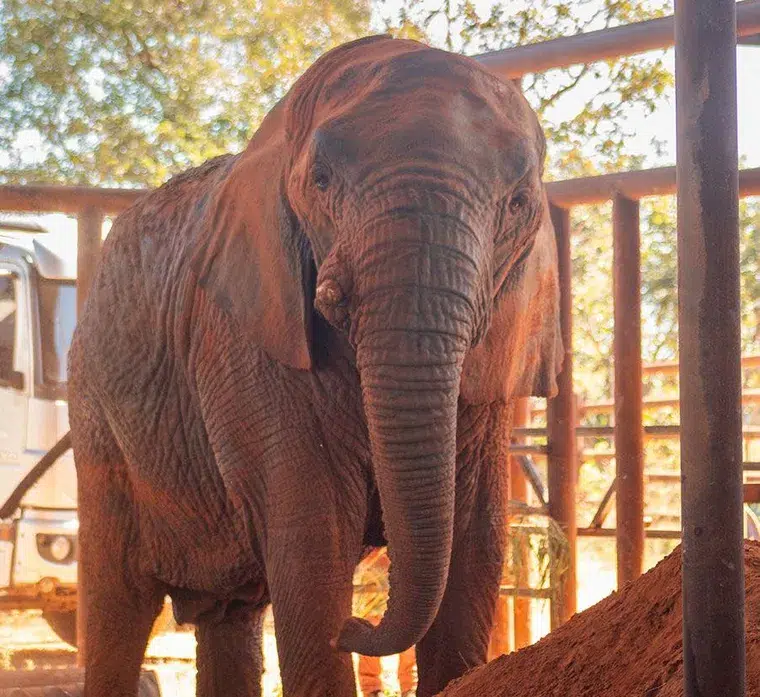 Elephant Kenya in Brazil. Photo: MDZ.
The ecological value of natural sanctuaries
Wildlife sanctuaries play a vital role in conservation and ecological balance. By offering semi-freedom spaces, they contribute to the physical and emotional recovery of animals that have spent years in captivity or exploitative conditions.
These refuges allow species to resume their natural habits, reinforcing their adaptability and, in some cases, facilitating their return to the wild. Furthermore, they promote environmental education and raise awareness about the importance of animal respect.
Sanctuaries also function as research spaces, where the natural behaviors and social interaction of species in controlled environments are studied, providing valuable information for biodiversity protection and conservation.
By encouraging coexistence in freedom and respect for natural cycles, sanctuaries become key players in the fight against animal exploitation and environmental degradation.


