



A surprising discovery in the depths of the ocean could change the understanding of food chains. They found sea spiders that feed on methane-consuming bacteria.
They do this in an extreme ecosystem on the seafloor. This represents the first evidence of marine arachnids that depend on methanotrophic bacteria for their nutrition.
A methane-based diet: this is how sea spiders are
The study, recently published by scientists from the National Museum of Natural History of the Smithsonian Institution and other international institutions, reveals that the sea spiders of the genus Pycnogonida do not feed on conventional prey.
In this case, they obtain nutrients directly from bacteria that thrive in methane-rich environments.
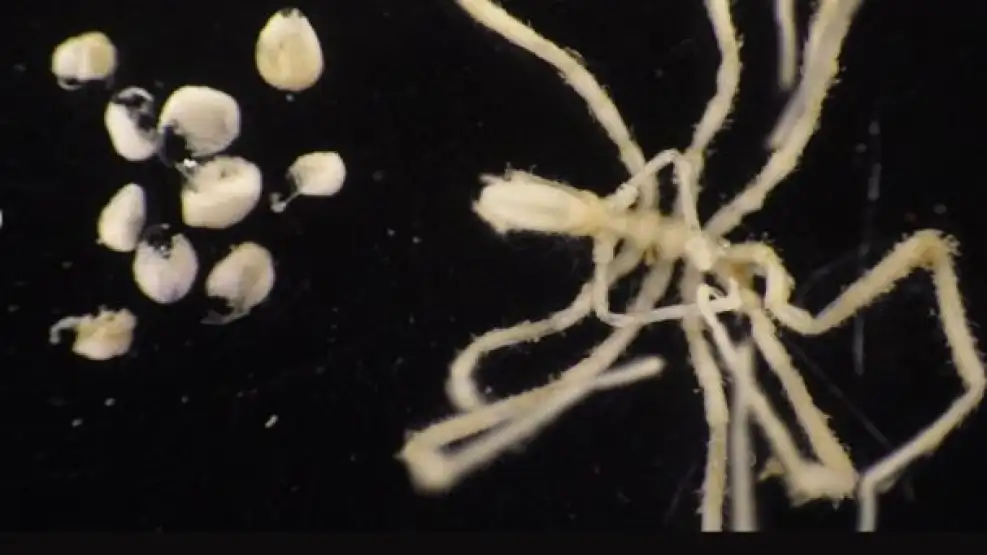 This is how sea spiders are. (Photo: @occidentalcollege).
These bacteria, known as methanotrophic, are able to use methane as an energy source. This is a key process in the regulation of this greenhouse gas in the oceans.
The discovered sea spiders were found near submarine methane seeps, located off the west coast of the United States, at depths of over a thousand meters.
Ecological and climatic implications
The discovery has important ecological and climatic implications. These species could play a key role in the control of oceanic methane, indirectly contributing to reducing emissions of this potent greenhouse gas into the atmosphere.
Furthermore, this finding expands the scientific understanding of life forms adapted to extreme conditions. Such as high pressure, low temperatures, and a scarcity of sunlight.
Methanotrophic bacteria and the organisms that consume them are part of chemosynthetic ecosystems, where energy does not come from the sun, but from chemical compounds like methane or hydrogen sulfide.
An unexplored ecosystem
The ecosystems of the seafloor remain one of the least explored territories on the planet.
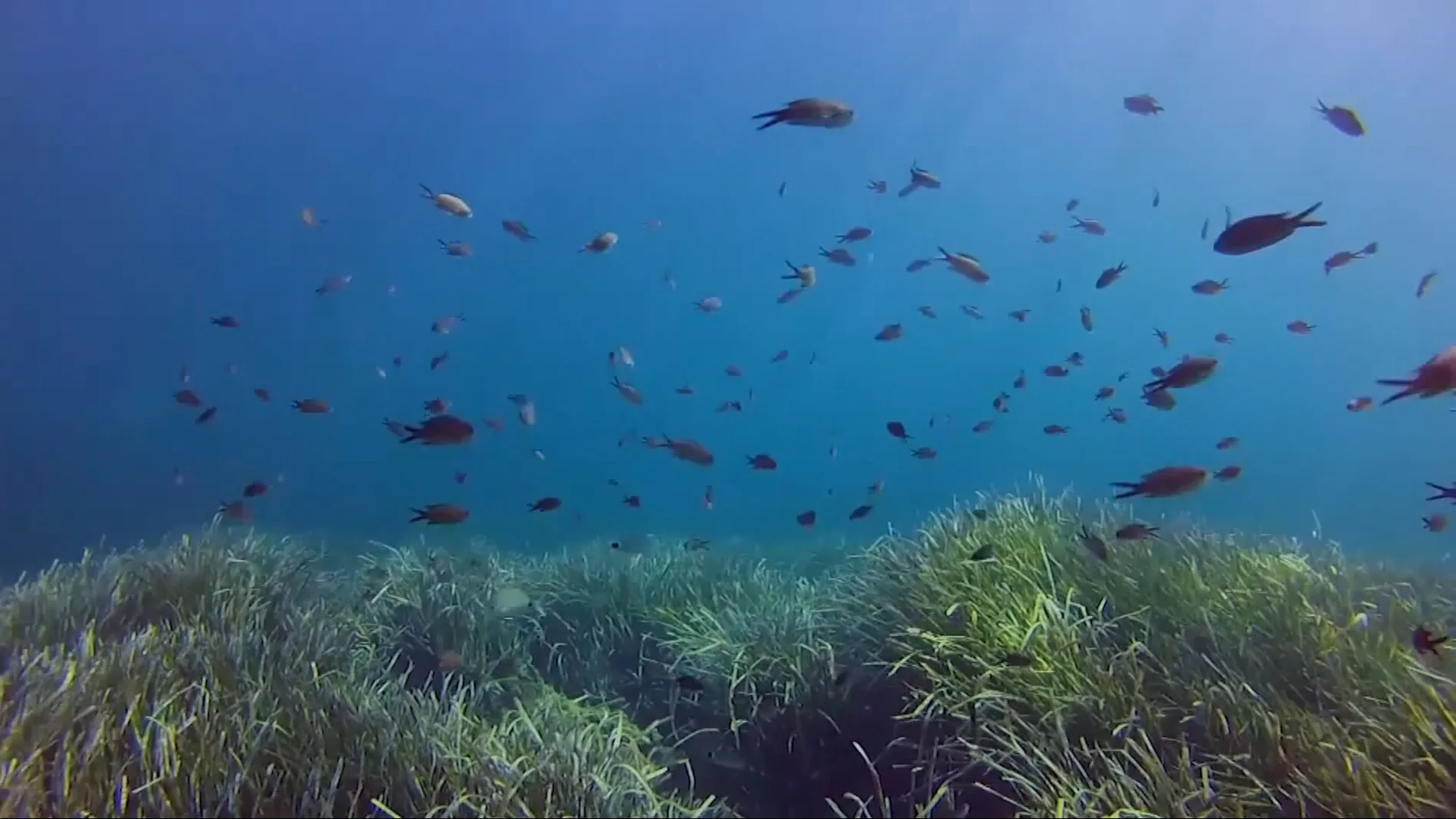 The mysteries of the seafloor.
Research like this reveals the existence of complex and unknown biological interactions, which could be key to understanding the evolution of life and environmental balance on a global level.
Scientists emphasize that there is still much to discover about how these benthic organisms interact with their environment and how they could be affected by human activities, such as hydrocarbon extraction or climate change.


