



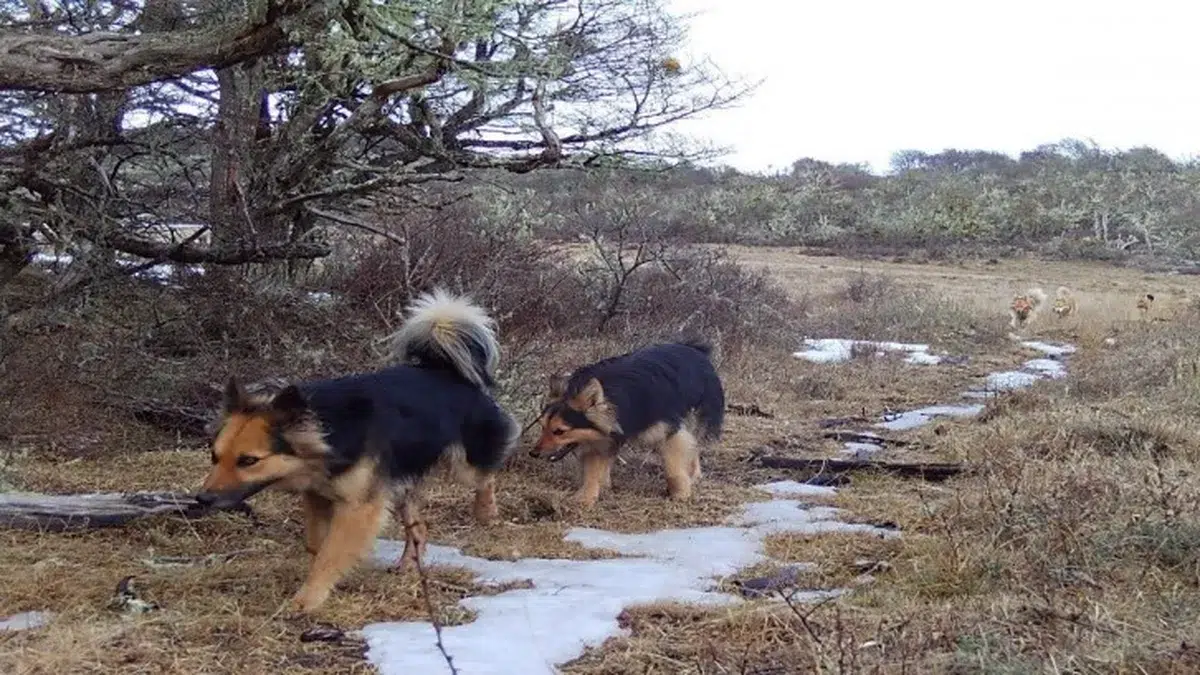
In the 83rd Rural Exhibition of Neuquén, producers and officials warned about the advance of loose dogs that stray from towns and form packs in rural areas. The concern arises from observing similarities with the crisis experienced in Tierra del Fuego, where more than a decade ago, feral dogs were declared a plague due to their devastating impact on sheep and cattle production.
Lucila Apolinaire, then director of the Fuegian Rural Society, had pointed out that the dogs “ended the culture of the countryside” and that the attacks were unsustainable. Today, that reality is starting to seriously concern Neuquén.
Current situation in the province
The Secretary of Production, Diego García Rambeaud, explained that in Neuquén, dogs are not yet seen in a fully feral state, as in Tierra del Fuego, but there are animals that stray from their homes, roam during the day, and return at night. This lack of responsible ownership leads to attacks on flocks and calves.
The damages are significant: a producer reported losing 9 out of 18 sheep in a single attack. “That animal is the producer’s capital and the source of food; there is a lot of work behind it,” Rambeaud emphasized.
Economic and health impact
The president of the Rural Society of Neuquén, Cecilia de Larminat, highlighted that the attacks cause deaths and lifelong mutilations in production animals. She also warned about the health risk: dogs can transmit hydatidosis and other zoonotic diseases, worsening the issue.
The SRN conducted an internal survey revealing numerous cases throughout the province, especially in localities like Zapala, Junín de los Andes, and Las Lajas, considered the most complex areas.
Political and social obstacles
Rambeaud acknowledged that meetings have been held with the Veterinary College and local municipalities, but noted that municipalities are constrained by public opinion and pressure from some animal protection groups, making it difficult to implement stricter measures.
Producer Mercedes de Larminat was blunt: “The cow and the sheep are also animals. Why protect only the dog when it is causing harm? There must be a system of castration and strict responsible ownership.”
Control tools against feral dogs
Among the proposed measures are:
- Castration: useful but insufficient if not accompanied by owner control.
- Education and awareness: to prevent abandonment and promote responsible custody.
- Stricter regulations: to regulate the presence of dogs in rural and urban areas.
- Health actions: to reduce the transmission of diseases like hydatidosis.
Neuquén faces the challenge of acting before the situation reaches critical levels like in Tierra del Fuego. The key lies in responsible ownership, community control, and coordinated action among producers, municipalities, and health authorities. Otherwise, the packs could become a threat to production, public health, and the balance of local wildlife.



