



The Specialized Environmental Prosecutor’s Unit (UFEMA), under the direction of prosecutor Blas Matías Michienzi, carried out a raid in the Buenos Aires neighborhood of Almagro, where an informal veterinary clinic was operating that kept in illegal captivity three exotic birds: two macaws and a juvenile toucan.
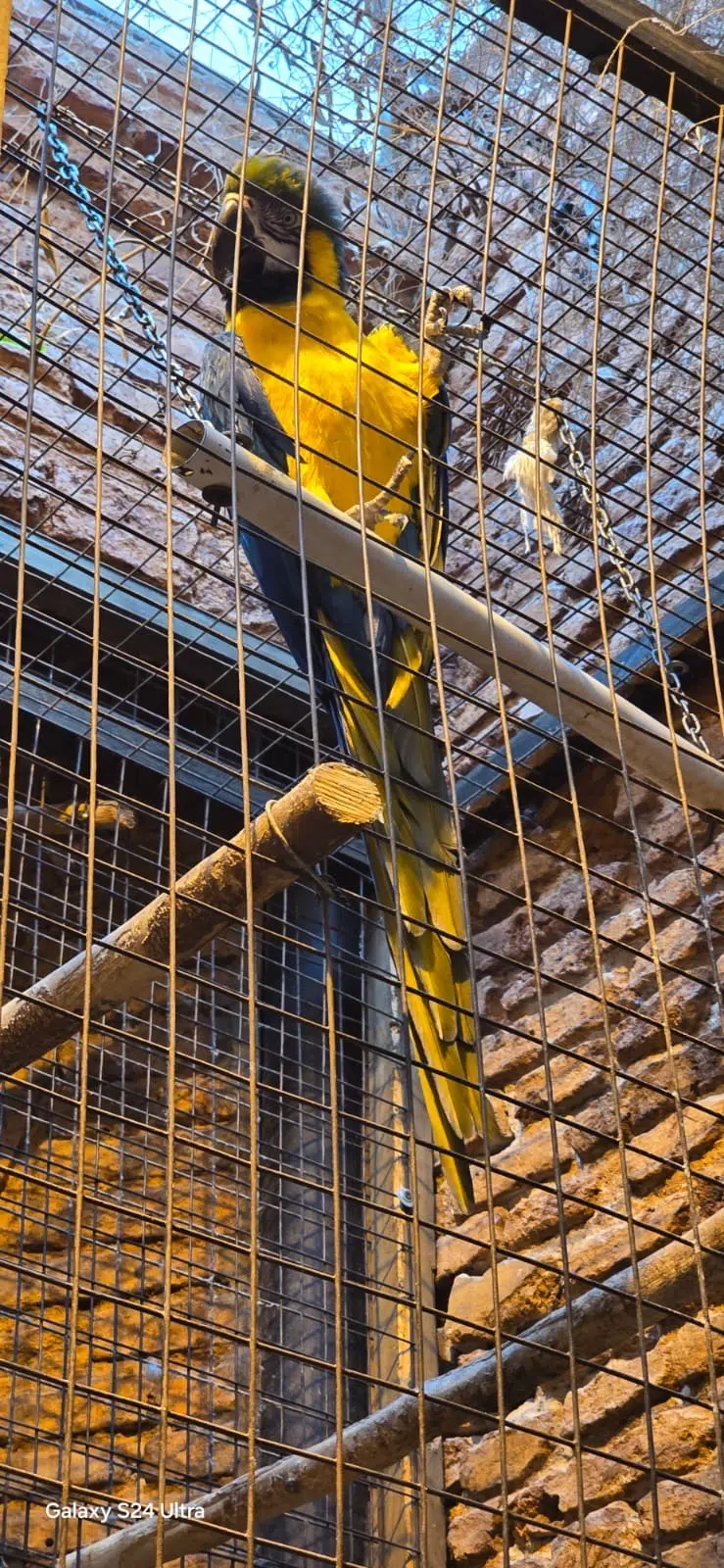
The procedure was authorized by the Criminal, Misdemeanor, and Offenses Court No. 21, led by Judge Paula Virginia Núñez Gelvez, and allowed the rescue of a Red Macaw (Ara chloroptera), a Blue and Yellow Macaw (Ara ararauna), and a Juvenile Green-billed Toucan (Ramphastos dicolorus).
Mistreatment, stress, and nutritional deficiencies
The birds showed dull plumage, signs of malnutrition, and severe environmental stress, as verified by the intervening veterinarian. They were unable to fly, moving only by jumping inside small cages, and were fed an inadequate diet for their species and stage of development.
The investigation began after neighborhood complaints about persistent noises and squawks coming from a residence on Humahuaca 4300, which prompted fieldwork and social media tracking by the Judicial Investigations Corps of the Public Prosecutor’s Office.
Inter-institutional coordination and transfer to the Ecopark of exotic birds
The operation was carried out in conjunction with the Environmental Crimes Division of the City Police, the General Directorate of Environmental Control of the Buenos Aires Government, and personnel specialized in complex crimes.
The specimens lacked identification rings and legal documentation, confirming their origin in the illegal wildlife trade. According to estimates by the UFEMA, the three birds would have an approximate value of 900,000 pesos on the black market.
By order of the prosecutor’s office, the animals and their cages were seized and transferred to the Ecopark of the City of Buenos Aires, where they will receive rehabilitation treatments and veterinary control to ensure their physical and emotional recovery.
Bird trafficking in Argentina: causes, consequences, and strategies
The illegal trade of wild birds represents a serious threat to national biodiversity, pushing species like the yellow cardinal to the brink of extinction.
This practice is punishable under the Law 22.421 on Wildlife Conservation, and generates ecological imbalances, health risks, and loss of natural heritage.
Main causes
- Ornamental value: sought for their colors and songs for collection or pets
- Internal and external demand: commercialization in large cities and export to Europe and the Middle East
- Lack of awareness: ignorance of environmental and legal impact
Consequences
- High mortality: up to 90% die before reaching their destination
- Species extinction: like the yellow cardinal and other native birds
- Ecological imbalance: affects their role in seed dispersal and insect control
- Health risks: spread of zoonotic diseases
How to combat it
- Report: to competent authorities; organizations like Aves Argentinas provide guidance
- Do not buy: avoid acquiring wild animals, as it finances the crime
- Raise awareness: educational and media campaigns to inform about the problem
- Coordinate and strengthen: articulation between public, private, and civil society organizations; stricter policies and border control



