



The hunting orcas have proven to be one of the most effective predators on the planet thanks to hunting based on cooperation and social learning. Their ability to coordinate maneuvers, ambush prey, and adapt tactics according to the environment makes them ocean specialists.
Each community develops unique methods that respond to their needs and the available fauna. This diversity of strategies has allowed for the documentation of unprecedented behaviors that even surprise marine science.
The techniques do not rely on brute force but on precision and group planning. The coordinated attacks reflect that these cetaceans perfect skills that are passed down through generations.
In different parts of the planet, the adaptability of orcas shows how animal culture can influence ecological dynamics. The repetition of hunting patterns indicates the existence of shared knowledge. And their effects can extend far beyond the moment of the attack.

A new tactic: orcas hunting young great white sharks in Mexico
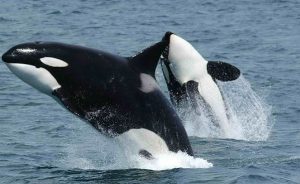
In waters near La Paz, a group of orcas was observed applying a precise maneuver to capture juvenile great white sharks. The technique involves surrounding the specimens, flipping them upside down, and inducing a temporary immobility that paralyzes them. This vulnerability allows for the extraction of the liver, an organ of high energy value.
The behavior was recorded over more than a year, and its repetition suggests that the group habitually masters this tactic. The orcas act in a synchronized manner, alternating roles to access the prey without exposing themselves. The rest of the body is left adrift, which demonstrates a selective use of the resource.
The observed behavior makes young sharks accessible targets. Their smaller size reduces risks and increases the energy efficiency of the hunt. This could explain why the phenomenon appears consistently in the same area.
Ecological impact: alteration in food chains and species displacements
The incursion of orcas in breeding areas modifies the behavior of young sharks. To avoid predators, these species tend to move to less exposed regions. This movement alters the balance of the food chains in the gulf.
The absence of sharks in certain areas affects the presence of pinnipeds, fish, and other marine species. Each displacement modifies key trophic relationships for the ecosystem. And the imbalance can propagate to higher levels of the chain.
If this behavior consolidates, the Gulf of California ecosystem could experience profound changes. Refuge areas would transform, the distribution of predators and prey would be altered, and habitat stability would be at risk. This scenario concerns research teams monitoring the region.
An international pattern with techniques that vary by sea
Previous records show similar behaviors in South Africa, Australia, and California. In those places, particular groups of orcas hunt adult sharks using variants of the same method. The knowledge seems to be transmitted within specific lineages.
The main difference lies in the choice of prey. In the Gulf of California, young specimens are revealed as a less risky and more profitable target. Their inexperience increases the likelihood of a successful attack.
This growing map of observations indicates that the behavior could spread to other regions. As the oceans change temperature, migratory routes are readjusted. And these encounters between predators could become more frequent.
How this behavior can modify their habitat
The intensification of encounters between orcas and young sharks is not an isolated phenomenon. The waters of the Pacific are experiencing thermal variations that push sharks towards areas where orcas regularly hunt. This convergence redefines the structure of the marine habitat.
The displacement of a key species like the shark alters the availability of prey and the distribution of predators. Breeding spaces may lose their original function and become areas of permanent risk. Over time, these modifications can reorganize the composition of the ecosystem.
If the behavior of the orcas continues to repeat, the coastal regions of the gulf could register visible changes in biodiversity. New migratory routes, alteration of feeding zones, and transformations in the trophic balance would be some of the consequences. The habitat, shaped over thousands of years, could enter a stage of accelerated transition.


