



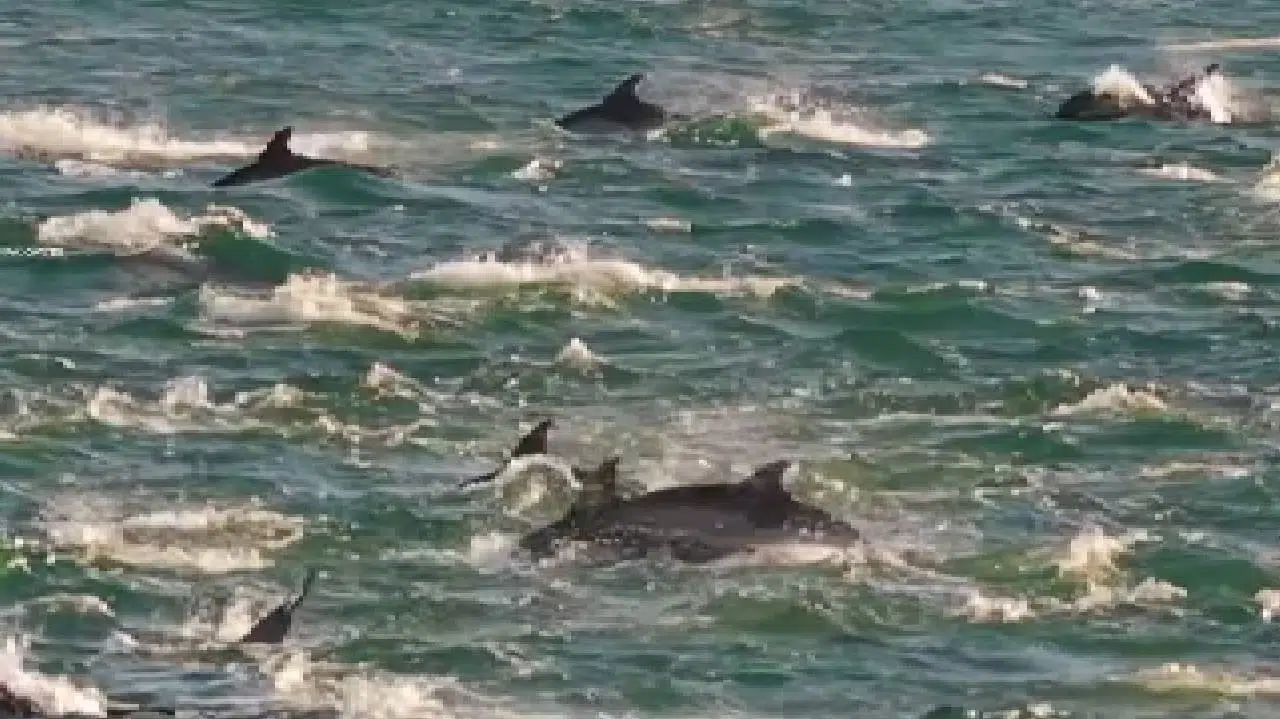
En las aguas del Gulf San Matías, off the coast of Las Grutas, the arrival of more than 500 common dolphins (Delphinus delphis) was recorded.
The animals advanced in synchronized formation, occupying nearly a kilometer in length. The sighting was captured from the air by drone operator Maximiliano Cartés, who described the scene as a “true dolphin stampede.”
Perfect coordination at sea
In the video, it is observed how the dolphins enter and exit the water in unison, as if performing a choreography. The filming also shows the characteristic cliffs of Las Grutas and the urban profile of the city, offering a privileged view of one of the most striking spectacles of the Patagonian marine fauna.
The publication generated admiration among residents, tourists, and social media users, who highlighted the natural wealth of the Rionegrina coast and the energy that the moment conveyed.
Reasons for the phenomenon
Specialists explain that these concentrations are frequent at this time of year, when large schools of fish enter the Gulf San Matías.
The abundance of food attracts the dolphins, which take the opportunity to feed and move in large groups. This behavior reflects the cetaceans’ ability to coordinate and maintain social cohesion, which also provides them protection against predators.
Dolphins and their role in the Argentine Sea
Dolphins are vital for the ecological balance and tourism of the region:
- Trophic balance: by feeding on anchovy, squid, and hake, they regulate populations and eliminate sick individuals.
- Environmental indicators: their presence reflects water quality and the abundance of fishery resources.
- Identity and conservation: species like the Lahille’s bottlenose dolphin, endemic and critical, have only about 260 individuals in Argentina.
- Sustainable tourism: in destinations like Puerto Madryn and Península Valdés, the sighting of dusky dolphins generates key income for coastal communities.
Patagonian biodiversity in focus
The sighting of more than 500 dolphins highlights the extraordinary marine biodiversity of the Gulf San Matías, establishing Las Grutas as a prominent destination in Patagonia. Each year, the region offers unique encounters with sea lions, penguins, coastal birds, and now, spectacular dolphin stampedes.
The presence of these animals also reminds us of the importance of conserving marine ecosystems against threats such as overfishing, pollution, and climate change. Dolphins, being top predators and bioindicators, play an essential role in the health of the Argentine Sea.
The massive sighting in Las Grutas was not only a visual spectacle but also a reminder of the value of marine biodiversity and the need to protect it.
Patagonia once again proves to be one of the world’s most privileged settings for observing wildlife in freedom, where nature expresses itself in its fullest power.



