



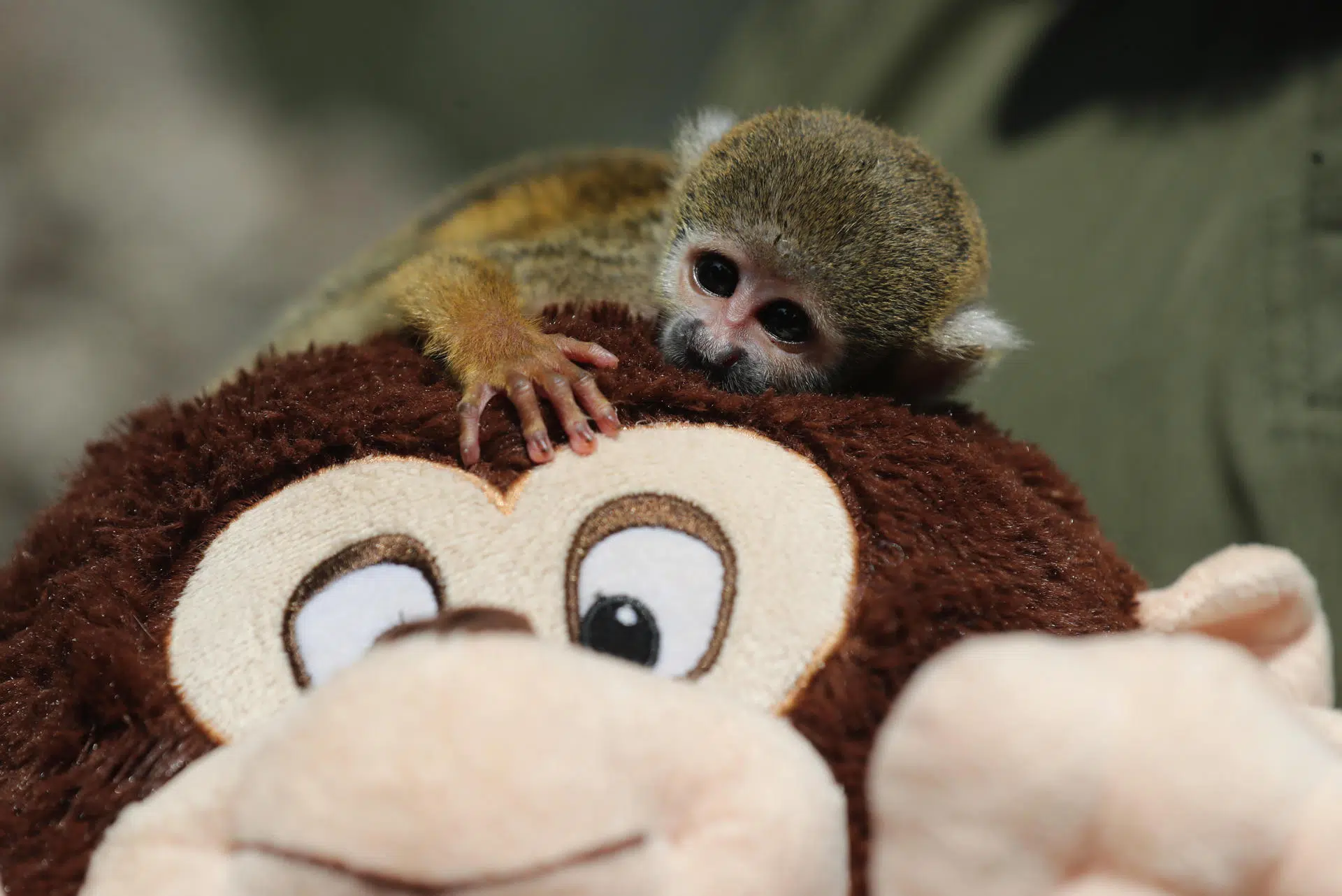
Such as happened with the Japanese monkey, now a Peruvian Punch is in the news. It is a baby squirrel monkey from the Peruvian Amazon that was separated from its mother at birth and taken to Lima to be sold as a pet.
Weighing just 90 grams, it arrived dehydrated and in poor condition but was rescued by the Club Metropolitano Huáscar in Villa El Salvador.
Today, Punch clings to a stuffed animal that substitutes for maternal contact, a common technique in the rehabilitation of orphaned primates.
Thanks to veterinary care, it now exceeds 100 grams and is expected to begin socializing with twelve other squirrel monkeys at the shelter in three months.
The illegal trafficking of primates
Veterinarian Julio Carrión explains that traffickers often kill mothers to capture the young, which are transported in terrible conditions to Lima, where they fetch higher economic value. The journey can last between 15 and 30 hours, and the mortality rate is devastating: 9 out of 10 monkeys die before they can be sold.
This illegal trade not only affects the animals but also the Amazonian and Andean ecosystems, which lose key species for their balance.
Impact and key figures
- Volume of trafficking: it is estimated that each year about 200,000 primates are subject to illegal trade in Peru.
- Mortality: most die in transit due to mistreatment and extreme conditions.
- Modus operandi: traffickers kill the mothers to separate the young, which cling to them during their first months of life.
Affected species
Peru is home to 47 species of monkeys, several of them endangered:
- Yellow-tailed woolly monkey (Lagothrix flavicauda): endemic to the Andes, in Critical Danger.
- Other trafficked species: squirrel monkey, common woolly monkey, black-capped capuchin, and night monkeys (Aotus).
Trafficking routes and rescue
- Arequipa: rescues in homes and parks reveal illegal routes in the southern Andes.
- Puno: strategic region for transfer to internal markets and neighboring countries.
- Border controls: illegal shipments have been detected in fruit trucks with monkeys and toucans.
The Huáscar refuge
Punch shares space with more than 30 monkeys, as well as macaws, toucans, turtles, coatis, eagles, and an Andean fox. Young animals are often transferred to state centers in the Amazon for release, while adults or sick animals remain in shelters, as they have lost their survival abilities.
The case of the Peruvian Punch reflects the tragedy of illegal wildlife trafficking in Peru, but also the hope provided by rescue and rehabilitation programs. Each recovered animal is a reminder of the need to protect Amazonian and Andean biodiversity, strengthen controls, and promote public awareness of a crime that threatens both wildlife and ecosystems.



