



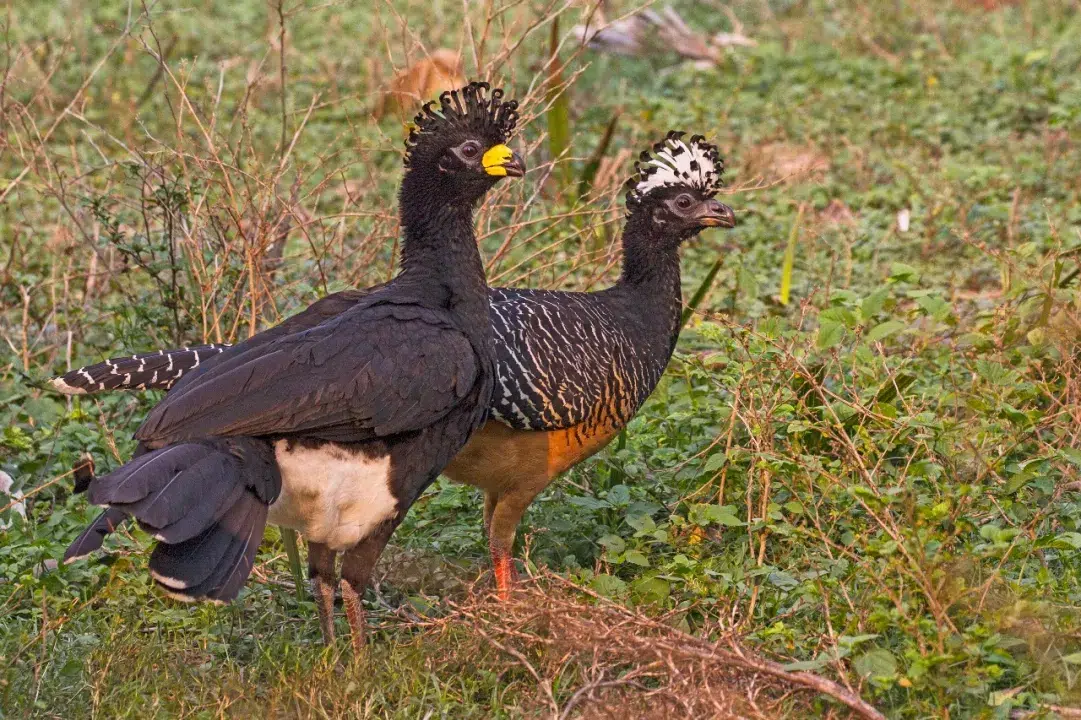
Six months after the first transfer, the Parque de la Biodiversidad completed the shipment of another five muitú specimens to the Gran Parque Iberá, in the province of Corrientes. In this way, a key process is consolidated to recover species that have disappeared from the ecosystem.
Indeed, the action is part of the Muitú Conservation Program, developed in conjunction with the Rewilding Argentina Foundation. Therefore, the initiative seeks to reverse the loss of biodiversity through the reintroduction of native fauna.
Likewise, the new group joins the five specimens previously transferred. Consequently, the presence of the species is strengthened in an area where it had significantly decreased.

Reproduction and scientific work for conservation
The project achieved significant advances in captive breeding. Firstly, the number of births at the Parque de la Biodiversidad doubled, reaching ten chicks in one year.
Additionally, this result is due to a sustained effort by professionals who ensure adequate sanitary and developmental conditions. In this way, the specimens are prepared to face the natural environment.
On the other hand, the process includes training stages to promote self-sufficiency. Thus, the chances of survival after the final release are increased.
Adaptation stages in a restored environment
Once in the Gran Parque Iberá, the muitús undergo a quarantine period. In this regard, their health status and initial adaptation to the new environment are evaluated.
Subsequently, they enter a pre-release phase where they begin to interact with the environment. Consequently, they develop key skills for their life in freedom.
Finally, the specimens will be released into the park’s forests. In this way, progress is made in the ecological restoration of the region, affected by the disappearance of native species.
Ecological importance and species status
The muitú is a galliform bird native to the tropical forests of South America, present in northeastern Argentina, eastern Bolivia, central Brazil, and Paraguay. Firstly, it plays a fundamental role as a seed disperser.
However, habitat destruction and poaching drastically reduced its populations. Therefore, its absence caused imbalances in the ecosystems in much of northeastern Argentina.
In this context, its reintroduction is a key tool to recover essential ecological processes. Likewise, initiatives like this align with the guidelines of the International Union for Conservation of Nature, promoting comprehensive conservation strategies.


