



Punch, a small Japanese macaque born in July 2025 at the Ichikawa Zoo, became a viral phenomenon in early 2026.
After being rejected by his mother shortly after birth, the caretakers gave him an orangutan plush toy (IKEA’s Djungelskog model) as a maternal substitute. The toy became his emotional refuge and the tool to train the ability to cling, essential in the first months of life for macaques.
Images of Punch hugging the plush toy spread across the internet and moved the public, generating massive visits to the zoo and a debate on animal welfare.
Rejection and Comfort
Punch’s mother abandoned him, probably due to exhaustion and extreme heat conditions during the season of his birth. Without company, the little one developed a strong bond with the plush toy, which he treated as his surrogate mother. Whenever other macaques pushed him away, Punch would run to the toy for safety.
This behavior, although unusual, allowed him to survive and remain emotionally stable in his early months.
Virality and Socialization
The spread of his images attracted thousands of visitors and forced the zoo to impose rules: silence during visits and a maximum stay of ten minutes, to reduce the stress of the more than 50 monkeys living there.
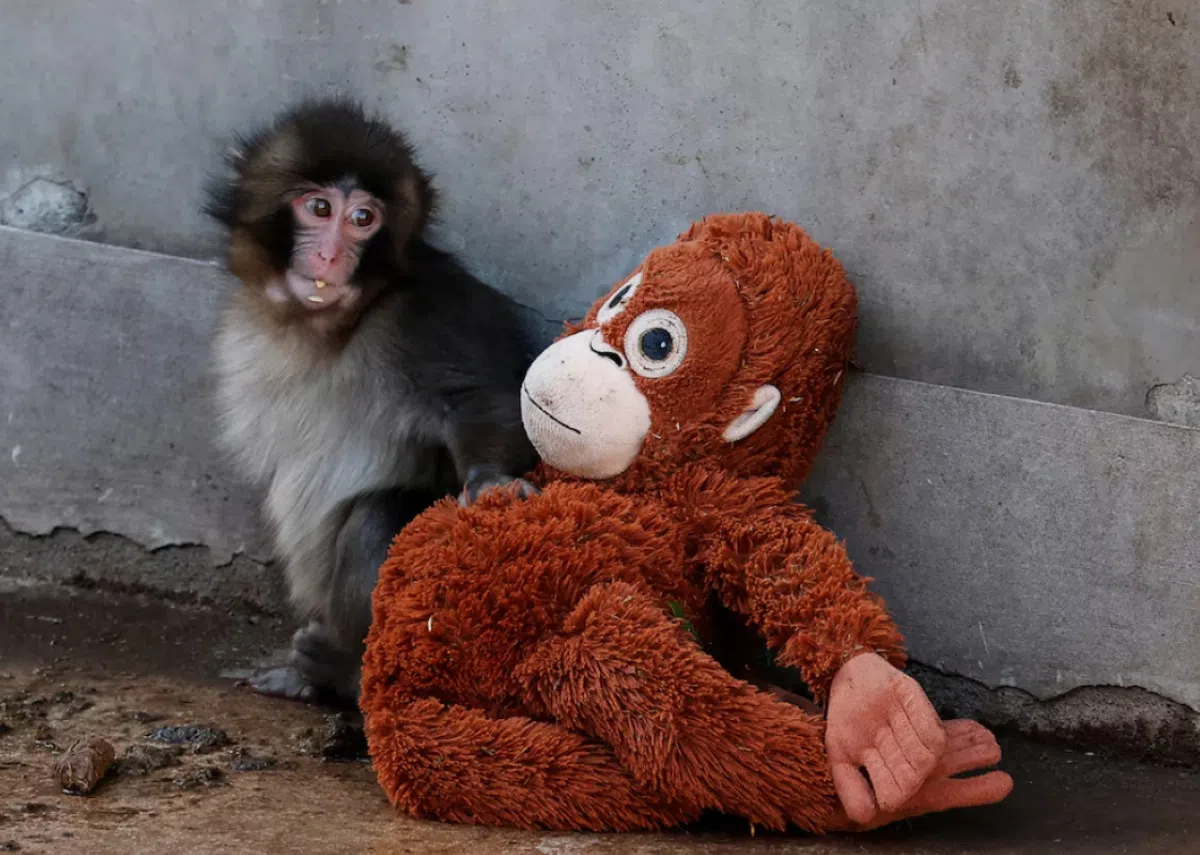
In February 2026, caretakers reported positive signs: Punch began interacting with other macaques, climbing on their backs and receiving caresses. For specialists, his decreasing use of the plush toy is a sign of independence and adaptation.
Impact and Debate
Punch’s case opened a debate on animal welfare in zoos and the need for affection in young animals. His story reflects how animals, like humans, require emotional bonds to develop.
- Emotional Impact: Punch became a symbol of tenderness and overcoming isolation.
- Social Impact: his virality inspired reflections on the management of animals in captivity.
- Scientific Impact: caretakers highlight the importance of supporting the socialization of rejected young animals to integrate them into the group.
Next Steps
Although Punch still sleeps with his plush toy every night, caretakers hope to soon see him cuddled up with other macaques. The zoo director, Shigekazu Mizushina, noted that overcoming the dependence on the toy will promote his independence and full adaptation.
Punch’s story is an example of how empathy and human care can make a difference in the life of a vulnerable animal. What began as a tender scene with a plush toy turned into a tale of resilience and hope: the journey of a macaque towards integration into his natural environment and overcoming isolation.



