



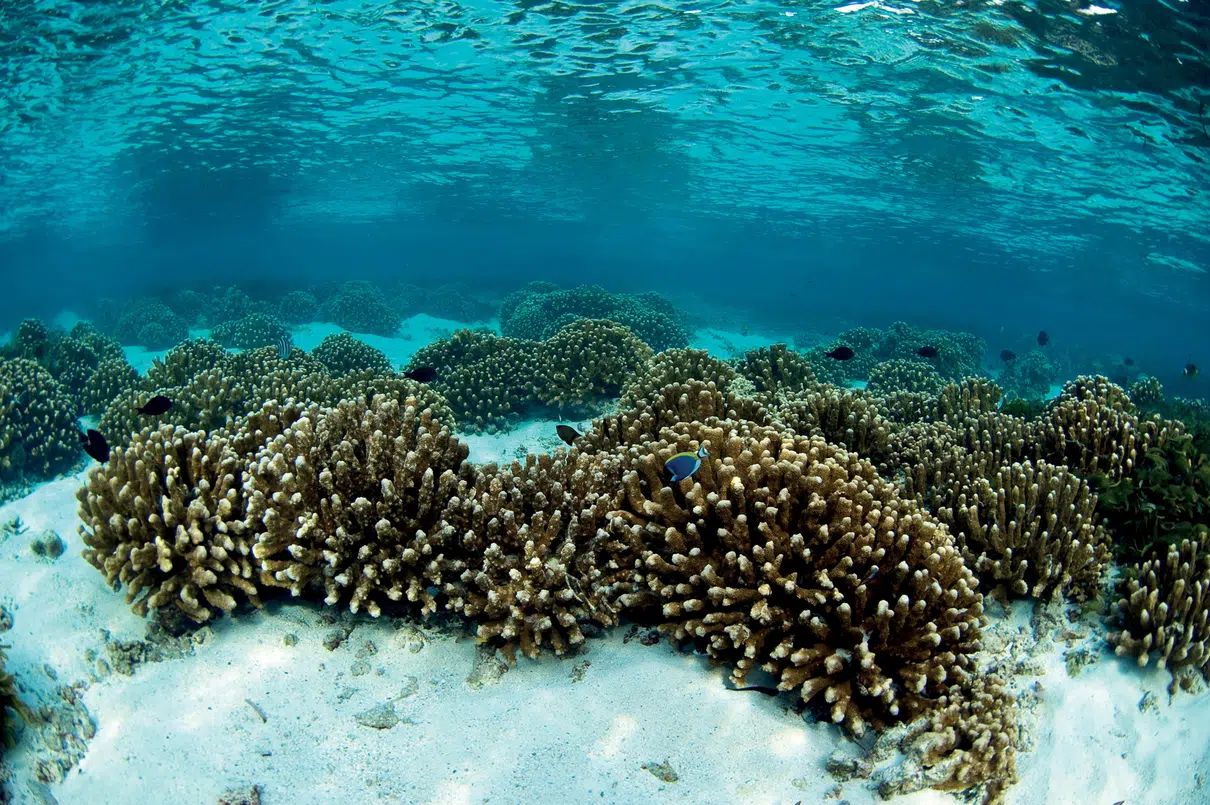
An international team of scientists led by Macquarie University in Australia and the Wildlife Conservation Society (WCS) identified 165,922 km² of coral reefs in 71 countries and 100 territories with a high capacity to resist and recover from the effects of climate change.
The study, presented at the Our Ocean Conference in Mombasa (Kenya), expands the results of the 50 Reefs initiative from 2018, tripling the number of reefs with potential climate resilience.
Distribution and Characteristics
The resilient reefs are concentrated in five main countries:
- Australia
- Bahamas
- Cuba
- Indonesia
- Philippines
Scientists conclude that some reefs manage to resist thanks to favorable ocean conditions that reduce the impact of warming, while others have developed tolerance to thermal stress or a rapid recovery capacity after extreme events.
Study Methodology
The analysis was based on more than 45,000 reef observations conducted between 1960 and 2025, along with climate, oceanographic, and human pressure data.
The results were processed using machine learning models, which allowed for the identification of resilience patterns on a global scale.
Concerns and Challenges
Despite the finding, researchers warned that only 28% of the identified reefs are within protected areas.
This leaves more than 119,000 km² exposed to threats such as overfishing, pollution, and coastal development without conservation measures.
International Campaign
The publication of the report coincides with the launch of the Our Reefs, Our Future campaign, driven by WCS, WWF, and The Nature Conservancy (TNC).
The initiative calls on governments for greater protection of the most resilient reefs against climate change.
Strategic Importance of Coral Reefs
Although they cover less than 1% of the ocean, coral reefs are fundamental for marine and human life:
- Coastal Protection: they act as natural breakwaters, reducing wave energy by up to 95% and preventing flooding and erosion.
- Climate Mitigation: they absorb carbon dioxide (CO₂) and participate in the global carbon cycle.
- Ecosystem-Based Adaptation: they provide food security and livelihoods for about 850 million people, strengthening the resilience of coastal communities.
- Biodiversity: they host about a quarter of all marine species, functioning as vital genetic refuges in a changing climate.
The discovery of nearly 166,000 km² of resilient reefs demonstrates that there are still ecosystems capable of surviving and recovering from the climate crisis.
However, the lack of effective protection for most of them poses an urgent challenge: ensuring that these natural refuges can fulfill their role as storm barriers, carbon sinks, and biodiversity sources.



