



The Superior Court of Justice of Chubut is preparing to resolve a case that could redefine the criminal approach to environmental crimes in Argentina. The decision will be announced on Tuesday, April 21, at a hearing that will review the conviction against Ricardo La Regina for a penguin massacre.
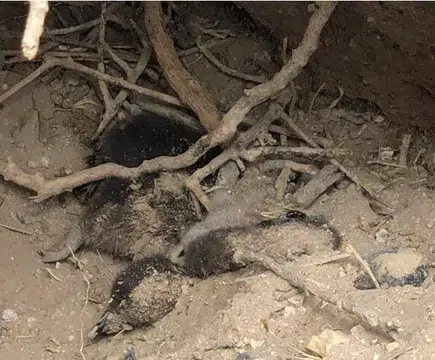
In this context, the producer was sentenced in 2024 to four years of imprisonment for aggravated environmental damage and animal cruelty. The case originated after the massacre of more than a hundred penguins in Punta Tombo, one of the main breeding sites for these birds.
Additionally, the judicial process extended for more than three years. During that time, six judges in different instances upheld the conviction, reinforcing the solidity of the investigation.

Irreparable damage in a protected area
The case exposes an illegal intervention in a sensitive ecosystem. According to the investigation, the accused used heavy machinery to open a parallel path to the coast without authorization.
As a consequence, more than 2,000 square meters of native vegetation were destroyed. This impact directly affected nests, eggs, and chicks during the reproductive stage.
Furthermore, the installation of an electrified fence worsened the damage to the fauna. Indeed, these actions significantly altered the natural habitat of the penguins.
On the other hand, the use of satellite images provided by CONAE allowed reconstruction of the events with precision. Thus, the technical evidence strengthened the judicial case.
A precedent for environmental justice
The court’s resolution will not only impact the specific case but could also set a key precedent. Consequently, it is expected to influence future decisions related to environmental crimes.
In recent years, Argentine justice has begun to give more importance to this type of case. Therefore, the ruling could consolidate a trend towards stricter sanctions.
Additionally, the case highlights the need to strengthen control mechanisms in protected areas. In this sense, the articulation between science, justice, and public policies is essential.
How the Penal Code contemplates environmental crimes
In Argentina, environmental damage is not always specifically typified in the Penal Code. However, there are legal figures that allow sanctioning behaviors that affect biodiversity.
For example, the crime of damage can be aggravated when it affects a public use good or a protected ecosystem. Consequently, penalties can include effective imprisonment depending on the magnitude of the impact.
Likewise, the Law 14.346 contemplates animal abuse and cruelty. Thus, actions that involve suffering or death of animals can be penalized.
However, specialists warn that the legal framework still presents limitations. Therefore, many sectors are pushing for reforms that incorporate environmental crimes in a clearer and more specific way.
Biodiversity at risk and human responsibility
The Punta Tombo case reflects the consequences of uncontrolled human activities in fragile ecosystems. Indeed, the loss of biodiversity can have irreversible effects.
Moreover, the destruction of habitats impacts entire ecological chains. Consequently, the recovery of these environments is often slow or, in some cases, impossible.
Finally, the judicial decision is inscribed in a global context where environmental protection is gaining centrality. Thus, the ruling could become a milestone for the defense of wildlife in Argentina.



