



In the last few weeks, **Rio de Janeiro** has become the [scene of a majestic phenomenon](https://noticiasambientales.com/animales/prefectura-refuerza-protocolos-ante-la-creciente-presencia-de-ballenas-cerca-de-balnearios-en-mar-del-plata/): the massive presence of **humpback whales**.
The whales swim the nearby waters, giving tourists and scientists a spectacle of **jumps, songs, and synchronized movements**.
This behavior coincides with **July 23, World Whale and Dolphin Day**, a date that highlights the value of these marine giants in **oceanic ecosystems**.
Humpback whales make a journey each year from their **feeding grounds in Antarctica** to the **breeding sites** located in the states of Bahia and Espírito Santo, turning Rio into a **strategic stopover in their tropical migration**.
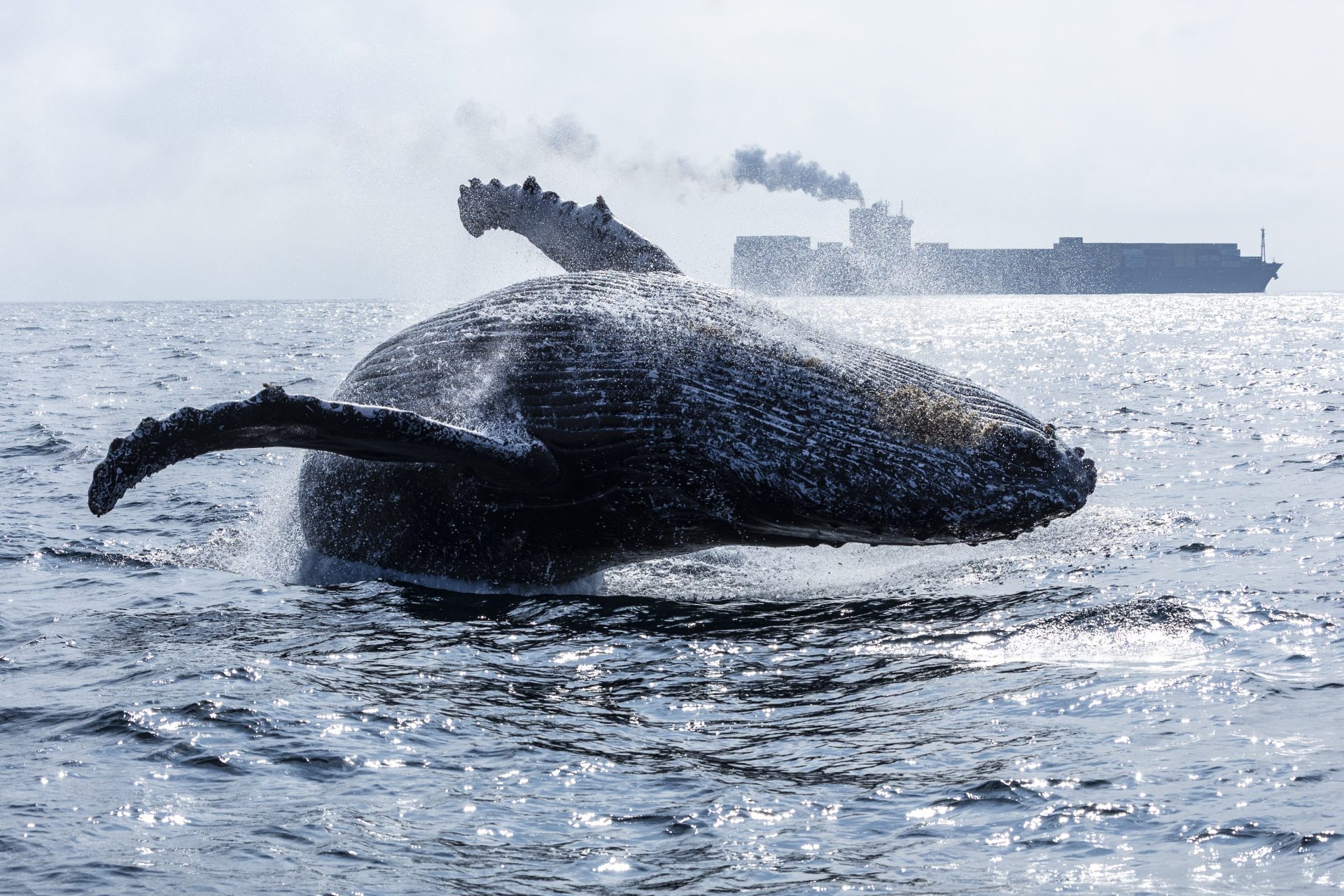
This cycle is closely monitored by the **Humpback Whale Project** team, led by marine biologist **Guilherme Maricato**. The team collects data on the **origin, destination, age, sex, and acoustic behavior** of each specimen.
Researchers have found that **males emit increasingly elaborate songs** to attract females. A key aspect that is also studied through sound analysis. These efforts have been made possible thanks to the work of the [**Humpback Whale Institute**](https://www.baleiajubarte.org.br/), which has been managing the project since 1988, focusing on the **protection of cetaceans in Brazilian waters**.
## Population recovery, challenges, and call for marine preservation
Biologist **Liliane Lodi**, a historical collaborator of the project, celebrates the increase in sightings in Rio as a direct consequence of the **environmental protection programs** implemented since the 1980s.
The last count carried out by the Institute indicates that the **humpback whale population multiplied by 18** between 2001 and 2022, going from **1,400 to over 25,000 individuals**. A recovery attributed to **the end of commercial whaling through the 1986 moratorium**.
However, threats persist: this week an individual was found dead on **São Conrado beach**.
Experts emphasize that **respect and citizen awareness are essential** to continue guaranteeing a healthy future for these ocean giants.
*Cover photo: EFE*



