



El Gobierno de Santa Fe carried out a new release of rehabilitated wildlife at the Centro de Rescate, Investigación e Interpretación de la Fauna (CReIF) La Esmeralda, located in the capital city.
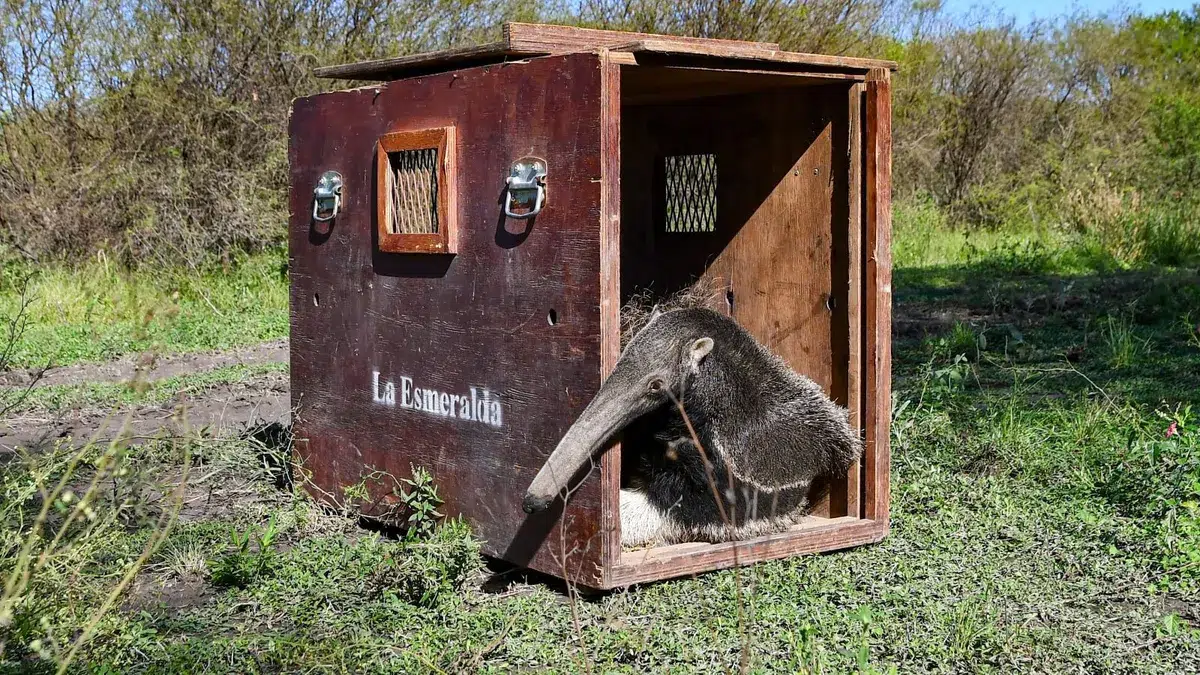
Among the reintroduced specimens are a female giant anteater, a maned wolf, a wildcat, and dozens of wild birds such as black-headed grosbeaks and cardinals.
The activity is part of the conservation policies promoted by the Ministry of Environment and Climate Change, which during 2026 has already managed to recover and reintroduce more than 900 specimens in protected natural areas of the Provincial System.
Recovery Stories
- Giant anteater: found in La Criolla after suffering a dog attack, received veterinary care at La Esmeralda and, after passing health and behavioral evaluations, was deemed fit to return to its habitat.
- Maned wolf: rescued in Monte Vera, suffered from a renal parasitosis caused by Dioctophyma renale. After treatment and veterinary follow-up, it was discharged and released. The species is protected as a Provincial Natural Monument.
- Wildcat: recovered from a situation of being kept as a pet in southern Santa Fe, returned to nature after rehabilitation.
- Wild birds: dozens of specimens victims of illegal trade or kept as pets were returned to their natural environment.
The Role of La Esmeralda
The CReIF La Esmeralda is an emblematic site of the province and a reference in the Central Region. Its main functions include:
- Rescue and veterinary assistance: receives an average of 2,000 animals annually, from seizures or citizen alerts.
- Reintroduction to their habitat: after recovery, the specimens are released in protected natural areas.
- Comprehensive reconversion: the site left behind the traditional zoo format to become a preservation center with quarantine areas and routes representing the ecoregions of Santa Fe.
- Environmental education and research: open to families and schools, it promotes awareness about the importance of not keeping native wildlife as pets.
Coordinated Work
The center works together with the Ecological Police, the Rural Guard Los Pumas, the Faculty of Veterinary Sciences of the UNL, and local governments. It also has a climate innovation center and a training center, reinforcing its role as a scientific and educational space.
Authorities reminded that, in the presence of wild animals in urban or peri-urban areas, it is recommended not to intervene or attempt to domesticate them, and to notify 911 or the competent authorities to ensure appropriate action.
Importance of These Actions
The release of rehabilitated wildlife contributes to:
- Conservation of threatened species such as the maned wolf and the giant anteater.
- Reduction of illegal wildlife trade, which remains one of the main threats to native birds and mammals.
- Civic awareness, by showing that wildlife should remain in their habitat and not be domesticated.
- Strengthening of protected natural areas, which receive the released specimens and consolidate as biodiversity refuges.
The release of a giant anteater, a maned wolf, a wildcat, and dozens of birds in Santa Fe reaffirms the provincial commitment to biodiversity conservation.
The work of the Centro La Esmeralda demonstrates that wildlife rehabilitation and reintroduction is possible when public policies, science, and citizen participation are coordinated.



