



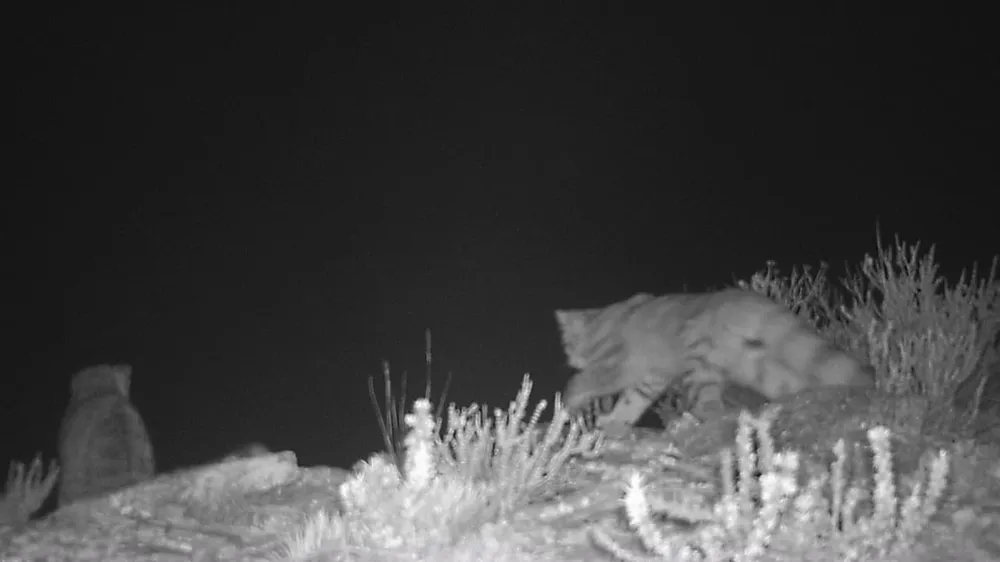
Two specimens of Andean cat were recorded in the Villavicencio Natural Reserve. Consequently, the finding represents a hopeful sign for conservation.
The sighting occurred in the Pampa de Canota through trap cameras. Additionally, the images confirmed the nocturnal presence of the species.
This record is relevant due to its extreme rarity. Therefore, it reinforces the importance of protecting these environments.
A key ecosystem for its survival
The Andean cat inhabits puna zones and arid environments. Consequently, it requires very specific conditions to survive.
The Pampa de Canota offers shelter and food. Additionally, it harbors species like the chinchillón, its main prey.
Likewise, these ecosystems are fragile. Therefore, any alteration can affect the species. Thus, habitat conservation is essential. In this way, it ensures its permanence.
Monitoring and sustained conservation
The monitoring in Villavicencio has been developed for more than two decades. Consequently, it allows obtaining key data. Additionally, it is carried out in conjunction with the Andean Cat Alliance. Therefore, it strengthens the regional work.
Likewise, the Directorate of Biodiversity and Ecopark of Mendoza is involved. In this way, research is regulated. These sustained efforts show positive results. Thus, they demonstrate the recovery of environments.
The Andean cat: a critically endangered species
The Andean cat is one of the most threatened felines in the world. Consequently, it is classified as endangered.
It inhabits from Peru to the south of Argentina. Additionally, it prefers isolated areas with rocky outcrops. It is characterized by its long, ringed tail. Therefore, it is easily distinguishable from other species. Likewise, its elusive behavior makes it difficult to study. Thus, each record is valuable.

Threats and conservation strategies
The main threats are linked to human activity. Consequently, hunting and habitat loss affect its survival.
Additionally, unsustainable livestock practices reduce its prey. Therefore, they generate conflicts. However, innovative solutions are being implemented. Likewise, livestock guardian dogs stand out.
These animals deter predators without harming them. In this way, the use of traps or poisons is avoided. Technologies such as deterrent lights and sounds are also applied. Thus, coexistence is promoted.
An ecological and cultural symbol of the Andes
The Andean cat has a strong symbolic value. Consequently, it represents balance and harmony in local communities.
Additionally, its presence indicates good environmental health. Therefore, it functions as an indicator species. Likewise, its conservation benefits the entire ecosystem. In this way, it protects multiple species.
In short, its recent appearance in Mendoza renews expectations. Thus, it confirms that sustained conservation can reverse critical scenarios.


