



As every June 15th, the International Huillín Day invited reflection on the situation of one of the most threatened mammals in Patagonia. In Río Negro, the date holds special significance due to the efforts that various institutions are making to protect this emblematic species and preserve the environments where it still survives.
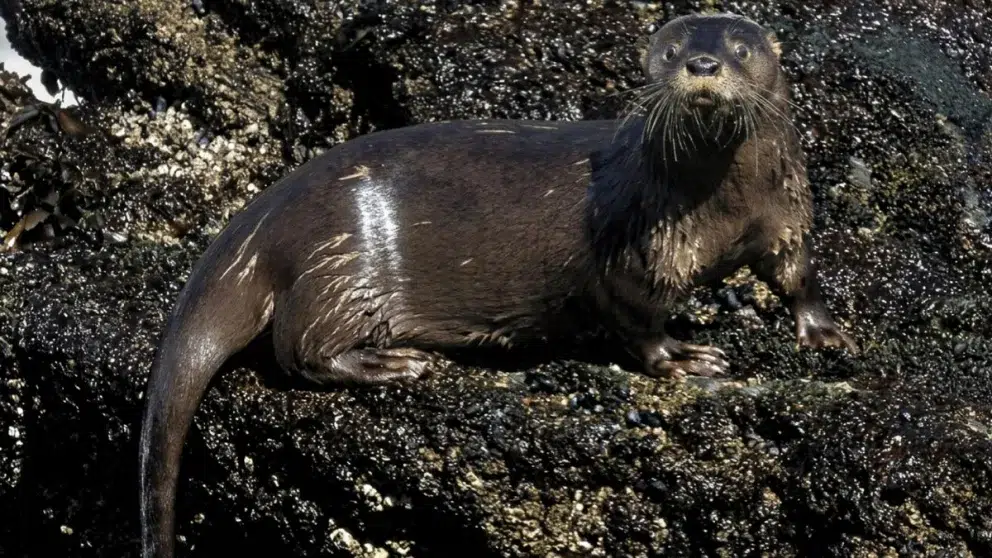
The huillín (Lontra provocax), a native otter of South America listed as endangered, plays a fundamental role in the balance of aquatic ecosystems. Its presence is often associated with rivers, lakes, and wetlands in good conservation status.
Therefore, protection strategies not only aim to prevent the disappearance of the species but also to conserve biodiversity and the environmental services that benefit human communities.
The Limay River, a key corridor for conservation
In the Río Limay Protected Natural Area, ongoing monitoring tasks are carried out by the Secretariat of Environment and Climate Change of Río Negro, along with the Nahuel Huapi National Park, park rangers, and environmental guards.
The teams cover different sectors to identify signs of huillín activity. Among the clues collected are tracks, feces, food remains, and other traces that help better understand its behavior and distribution.
Moreover, these studies provide valuable information to detect changes in populations and design more effective management measures. In this way, scientific research becomes an essential tool for conservation.
Healthy ecosystems for a vulnerable species
The Limay River holds strategic importance within the Patagonian landscape. Its course connects environments of great ecological value and facilitates the movement of individuals between different sectors of the territory.
Thanks to this function as a biological corridor, the huillín populations can maintain genetic exchanges that favor their long-term survival. However, the degradation of the shores, pollution, and the expansion of human activities represent constant threats.
For this reason, environmental authorities emphasize the need to keep watercourses and protected natural areas in good condition, which are essential to ensure the continuity of native species.

Civic participation is also essential
The protection of the huillín largely depends on the collaboration between public organizations, researchers, and local inhabitants. Everyday actions can make a significant difference in the conservation of riparian environments.
Recommendations include avoiding littering in rivers and lakes, respecting protected areas, caring for coastal vegetation, and limiting the entry of pets into sensitive areas for wildlife.
Additionally, promoting responsible recreational activities helps reduce disturbances on a species that requires tranquility and healthy environments to thrive.
Little-known curiosities about the huillín
Although it often goes unnoticed, the huillín has surprising characteristics that make it one of the most unique species in Patagonia. It is one of the southernmost otters on the planet and one of the few adapted to live both in freshwater environments and marine coastal areas.
Its fur is extremely dense and waterproof, an adaptation that allows it to withstand the region’s low temperatures. Additionally, it can stay underwater for several minutes while searching for fish, crustaceans, and other small animals to feed on.
Another peculiarity is its reserved behavior. Unlike other aquatic mammals, it tends to avoid contact with people and conducts much of its activity in less accessible areas of the riparian vegetation.
The conservation of the huillín represents much more than the protection of a threatened species. Its survival serves as an indicator of the health of the aquatic ecosystems in Río Negro, the Limay River, and the Nahuel Huapi National Park, natural spaces whose preservation is essential for the environmental future of Patagonia.



