



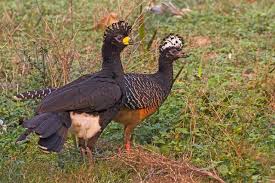
Corrientes made history again in the conservation of native fauna. Five specimens of native fauna known as muitú (Crax fasciolata), a bird that had been extinct in Argentina for over four decades, were transferred from the Biodiversity Park of Córdoba to the Great Iberá Park.
The initiative is part of the Muitú Conservation Program, promoted by the Rewilding Argentina Foundation and the BioCórdoba Municipal Entity. This effort marks a new chapter in the ecological restoration of Iberá, as their return strengthens the goal of recovering the lost natural balances in the ecosystems of northeastern Argentina.
The muitú, also known as pavón or pava del monte, is a large galliform bird that traditionally inhabits the forests and jungles of central and northern South America, including regions of Bolivia, Paraguay, and Brazil. In Argentina, it disappeared towards the end of the 20th century, mainly due to hunting and habitat loss caused by deforestation.
After decades of absence, their return represents a significant step towards environmental restoration. The five chicks were raised under controlled conditions, following protocols from the International Union for Conservation of Nature (IUCN). After a four-month quarantine in Corrientes, they began their pre-release stage, where they learn to recognize sounds, food, and natural shelters before being released.

The ecological role of the muitú in the forests of Iberá
The muitú plays an essential role in the ecosystem: it is a natural seed disperser. By feeding on wild fruits and moving through the forest, it helps regenerate native vegetation. This dispersal process is vital to maintain the structure and diversity of the forest, promoting the growth of new plants and ensuring food for other species.
The disappearance of the muitú in Argentina silently affected the balance of the forests in the northeast. Without its work, many trees lost their main means of dispersal, reducing the capacity for natural regeneration. Recovering the muitú means, therefore, reactivating a key link in the ecological chain.
Its return also serves as an indicator of environmental health. An environment capable of sustaining this species —which requires dense vegetation cover, abundant food, and tranquility— reflects the effectiveness of the restoration policies implemented in Iberá.
The presence of the muitú not only benefits the flora but also improves conditions for other animals. As native plants regenerate, shelters and food sources are created for birds, mammals, and insects, strengthening biodiversity as a whole.
A release that represents the rebirth of a species
The release of these five specimens is more than a symbolic action. It represents the culmination of years of work between public and private institutions to reverse biodiversity loss. The Iberá Park, transformed into a natural conservation laboratory, demonstrates that species can return if the ecosystems that support them are restored.
Furthermore, the return of the muitú opens the door to new opportunities for sustainable development for local communities. Eco-tourism, environmental education, and scientific research find in conservation a growth engine compatible with nature.
After more than 40 years, the song of the muitú resonates again in the forests of Corrientes. Their return symbolizes the resilience of wildlife and the commitment of a province that has bet on restoring part of its natural wealth to the country. Restoring this species not only means recovering a species: it is rebuilding a balance that benefits the entire ecosystem of Iberá.



