



A small town in northeastern Italy is facing an unusual situation that has begun to alter the daily life of its inhabitants. A colony of peacocks, which has steadily grown in recent years, is currently roaming streets, gardens, and rooftops, causing inconvenience and concern.
Currently, authorities estimate that the population is around 100 to 120 specimens. As a result, complaints about property damage, constant noise, and accumulation of droppings in public and private spaces have begun to multiply.
However, the conflict divides the community. While some residents demand urgent measures to reduce the presence of the birds, others defend their presence and reject any intervention that would involve removing them from the area.

Noise, damage, and problems in urban spaces
One of the main issues pointed out by residents is the noise produced by the peacocks, especially at night and during mating season. The constant squawking affects rest and disrupts the tranquility of the environment.
Additionally, several residents have reported damage to roofs, gardens, and vehicles. This is compounded by the presence of droppings on patios and sidewalks, a situation that raises concerns due to sanitary and coexistence issues.
On the other hand, there have also been traffic incidents related to the movement of the animals on the streets. This has increased the concern of local authorities, who are seeking alternatives to control the situation without affecting the welfare of the wildlife.
How did the colony expand?
The presence of peacocks in the area began more than a decade ago. In 2014, there were only about ten specimens concentrated near an old pine forest linked to an abandoned military colony.
Over time, the population rapidly reproduced and began to move towards urban areas. During the covid-19 lockdown in 2020, the reduction in human activity further facilitated their expansion.
Since then, the birds have found food and shelter in residential areas. They currently use trees, terraces, and rooftops as resting places while roaming streets and squares in search of food.
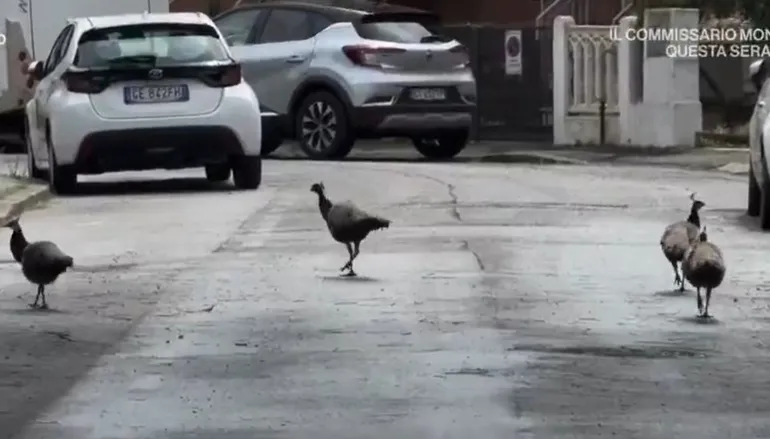
What factors might have influenced this invasion?
The growth of the colony is due to various environmental and human factors. Firstly, the absence of natural predators in urban areas allowed for a sustained reproduction of the specimens.
Additionally, the food provided by residents and tourists encouraged the birds to remain near homes. This constant access to food reduced the need to return to wild areas.
Moreover, urbanization and the transformation of natural habitats also influenced the behavior of the species. In many cases, animals find more stable conditions for survival in cities.
Furthermore, the health confinement temporarily altered human dynamics and allowed various species to occupy new spaces. This phenomenon was observed in several cities around the world during the pandemic.
The measures being considered by the authorities
In response to the advancement of the colony, the municipality has begun implementing preventive actions. Among them, they have placed signs to discourage the feeding of the animals and reduce their presence in residential areas.
Additionally, the authorities plan to conduct a census to accurately determine the number of specimens and evaluate possible environmental management strategies.
Among the alternatives is the partial relocation of some peacocks. The Safari Ravenna Zoo has expressed its willingness to receive part of the colony, although the process will require controlled captures, microchip placement, and coordination with specialized organizations.
Finally, the case reopens the debate on how to manage coexistence between wildlife and urban spaces in a context where ecosystems continue to be transformed by human action.


