



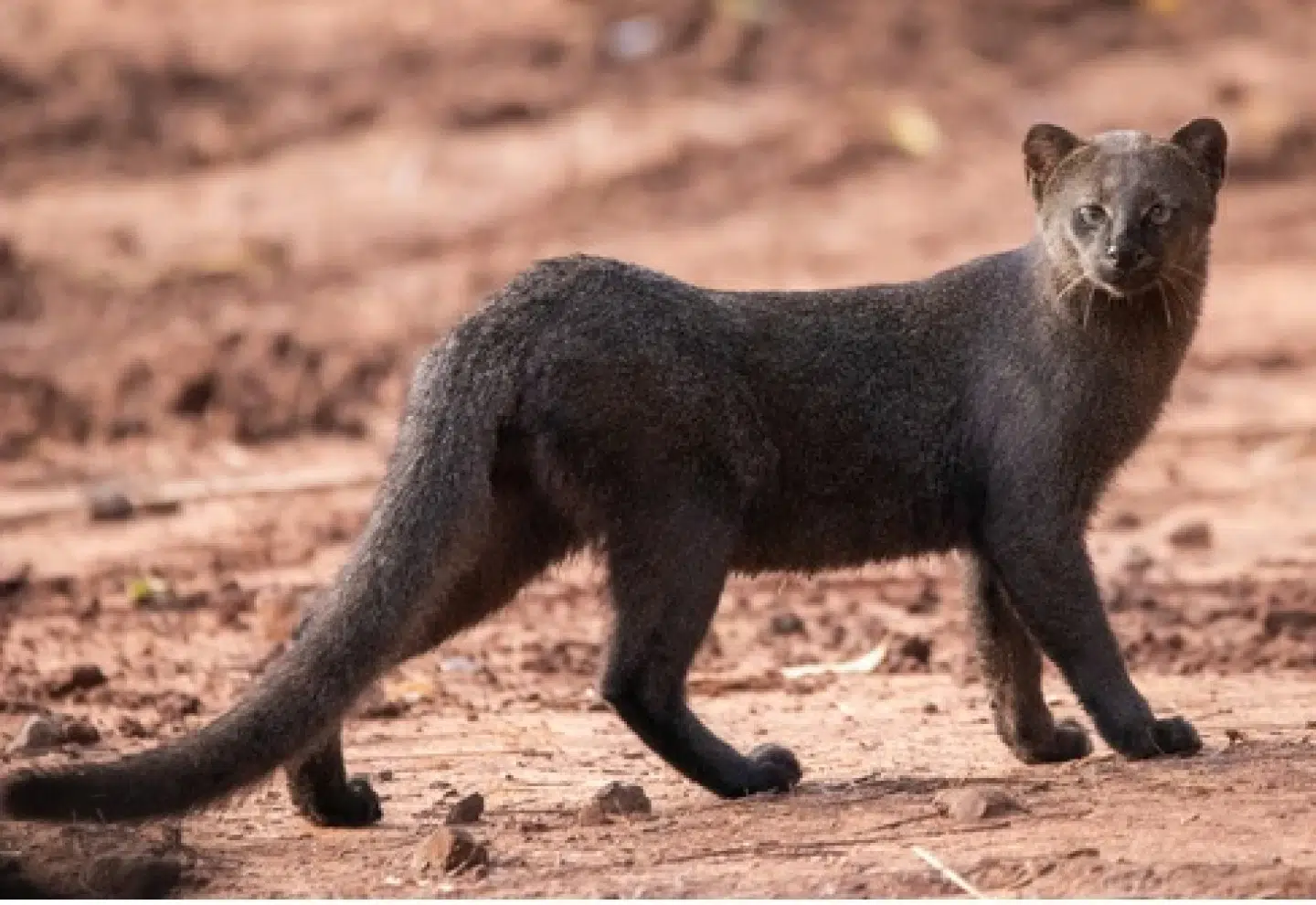
A yaguarundi, also known as the jaguarundi cat (Herpailurus yagouaroundi), was captured by cameras at the Grão-Pará Ecological Station, on the border between Brazil and Guyana. The recording occurred during long-term environmental monitoring conducted between November 2025 and February 2026, as part of the Grande Tumucumaque Program.
The feline, with an elongated body, small head, and long tail, is categorized as vulnerable to extinction by ICMBio. Although it inhabits all biomes of Brazil, its low population density makes each appearance a significant event for researchers and environmental organizations.
Amazon Monitoring Project
The monitoring in Grão-Pará is part of a project led by the Amazon Institute of People and the Environment (Imazon) and the Institute of Indigenous Research and Training (Iepé), along with indigenous communities.
- Coverage: about 10 million hectares in the Guiana Shield.
- Duration: monitoring of fauna and flora over 15 years.
- Preliminary results: 44 species of medium and large size recorded, including jaguar, puma, anteater, and tapir.
Researcher Jarine Reis explained that the monitoring will allow understanding how species respond to climate change and strengthen territorial protection.
Indigenous Participation
The project has nine trained indigenous monitors for fieldwork. Erlane Tiriyó, from the Boca do Marapi village, highlighted that the experience allowed expanding knowledge about the species and passing it on to new generations.
In August, a new route will be opened in the jungle, with the installation of 15 additional cameras and 15 bioacoustic recorders to capture sounds of birds and insects.
Ecological Importance of the Yaguarundi
Conserving the yaguarundi in Brazil is vital for several reasons:
- Ecological balance: regulates populations of rodents, birds, and reptiles, preventing imbalances in the food chain.
- Landscape connectivity: uses biological corridors between fragmented forests and agricultural areas, maintaining the connection between ecosystems.
- Regional vulnerability: although globally of “least concern,” in Brazil its populations are declining due to habitat loss.
Main Threats
- Habitat loss: agricultural expansion, fires, and urbanization.
- Diseases transmitted by domestic dogs: distemper and parvovirus.
- Road accidents: frequent mortality when moving through rural roads.
Conservation Actions
Long-term camera trapping projects, like that of Grão-Pará, are essential to assess the ecology and population density of the yaguarundi. The information obtained will allow designing more effective protection strategies and strengthening territorial integration with indigenous communities.
Organizations like the IUCN CatSG and Mongabay highlight the need for additional studies to better understand the species’ status and address the threats that compromise its survival.
The recording of the yaguarundi in the Brazilian Amazon is more than a scientific finding: it is a sign of hope for the conservation of an elusive and vulnerable feline.
Its presence confirms the importance of environmental monitoring programs and the joint work between researchers and indigenous people to protect biodiversity in one of the planet’s most critical regions.



