



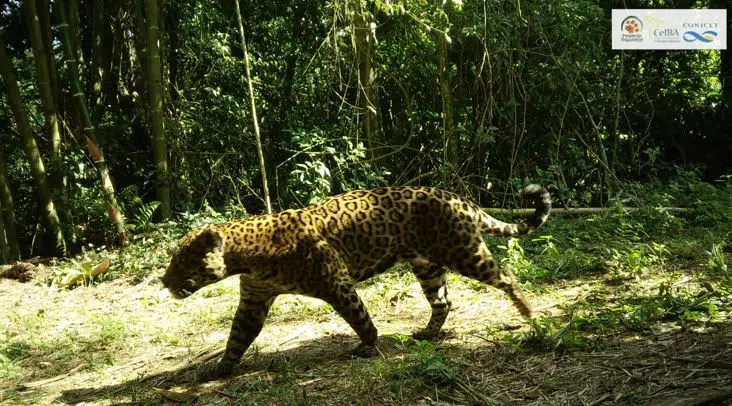
A recent report revealed a decrease in the population of jaguars in the Misiones jungle. There are between 64 and 110 individuals, with an estimated average of 84.
The data comes from a recent binational population monitoring study conducted in Argentina and Brazil, and the figure represents a slight decrease compared to previous years. This comes after a sustained period of population growth and stability.
The announcement was made in Posadas by the Fundación Vida Silvestre Argentina and researchers from CONICET, part of the Yaguareté Project (CeIBA – CONICET). It was during the Ordinary Meeting of the National Conservation Plan Management Committee for the Yaguareté Natural Monument.
## Decrease in the population of jaguars in the Misiones jungle
For both organizations, which have been working for over 20 years for the conservation of the species, this result raises an alarm regarding the sustainability of Argentina’s largest feline.
“The jaguar is an indicator of the environment’s health, this slight decrease reflects increasing pressure on our ecosystems. It is crucial that authorities and society as a whole double their commitment to its conservation,” warned Lucía Lazzari, coordinator of the Forests program at Fundación Vida Silvestre Argentina.
“Reinforcing comprehensive work on Misiones’ protected natural areas, focusing on hunting and conflicts between jaguars and domestic animals, is essential today to prevent this situation from worsening,” she said.
“Provincial and national parks need more funding and greater attention from the authorities,” she added.
On the other hand, Agustín Paviolo, an independent researcher at CONICET and leader of the Yaguareté Project, warned that “between 2006 and 2018, through coordinated work by government organizations, NGOs, and scientists, we managed to double the size of the population in Misiones.”
However, these new estimates show that “we cannot reduce resources and efforts for its conservation because we could lose all that has been achieved before.”
Population studies of the species began in 2003 when the population barely reached 40 individuals.
## Threats to the jaguar
Since then, thanks to conservation actions, territorial management, communication, and environmental education, the population was doubled and stabilized.
However, the current results show that the situation remains fragile and requires sustained and strengthened responses.
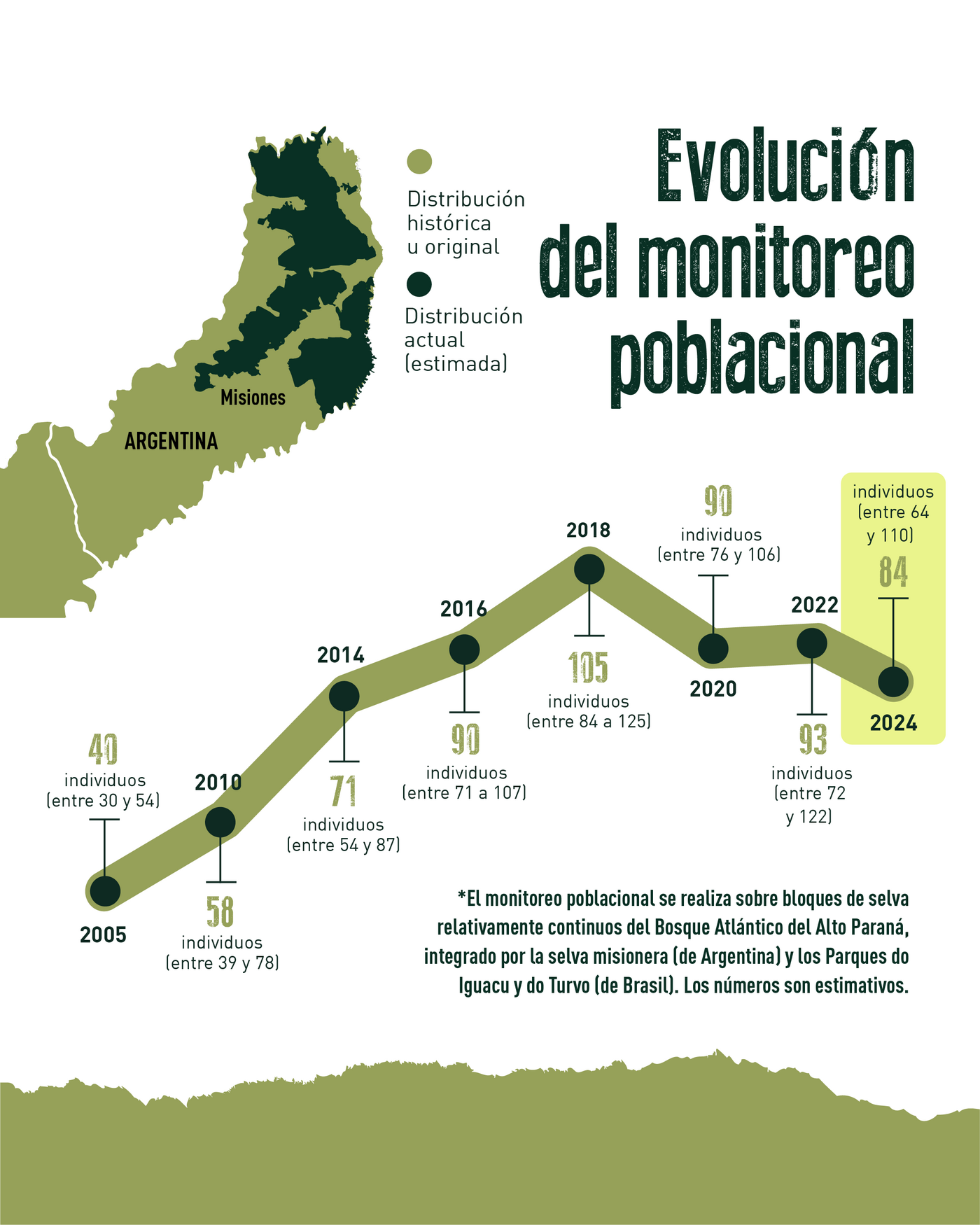
Despite this slight decline, Misiones still houses the largest population of jaguars in Argentina.
Hunting, a prohibited and punishable activity by law in Misiones, conflicts of large felines with livestock and domestic animals in rural areas near protected natural areas, wildlife being run over on roads and paths that cross jungle areas, and the reduction and fragmentation of the forest are the main causes that threaten the jaguar.
In Argentina, the species is considered critically endangered.



