



Japan once again stands out in the energy landscape with an innovation that surprises with its power and ambition. It is a super solar panel with a capacity of 20 GW, equivalent to what 20 nuclear reactors would produce.
This advancement is part of a path started centuries ago when the photovoltaic effect was discovered: the ability of certain materials to generate electricity when exposed to solar light. With technological evolution, solar panels ceased to be an expensive rarity and became massive energy solutions.
In the 1950s, the first silicon solar cells demonstrated their efficiency, and in 1954, Bell Labs introduced the first commercial solar panel. Although its performance was low and its manufacturing costly, it opened the door to an energy revolution that now reaches a new peak.
Now, Japan takes an even bigger leap with this perovskite technology superpanel, which promises to change the paradigm of large-scale solar generation and accelerate the transition towards a cleaner energy matrix.
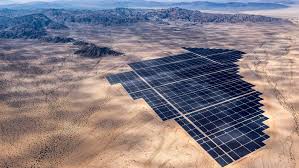 Japan advances solar energy with a superpanel. Photo: ECOticias.
Technology, Self-sufficiency, and Clean Energy
The development of this solar panel is led by the Japanese company Sekisui Chemical, with governmental support. The goal is clear: reduce emissions and achieve carbon neutrality by 2050.
The projected deployment by 2040 aims for renewable energies to represent between 40 and 50% of the national energy mix. In this context, the superpanel represents a key step in reducing dependence on fossil fuels and moving towards energy self-sufficiency.
In technical terms, it is estimated that its capacity will be able to supply more than 6 million households. Currently, urban tests are being conducted in Tokyo and Yokohama, studying aspects such as the durability and efficiency of perovskite panels (PSC) under real conditions.
Use of Solar Panels in Japan
Japan has historically been a country committed to the development of clean technologies. After the nuclear accident in Fukushima, the push for renewables became strategic, and solar panels began to take a leading role.
Solar roofs, floating installations, and systems integrated into buildings became common. In rural and urban areas, the country maximizes its limited available surface to deploy efficient solar structures.
The new superpanel is part of this territorial optimization policy, with a lightweight, flexible, and adaptable design. Its production through a ‘roll-to-roll’ system allows for scaling up manufacturing more quickly, reducing costs, and improving access.
 Solar panels.
A Future Powered by the Sun
The pilot plant of Sekisui Chemical already produces these 30-centimeter wide panels, with an initial efficiency of 15% and an estimated lifespan of ten years. Although these numbers may seem modest, the low weight and ease of installation more than compensate for that difference.
Perovskite technology offers advantages over traditional panels: it is cheaper to produce, allows for flexible designs, and adapts to new surfaces. Additionally, its ability to generate energy with low solar radiation is ideal for regions with variable climates.
The challenge will be to scale up this innovation without sacrificing performance or durability. If they succeed, Japan will become a global reference not only in technological innovation but also in sustainability and climate leadership.
This superpanel not only represents a technical feat. It marks a turning point in the use of solar energy as the main source in the ecological transition. With bold decisions like this, Japan positions itself among the key players in a cleaner and more efficient future.



