



A team from the **Nanyang Technological University (NTU)** in Singapore has developed an innovative technique that allows for the **reuse of glass from solar panels** at the end of their End-of-Life (EoL).
The advancement represents a significant step towards a **circular economy** in the **solar energy** and **electric storage** sectors by improving the performance of **solid-state lithium batteries**.
From waste to strategic resource: the potential of photovoltaic glass
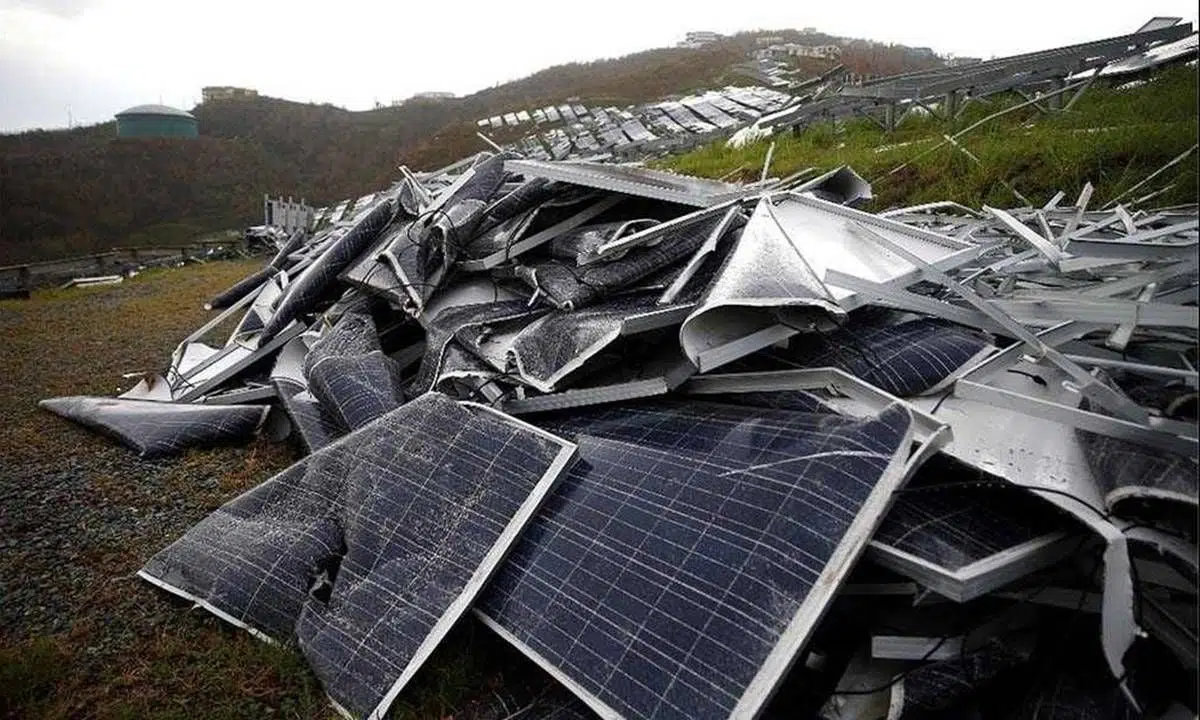
The **glass**, which makes up most of the weight of solar panels, usually has **limited recycling options** due to the high energy costs of conventional methods.
However, the NTU team demonstrated that this material can become a **functional additive** for **solid polymer electrolytes (SPE)** used in solid-state lithium batteries.
Through a **heat-free crushing process**, a powder of **glass nanoparticles** about 300 nm in size is generated and then integrated into electrolytes based on **polyethylene oxide (PEO)**, a polymer widely used in battery manufacturing.
This approach avoids energy-intensive procedures like separating **ethylene-vinyl-acetate (EVA)** components.
Technical improvements and proven efficiency
Laboratory tests confirmed that the solid electrolyte modified with **glass nanoparticles** increased its **ionic conductivity** from 9.66×10⁻⁶ S/cm to **1.10×10⁻⁵ S/cm** with just a 2% weight addition.
Furthermore, **lithium metal batteries** with this component showed a **superior capacity** after 80 cycles: **123.07 mAh g⁻¹**, representing an **8.3% increase** compared to standard references.
Towards a more circular energy synergy
According to lead researcher **Yeow Boon Tay**, this development “demonstrates that discarded solar glass has great potential as a functional material in advanced batteries.”
The study promotes a **direct interrelation between two expanding industries**, fostering a **more sustainable and interconnected** approach between photovoltaic generation and energy storage.
Additionally, the NTU team is advancing in **low-temperature methods to recycle silicon** from panels, intended for the production of **anodes for lithium batteries**, expanding the horizon towards an even more regenerative energy system.
Circular innovation to tackle the challenge of solar waste
The new approach **reduces the environmental impact** of the energy industry by recovering valuable materials from unused components like glass and silicon and reusing them with low energy consumption.
This solution not only optimizes battery performance but also **addresses the growing issue of solar waste**, improving the image and sustainability of a key technology for the future.



