



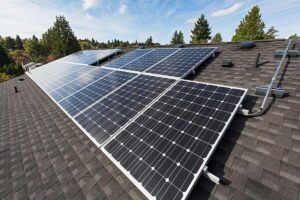
South Australia, considered one of the most advanced territories in the world in renewable energy, set another historic record. On Christmas Day, rooftop solar generation far exceeded electricity demand.
In this context, the grid recorded a negative demand of –263 megawatts at 1:30 PM. This phenomenon occurred in a scenario of low festive consumption and high distributed solar production.
Thus, the energy generated in homes covered 117% of the underlying demand. The surplus forced a real-time redefinition of the electrical system‘s operation.

The repetition of the record and a consolidated trend
The next day, the behavior repeated. Rooftop solar energy again covered 110% of the underlying demand, while the grid’s minimum demand dropped to –165 megawatts.
Throughout both festive days, South Australia recorded nine half-hour intervals where solar generation exceeded 100% of demand. Additionally, this phenomenon was repeated in 78 intervals throughout the year.
In this way, the state consolidated a trend that reflects the rapid adoption of clean technologies at a domestic scale.
A unique grid compared to the rest of the country
No other Australian state presents similar levels of rooftop solar. Therefore, South Australia is currently the only grid experiencing negative demand recurrently.
Victoria showed the next lowest values, with a minimum demand of 1,287 megawatts. In contrast, Tasmania, with a smaller grid, barely reaches solar contributions of 20%.
This difference explains why the technical challenge is concentrated in the south of the country, where the energy transition is advancing at a faster pace.
Interconnections, gas, and batteries as backup
South Australia can manage these surpluses thanks to its interconnections with Victoria and New South Wales. These connections allow the export of surplus renewable energy to other regions.
However, the system requires maintaining at least one operational gas unit to ensure critical grid services. This is complemented by the strategic role of batteries.
During days of higher solar generation, Neoen’s Blyth battery was instructed to stay synchronized and absorb surpluses, acting as a system backup.
Solar energy and its multiple benefits
The advancement of rooftop solar directly reduces greenhouse gas emissions. Each day of negative demand implies fewer fossil fuels in operation.
Moreover, distributed generation strengthens energy resilience and reduces costs for households. In the long term, this translates into greater electrical security and more stable rates.
Finally, South Australia’s model demonstrates that a rapid transition is possible. With more interconnections and storage, the path towards 100% renewables projected for 2027 appears increasingly closer.



