



An extensive investigation carried out over almost two years led to the dismantling of an organization dedicated to the capture and illegal commercialization of wildlife in Argentina. The case once again highlighted the threats that biodiversity faces due to animal trafficking, one of the illicit activities that most harms natural ecosystems.
The investigation began following a complaint related to possible violations of the Law 22.421 on Wildlife Conservation. From that moment, officers from the “Buenos Aires” Squadron carried out intelligence tasks, cyber patrolling, and communication analysis to identify those responsible.
After 1 year and 10 months of work, the investigators managed to reconstruct the operation of a network composed of four men involved in different stages of the illegal circuit, from the capture of specimens to their distribution and sale through social networks.

An organization with national reach
The monitoring tasks allowed determining that one of those involved was posting wild animals for sale and coordinating deliveries in different parts of the Buenos Aires suburbs, mainly in Lomas de Zamora and Almirante Brown.
Subsequently, the investigations identified other members who performed specific functions related to hunting, temporary storage, transportation, and distribution of specimens to different regions of the country via parcels.
With the gathered evidence, the Federal Prosecutor’s Office No. 1 of Lomas de Zamora ordered simultaneous raids on six properties in the province of Buenos Aires and two located in the city of Rosario, province of Santa Fe.
Rescue of animals and seizure of items used for illegal activity
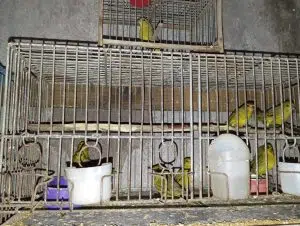
During the operations, 88 birds were rescued belonging to various species, including talking parrots, thrushes, blue tanagers, grosbeaks, buntings, cardinals, calafates, goldfinches, and celestinos.
Additionally, the agents found 20 fish, 13 hamsters, and four turtles. They also discovered eight dead birds, including goldfinches and cardinals, as well as the skull of an antelope.
Furthermore, 2 kilos 633 grams of cannabis sativa were seized, along with a .22 long caliber rifle, four air guns, ammunition of various calibers, pellets, and nine wooden traps used for capturing animals.
As a result of the operation, two people were detained while another two remain linked to the judicial case.
Penalties contemplated for wildlife trafficking in Argentina
The Law 22.421 establishes sanctions for those who capture, transport, commercialize, or keep specimens of wildlife without the corresponding authorizations. Depending on the severity of the acts and the species involved, penalties may include economic fines, confiscation of the animals, and prison sentences.
Furthermore, when these activities are combined with other crimes, such as illegal possession of weapons or clandestine trade, the judicial consequences can significantly worsen.
Environmental authorities consider that combating wildlife trafficking is a key tool for protecting biodiversity, as this activity reduces wild populations, alters ecosystems, and puts vulnerable species at risk.
Recovery and protection of biodiversity
After the raids, the rescued specimens were placed under the care of specialized organizations. In Buenos Aires, the Environmental Control Brigade of the National Secretariat of Environment intervened, while in Santa Fe, the General Directorate of Sustainable Wildlife Management of the Ministry of Environment and Climate Change collaborated.
The animals were transferred to rehabilitation centers where they will receive veterinary care, health evaluation, and recovery processes before a potential reintroduction to their natural environment.
This type of operation is crucial to halt the illegal trade of species and strengthen the conservation of native wildlife, an essential natural heritage for the ecological balance and healthy functioning of Argentine ecosystems.



