



The Arctic ice melting is advancing and is no longer news. The situation worries the scientific community due to the direct consequences it would bring to the planet, and a new study indicated when it will stop being as we know it.
A new climate normality for temperature and sea ice in the Arctic is expected in the near future. According to the analysis, it will be before 2050. Additionally, rainfall will reach an analogous state by the end of the century.
## Arctic Ice Melting and a Key Year
Scientists from the University of Groningen and the Royal Netherlands Meteorological Institute (KNMI) developed a method to predict this new climate normality.
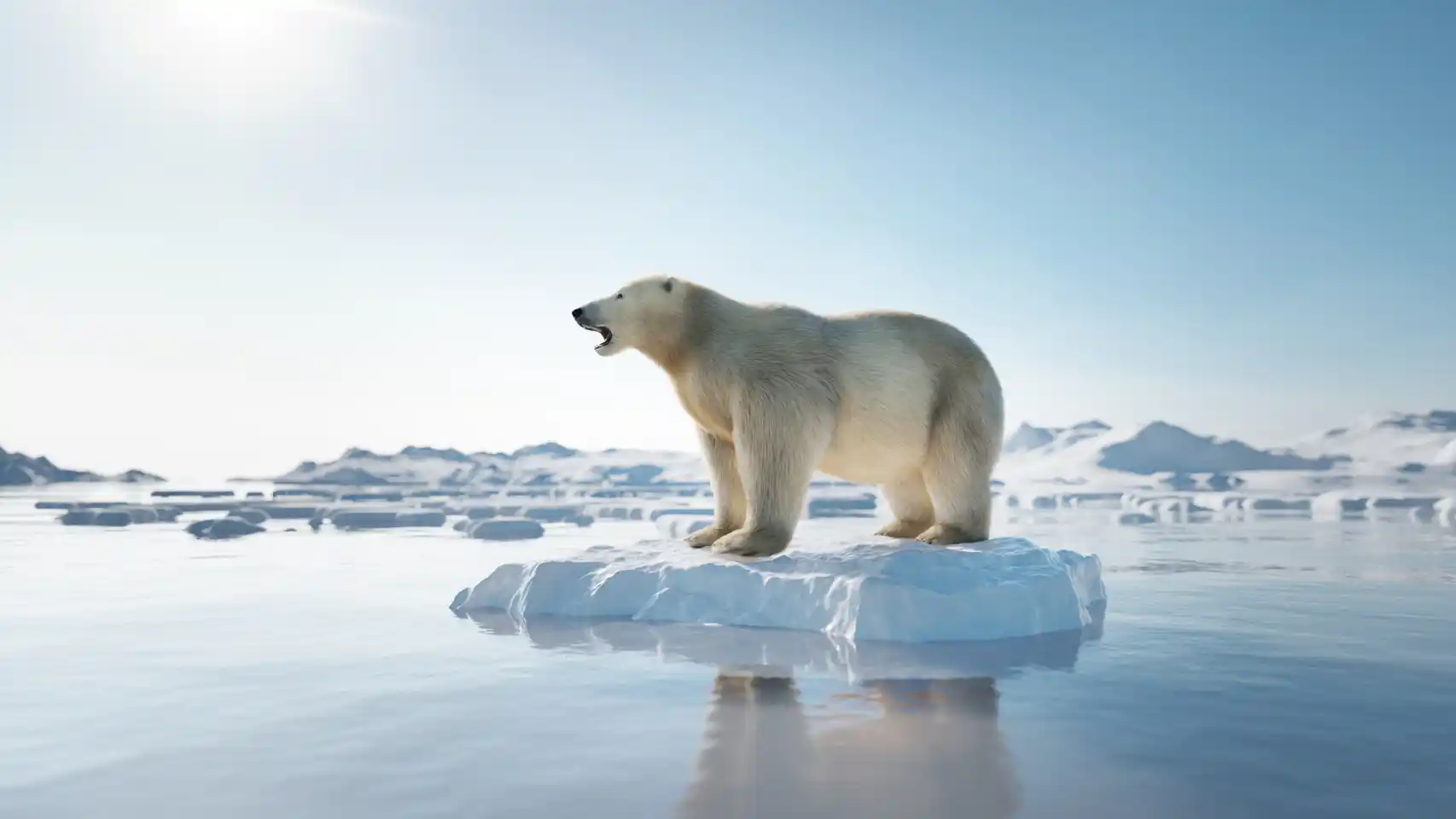
They named it ToE (Time of Emergence) and it exceeds the threshold of anomalous climate in various Arctic regions. They based their analysis on warming, humidity, and sea ice melting.
The results were published in the journal Scientific Reports. The authors used 14 global climate models and fed them with various greenhouse gas emission scenarios and aerosol quantities to reconstruct the past and predict future climate changes in the Arctic.
## What Defined the ToE
The ToE was defined as the moment when the values of a climatic variable have been higher than 97.5% of historical values for 10 consecutive years.
The results show that, while the Arctic is warming rapidly, it has not yet reached the ToE for temperature and sea ice cover overall. This is mainly due to the very high natural variability of these Arctic variables.
## How Climate Change is Predicted
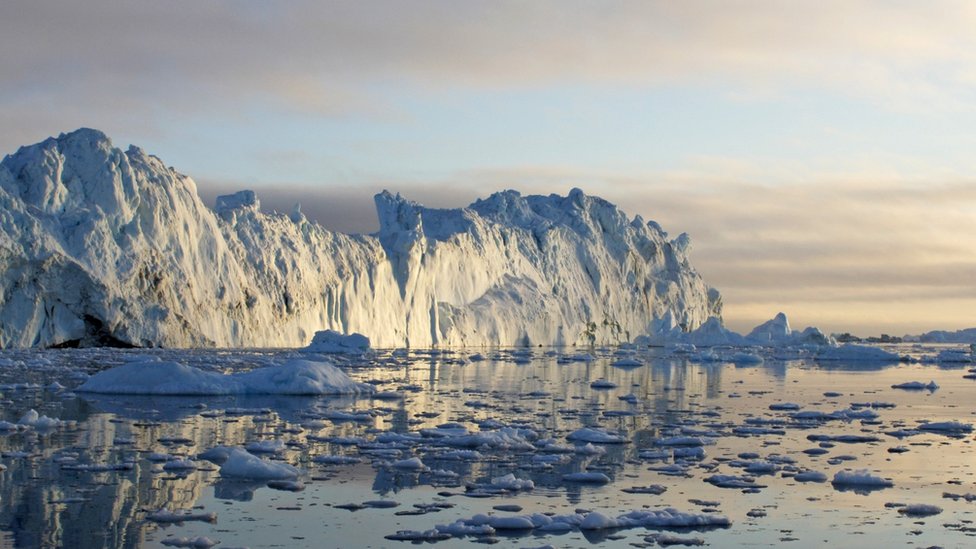
The sea ice thickness has already reached a new climatic state in the central Arctic region, given that the year-to-year variability of thickness is relatively small.
This makes sea ice the most sensitive predictor of climate change.
“We were excited to see that we could estimate the ToE consistently and robustly,” says Richard Bintanja, Professor of Climate and Environmental Change at the University of Groningen and corresponding author of the study to EuropaPress.
“The next step is to apply this knowledge in society, policies, and ecology,” he added.


