



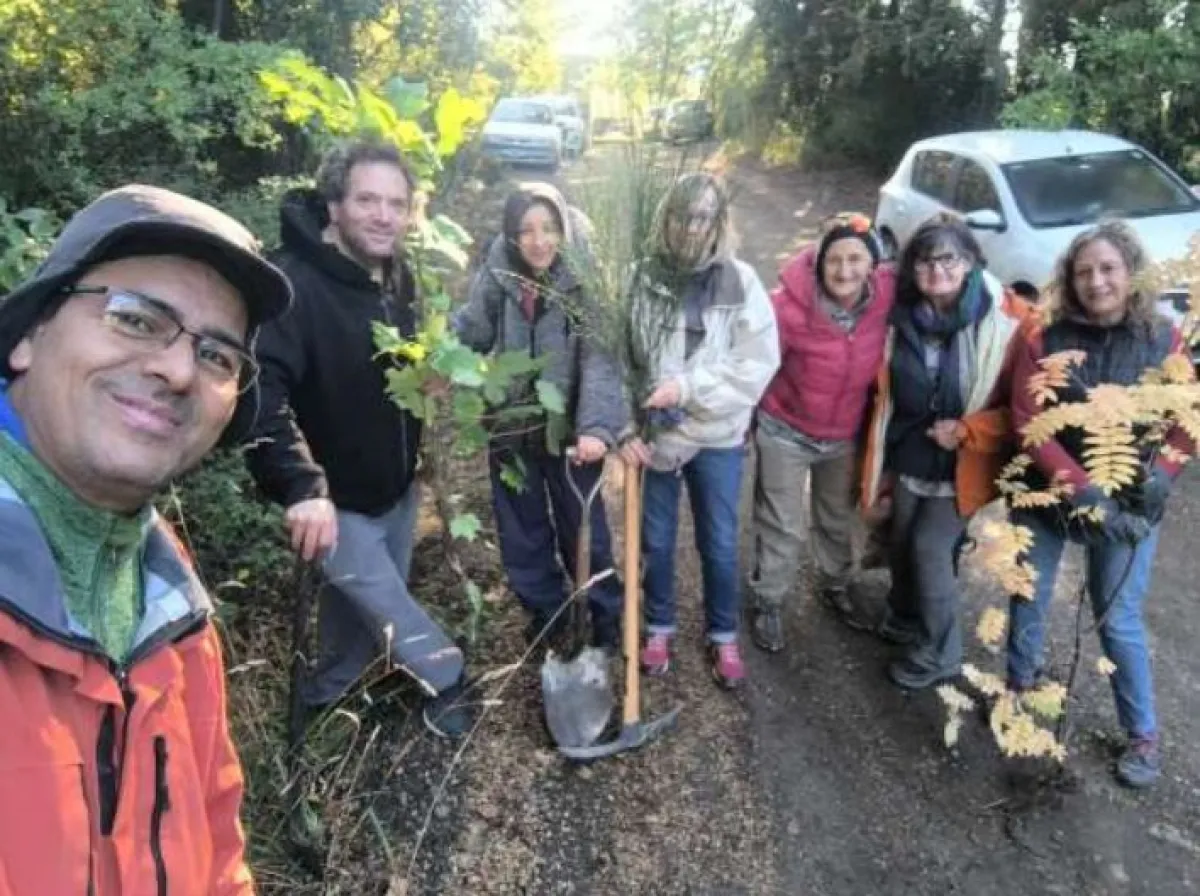
Last Saturday, March 28, residents and volunteers from the west of Bariloche participated in an environmental day at the Reserva Natural Urbana Bosque de la Ermita, where more than 470 invasive plants were removed and cleaning tasks were carried out.
The activity, promoted by the Juntas del Oeste as part of the Interpretation Trail project, seeks to preserve the native ecosystem and strengthen environmental awareness through community participation.
Extraction of Invasive Species
The day was supervised by biologist and ecologist Daniel Aldo Gómez, who provided an initial talk to teach how to distinguish exotic species from native ones. Among the specimens removed were:
- 282 wild cherry trees
- 130 musk rose bushes
- 26 rowan trees
- 13 hawthorns Additionally, garden plums, European maples, ornamental laurels, brooms, junipers, and Oregon pines were extracted.
The specialist explained that these invasive species spread rapidly and displace native vegetation, causing biodiversity loss and alterations in natural environments.
Project Continuity
The organization highlighted the commitment of the residents and announced that the work will continue with new extraction days, in addition to the placement of informative and preventive signage within the protected area.
The goal is to reinforce environmental awareness and promote the care of this natural space that is part of the city’s heritage.
Importance of Bosque de la Ermita
The Reserva Natural Urbana Bosque de la Ermita, located in the western area of Bariloche, plays a key role in the conservation of the native ecosystem within the urbanized environment. Its relevance is expressed in several aspects:
1. Conservation of Native Biodiversity
- Critical refuge for native flora and fauna of the Andean-Patagonian region.
- Preservation of emblematic species such as coihues and cypresses.
- Control of invasive species that threaten the original vegetation.
2. Ecosystem Services
- Water regulation: retains rainwater and protects basins that feed streams and lakes like Nahuel Huapi.
- Climate change mitigation: acts as a carbon sink and air purifier in an area of increasing urban development.
3. Social and Educational Value
- Functions as an “open classroom” for residents and schools.
- Interpretive trails and environmental education workshops are projected.
- Management actively involves residents, strengthening the sense of belonging and defense of the territory against real estate pressure.
4. Legal Framework and Planning
- Supported by specific municipal regulations.
- Has a Management Plan and Particularized Plan (Ordinance 226-16) that regulates permitted activities to ensure its long-term preservation.
The community day at Bosque de la Ermita demonstrates how citizen participation can be decisive in the protection of urban natural reserves.
The extraction of invasive species and the cleaning of the area not only restore the native ecosystem but also strengthen Bariloche’s environmental identity and its commitment to conservation.



