



China, the country that for decades led the growth of global carbon emissions, is beginning to show signs of reversal. A recent analysis indicates that its CO₂ emissions decreased in the early months of 2025, marking a possible ecological turning point for the Asian giant.
The report points to a 1.6% drop in emissions compared to the same period last year. This trend had already been hinted at in 2024 and is now strengthening thanks to the accelerated expansion of clean energy sources.
During the first months of the year, the use of fossil fuels in electricity generation also declined. For the first time, more than a quarter of the electricity came from wind and solar sources.
This transition represents an unprecedented change for an economy historically dependent on coal, which still plays a significant role as an energy backup in times of international uncertainty.
 Global CO2 emissions: the most polluting companies.
Energetic transition: progress, challenges, and carbon-free opportunities
The change in China’s energy matrix was driven by an ambitious strategy. In just 2024, China installed more solar capacity than the entire European Union combined. This rapid pace allowed them to stabilize emissions and strengthen their energy security.
The commitment to renewables also aligns with the evolution of China’s economic model. Carbon-intensive industries, such as steel or cement, are losing prominence to more sustainable sectors such as biotechnology or electric vehicle manufacturing.
However, halting growth does not guarantee sustained reduction. Experts warn that progress could stagnate if more aggressive policies are not implemented, especially in an uncertain geopolitical context and with slowing economic growth.
The big challenge will be to turn this pause into a long-term downward trajectory. To achieve this, China must maintain the current momentum and make firm commitments at the upcoming COP30 climate summit.
The global impact of China’s shift
Global climate action largely depends on the direction China takes. Its share of global emissions is around 30%, and its decision to reduce or maintain them can tip the balance of global warming.
The fulfillment of the commitment made in the Paris Agreement —to reduce its carbon intensity by more than 65% by 2030— is still in doubt. The pandemic and high energy demand have jeopardized that goal.
However, if China turns the recent emissions decline into a sustained trend, not only will it progress towards its climate goals, but it will also strengthen its international leadership in ecological transition.
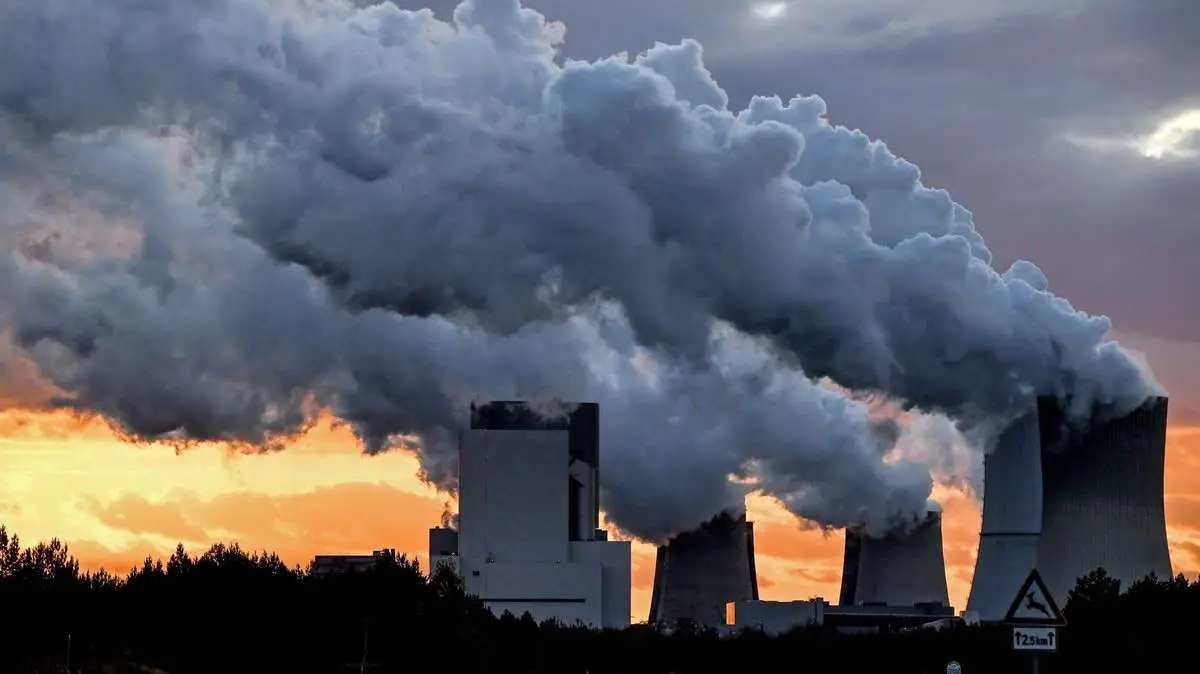 Carbon emissions.
What environmental measures has China taken in recent years?
In recent years, China intensified its environmental efforts through a rapid transformation towards renewable energies. The country led the installation of solar and wind capacity worldwide, accounting for more than half of the new infrastructure of this type between 2023 and 2025. This expansion allowed, for the first time, wind and solar energy to generate more than a quarter of its electricity.
Additionally, the Chinese government promoted policies to reduce its coal dependence, including the closure of polluting plants and the modernization of its power grid to integrate clean sources. It also boosted economic sectors with a low carbon footprint, such as electric mobility, biotechnology, and information technologies.
In parallel, China strengthened its environmental legal framework, tightening regulations on industrial emissions and air quality. These measures, along with increasing investment in green innovation, aim not only to reduce local pollution but also to meet its international commitments under the Paris Agreement.



