



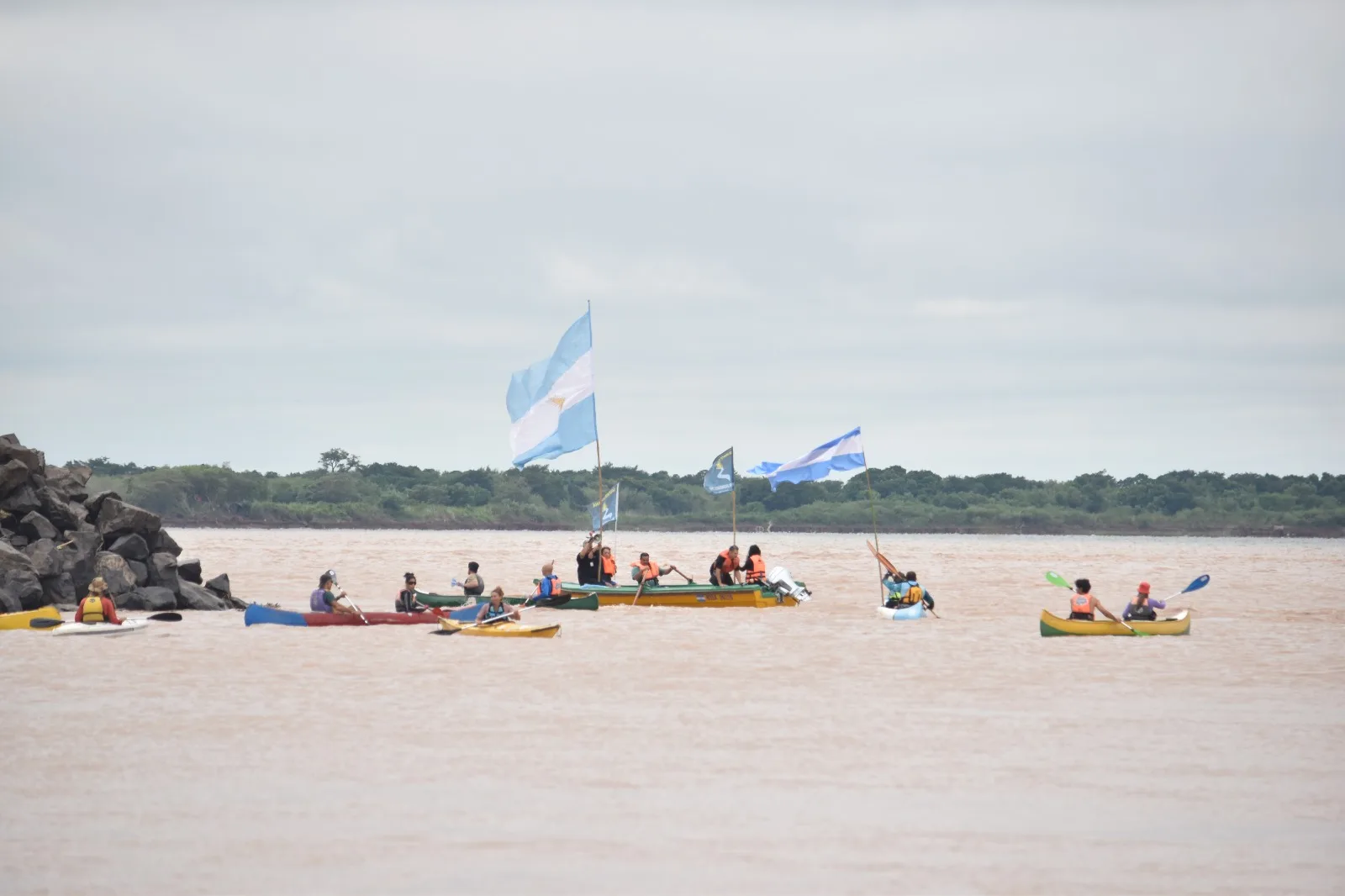
This weekend marked the beginning of a new paddle in defense of the Paraná River, an initiative driven by socio-environmental organizations warning about the risks of new interventions in the river’s course. The journey aims to raise awareness about the ecological impact that dredging projects and changes in the management of the river system could generate.
The journey, called “Save the Paraná and its wetlands”, began at the so-called kilometer 0, near Isla del Cerrito, in the province of Chaco. From there, the participants embarked on a journey that will cover approximately 800 kilometers downstream over 14 days.
Initially, the boats were supposed to depart from Las Palmas, also in Chaco. However, weather conditions forced a change in the starting point to ensure the safety of the participants.
The initiative was driven by the Forum for the Recovery of the Paraná and includes the participation of environmental, social, union, cultural, and student organizations from various provinces in the region. Additionally, the journey aims to connect territories and strengthen the debate on the environmental future of one of South America’s most important rivers.
Environmental concern over dredging projects in the river
The main concern of the participating organizations is related to the project to deepen the river dredging to 44 feet to facilitate the entry of large cargo ships intended for grain export.
According to environmental groups, this intervention could significantly alter the natural functioning of the river ecosystem. For this reason, they consider it necessary to assess its impacts before proceeding with large-scale works.
Currently, the river dredging is maintained at approximately 36 feet. However, even at that depth, changes in the dynamics of the water system have already been recorded. The effects noted include the blocking of water mouths, the reduction of lagoons and streams, and the alteration of areas that serve as refuge and breeding grounds for fish.
Consequently, specialists and social organizations argue that any further modification must consider rigorous environmental studies and planning that prioritizes the conservation of the ecosystem.
The Paraná wetlands and their ecological value
The wetlands associated with the Paraná River form one of the most important ecological systems in South America. These environments function as natural water regulators and biodiversity reservoirs.
Additionally, they act as natural filters that help improve water quality and reduce the impact of floods. Thanks to their natural structure, they also contribute to carbon storage and mitigate the effects of climate change.
These ecosystems are home to a vast diversity of species of fish, birds, reptiles, and mammals. At the same time, many local communities depend on these environments for traditional activities such as artisanal fishing.
Furthermore, the wetlands play a key role in the reproductive cycles of numerous aquatic species. Therefore, any alteration of the river’s natural flow can directly affect the ecological balance of the entire region. Protecting these environments has become a priority for scientists and environmental organizations working on the conservation of the Argentine coast.
A mobilization that combines culture, history, and environment
The start of the journey brought together representatives of organizations, residents, and environmental leaders from various localities in Chaco, Corrientes, Formosa, Entre Ríos, and Santa Fe. The event also saw significant youth participation.
During the meeting, cultural activities, informative exhibitions, and spaces for debate on the river’s future and the importance of preserving its ecosystems were held. Additionally, participants visited the local museum to learn about the region’s historical aspects.
Throughout the day, community meals were shared, and presentations on the importance of the Paraná as a natural and cultural heritage were developed. Activities related to the commemoration of International Women’s Day were also carried out.



