



The fires in Patagonia reached critical levels this Sunday, with active hotspots consuming more than 50,000 hectares in Los Alerces National Park.
This situation forced the National Government to declare the Fire Emergency in Chubut, Río Negro, Neuquén, and Santa Cruz last Friday.
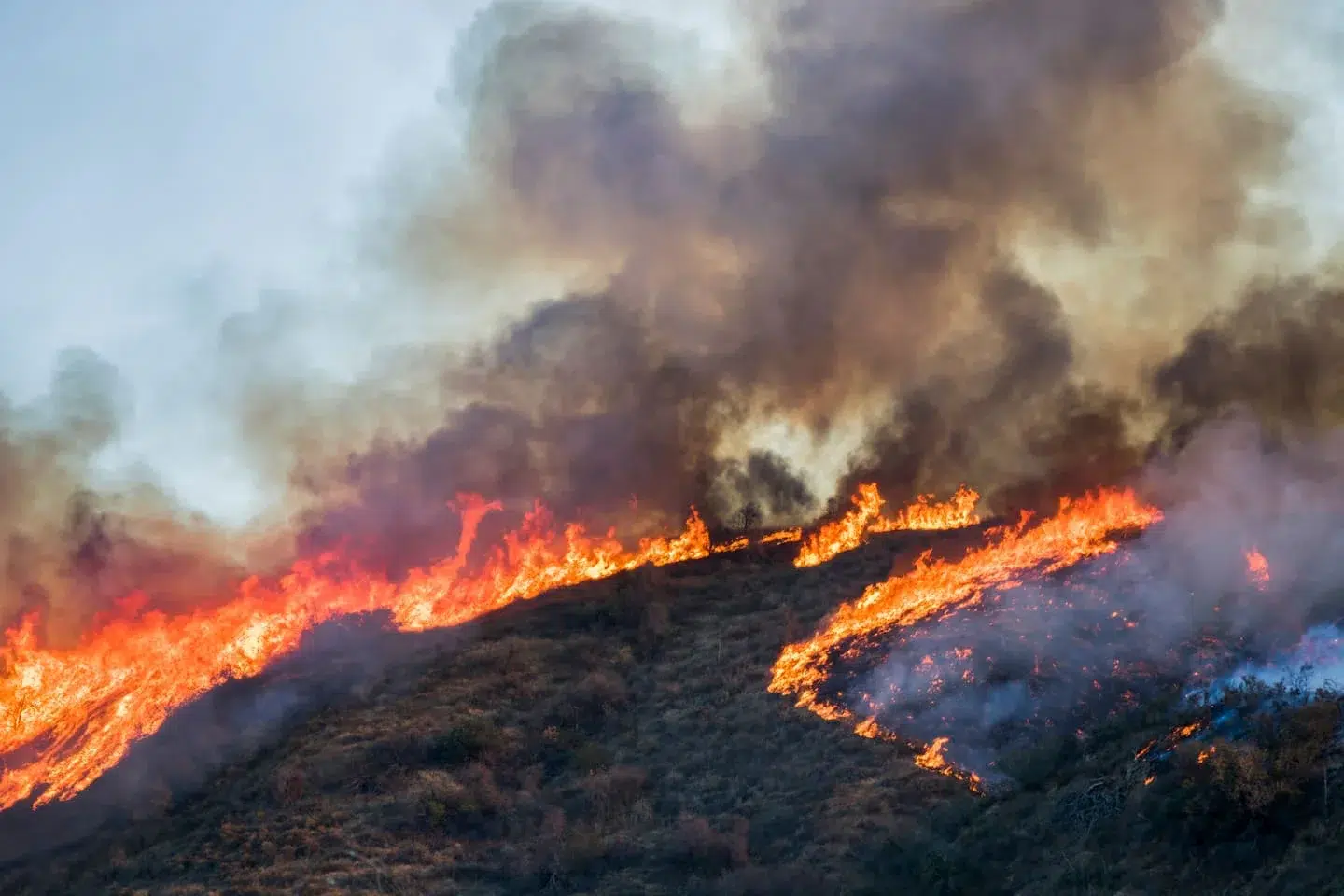
The region is experiencing one of the most severe seasons in recent years. The high temperatures, intense winds, and prolonged drought have created an adverse scenario that favors the rapid spread of the fire.

Four national parks under threat from the fires in Patagonia
The National Parks Administration (APN) reported that 247 agents are working in coordination with the Federal Emergency Agency (AFE).
This is in addition to another 265 fighters from the Chubut jurisdiction to tackle the crisis.
Currently, the fires in Patagonia are simultaneously affecting four protected areas.
In Chubut, besides Los Alerces, there are also hotspots in Lago Puelo, where new fires were started by lightning strikes.
Meanwhile, Nahuel Huapi National Park (Río Negro and Neuquén) has hotspots in hard-to-reach areas.
Finally, Lanin Park (Neuquén) was also affected by lightning and adds to the fires in Patagonia.
The emergency operation in Los Alerces
Los Alerces National Park has become the epicenter of the environmental disaster caused by the fires in Patagonia.
Currently, the fire remains active in the North and Central sectors, threatening ancient forests in the region.
Due to this, authorities have ordered the closure of the North Entrance of the park.
They also restricted recreational boating on Lake Futalaufquen to facilitate the operation of the 20 aerial resources deployed for the fires in Patagonia.
“It is reminded that official vehicles involved in logistical support have absolute priority of passage,” emphasized the national agency’s authorities.

In this way, the APN keeps another 300 brigade members from different regions of the country on alert.
The goal is to ensure replacements on the fire line given the magnitude of the fires in Patagonia.
Other critical hotspots in Chubut
The fires in Patagonia have spread to different points in Chubut. Hotspots have been recorded in Puerto Patriada, Epuyén, El Hoyo, and Cholila, where tens of thousands of hectares have been affected.
In Puerto Patriada, the fire moved eastward towards National Route 40.
The city of Esquel is not in immediate danger, although the smoke has affected visibility and the respiratory health of the inhabitants.
The situation in Santa Cruz and Río Negro
This weekend, the National Government extended the declaration of Fire Emergency to Santa Cruz.
The fires in this area of Patagonia are concentrated south of Puerto San Julián. There, they impact sensitive sectors such as the Provincial Reserve Peninsula de San Julián and the Interjurisdictional Marine Park Makenke.
The fire came to be located about 4000 meters from inhabited areas in Campo El Montañés. However, authorities indicated that there is no immediate risk to the homes.
In Río Negro, there are no active hotspots of great magnitude, although Bariloche and El Bolsón remain at “very high” risk of fires.
Therefore, the provincial government sent reinforcements and aerial resources, including a helicopter that dropped 460,000 liters of water to assist Chubut.
The resources deployed for the fires in Patagonia
The national operation mobilized 426 brigade members and a significant fleet of logistical support. 20 aerial resources were deployed, including water-bombing planes and helicopters, along with volunteer firefighters and AFE support.
The coordination between the different jurisdictions is ongoing, with a priority on personnel safety and the preservation of ecosystems.
The daily APN report highlighted that no precipitation is expected in the coming days, which worsens the outlook for the fires in Patagonia.



