



The intense polar wave affecting much of the country surprised this Thursday with snowfalls in Mar del Plata, Batán, Sierra de los Padres, Tandil, and other localities in the region.
Between the early morning and the morning, residents recorded the fall of snowflakes, sleet, and streets tinged with white on a day marked by extreme cold.
The phenomenon began around 6 a.m. in Sierra de los Padres, with sub-zero temperatures. Residents captured images of snow on houses, gardens, and vehicles, creating a winter landscape that hadn’t been seen with such intensity for several winters.
Postcards in the city and the coast
- In Mar del Plata, sleet was observed in various neighborhoods before dawn.
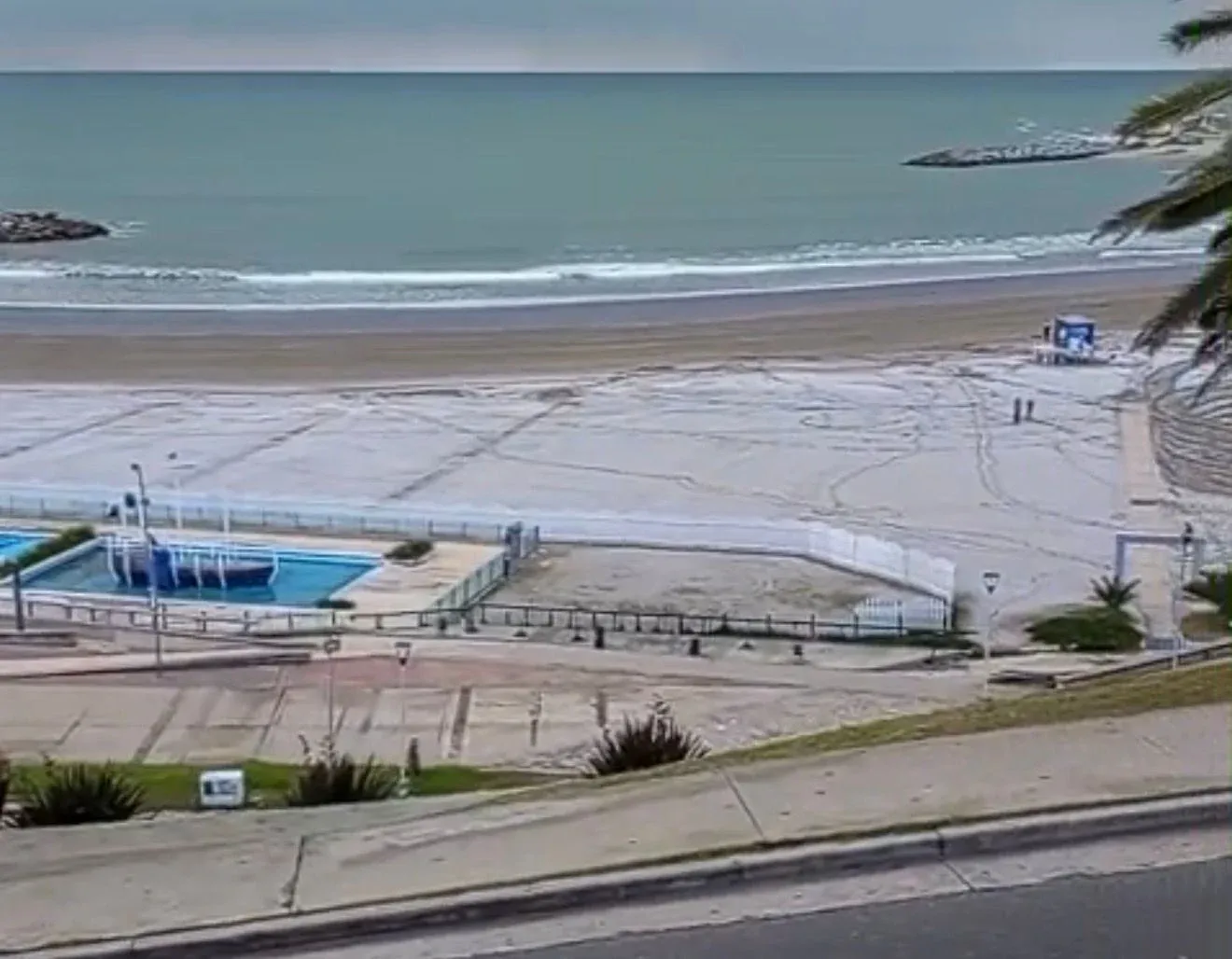
- At 8 a.m., beaches like Varese and Cabo Corrientes woke up with sand covered by a thin white layer.
- On the southern beaches, the snowfall was heavier, forming a thick layer on the sand.
- Residents recalled the historic snowfall of August 1, 1991, when the city experienced a similar episode.
- In Batán, the snowflakes managed to cover gardens, vehicles, and rural roads.
- In Tandil and Benito Juárez, frost and snow painted streets, squares, and roofs white.
Community reactions
The phrase “It’s snowing!” was repeated in schools, workplaces, and social networks. Students and teachers went out to the patios to feel the fall of the snowflakes, while residents of different neighborhoods took the opportunity to take photos and videos.
The phenomenon generated enthusiasm and surprise, even among those who doubted the forecast of the National Meteorological Service (SMN), which had anticipated the possibility of light snowfalls in General Pueyrredón.
Meteorological conditions
- At 8 a.m., the temperature in Mar del Plata was 0.5 ºC, with a wind chill of -3.4 ºC.
- At 10 a.m., the thermometer read 1.8 ºC, with a wind chill of -1 ºC.
- The SMN explained that the phenomenon was caused by the entry of an Antarctic air mass, accompanied by a south wind and a marked thermal drop.
The snowfall in Mar del Plata and the region left unique images and an unforgettable memory for residents and tourists.
Beyond the white postcard, the episode reflects the strength of the polar waves affecting the country and reminds us that such phenomena, although infrequent, are part of the region’s climatic history.
Can it snow in Buenos Aires City?
Meteorologists clarify that for it to snow in Buenos Aires City, low temperatures are not enough: sufficient humidity and precipitation coinciding with the entry of cold air are needed.
That happened on July 9, 2007, when a polar air incursion and a rain system allowed snowflakes to reach the ground in much of the AMBA. Due to their rarity, snowfalls in the Capital are considered an exceptional phenomenon.
On this occasion, the SMN forecasted a minimum of 1 ºC and a maximum of 9 ºC for Buenos Aires, with cloudy skies but no rain, reducing the possibility of seeing snow in the city.



