



A historical discovery in China shakes the world of botany and environmental conservation. Researchers found two living specimens of the Emmenopterys henryi, a colossal tree believed to be extinct for decades.
This species, native to Eastern Asia, had not been observed in its natural environment since the mid-20th century. This made it a symbol of silent biodiversity loss.
Historical discovery in China and botanical revolution: the colossal tree that comes back to life
With a height of up to 45 meters and a lifespan that can exceed 1000 years, the Emmenopterys henryi is considered one of the most majestic trees on the planet.
Its flowering is as rare as it is impressive. It can take up to 30 years to show its white bell-shaped flowers, which only appear under exceptional climatic conditions.
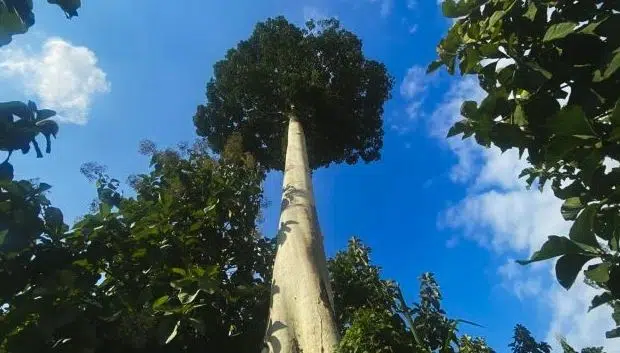
The discovery was made by a team of botanists from the University of Beijing, in a mountainous region in southern China that still preserves practically unexplored ecosystems.
The researchers identified two adult specimens in good health. This opens the possibility that there may be more trees of this species hidden in the dense vegetation of the area.
An advance for the conservation of endangered species
This unprecedented botanical discovery not only excites the scientific community, but also reinforces the importance of conserving natural habitats.
The presence of the Emmenopterys henryi in the wild could allow new strategies for its propagation and protection.
Environmental organizations are already working on plans to establish protected areas around the discovery site, in order to prevent this species from being at risk again.
Biodiversity: a reminder of what can be saved
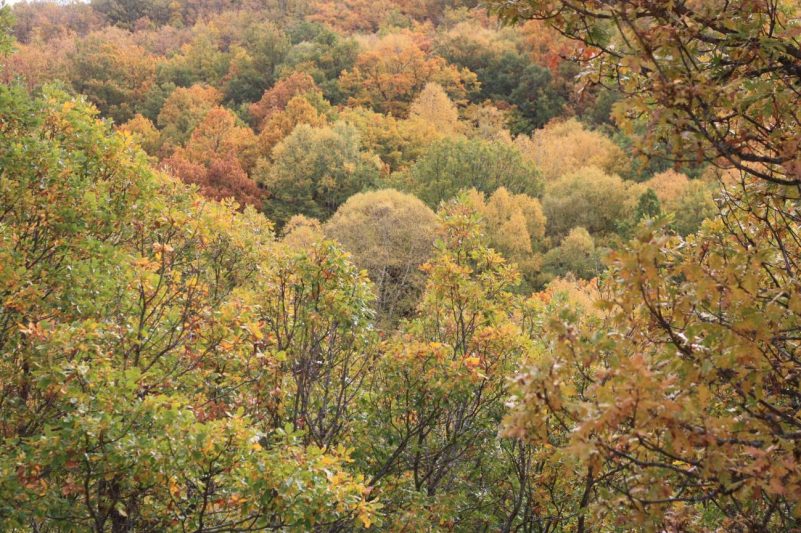 The specimens detected in China were believed to be extinct.
The case of this rediscovered colossal tree is a hopeful sign amidst a global environmental crisis.
This finding, in a context where climate change and deforestation threaten millions of species, adds to highlighting the urgency of protecting biodiversity. Additionally, it emphasizes the key role of continuing to explore our ecosystems with a scientific outlook and ecological commitment.


