



In San Juan, beekeeping is advancing hand in hand with nature. The Native Forest Program, which promotes sustainable production without altering the ecosystems, adds new experiences focusing on native flora and community participation.
Two new projects are joining the provincial network: one in Jáchal and another in Iglesia. Both aim to consolidate beekeeping as a tool for environmental conservation and local economic development.
The initiative already has a presence in various departments such as Valle Fértil, 25 de Mayo, Las Chacras, Usno, La Ciénaga, Nikizanga, and Bermejo. All apiaries had successful harvests in the last season, even with double harvesting in some cases.
This beekeeping does not seek high industrial yields, but rather aims to generate local value in harmony with native forests. A production model that preserves biodiversity, promotes local knowledge, and offers real opportunities in rural areas.
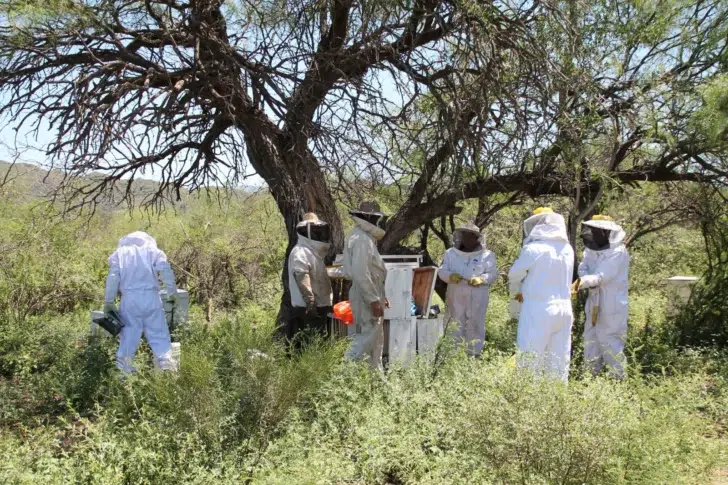 Native forests are the setting for beekeeping. Photo: La Provincia SJ.
New communities, new opportunities
On the way to the protected area of La Ciénaga, a group of neighbors and retired teachers will promote the assembly of beehives and the installation of a new apiary. Training sessions will begin in August, with technical support from the program.
The other project is located in Malimán, Iglesia department, a region of great environmental value. There, honey production will be combined with an educational trail linked to the “Forest at School” program, involving students in environmental care.
Both proposals strengthen the connection between conservation, education, and production. They also involve key actors such as teachers and young people, expanding the program’s scope beyond production.
Expectations are high, as these projects not only offer an income alternative but also revalue the territory, native flora, and community organization.
Looking towards the next season
The program’s technical team will carry out new visits to the apiaries in the coming days to verify the status of the beehives. The goal is to ensure that everything is ready for the 2025-2026 season, starting with spring.
This stage is crucial to guarantee the health of the bees and plan new actions. The continuity of the work depends on constant observation and technical support to each involved community.
The experience of San Juan demonstrates that it is possible to produce without destroying. Beekeeping in native forests combines knowledge, commitment, and nature, leaving honey as a result… and a future as a legacy.
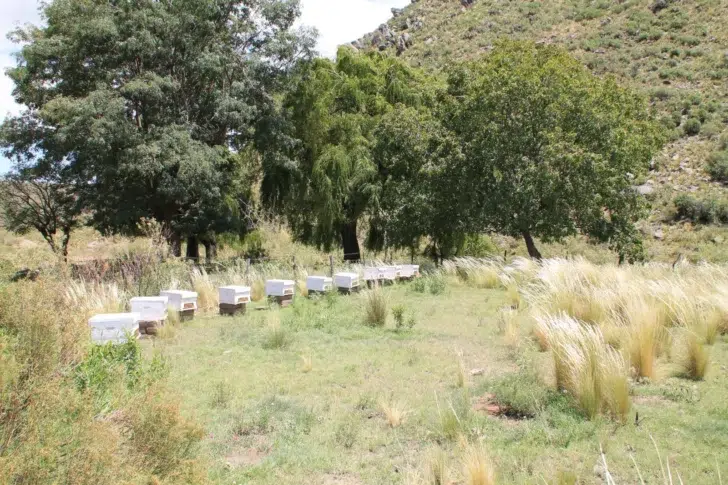 Beekeeping in the native forests of San Juan. Photo: La Provincia de SJ.
Socio-environmental benefits of planting native forests
The planting and restoration of native forests bring multiple advantages, both ecological and social. First, these ecosystems act as biodiversity reservoirs, hosting native flora and fauna that depend on that habitat to survive.
In addition, native forests help improve air and water quality. They act as natural filters, capturing pollutant particles, retaining moisture, and regulating the hydrological cycle. This is crucial in arid regions or those exposed to climate change.
From a social perspective, the creation of forests promotes green jobs, fosters environmental education, and strengthens community ties. By becoming productive, tourist, or educational spaces, they promote an economy based on environmental care.
They are also allies against desertification and soil loss, as their roots stabilize the terrain and prevent erosion. This helps maintain fertile lands and reclaim degraded areas.
Lastly, native forests are essential for pollination. By attracting insects like bees, they enhance regional agricultural productivity and maintain the balance of ecosystems.


