



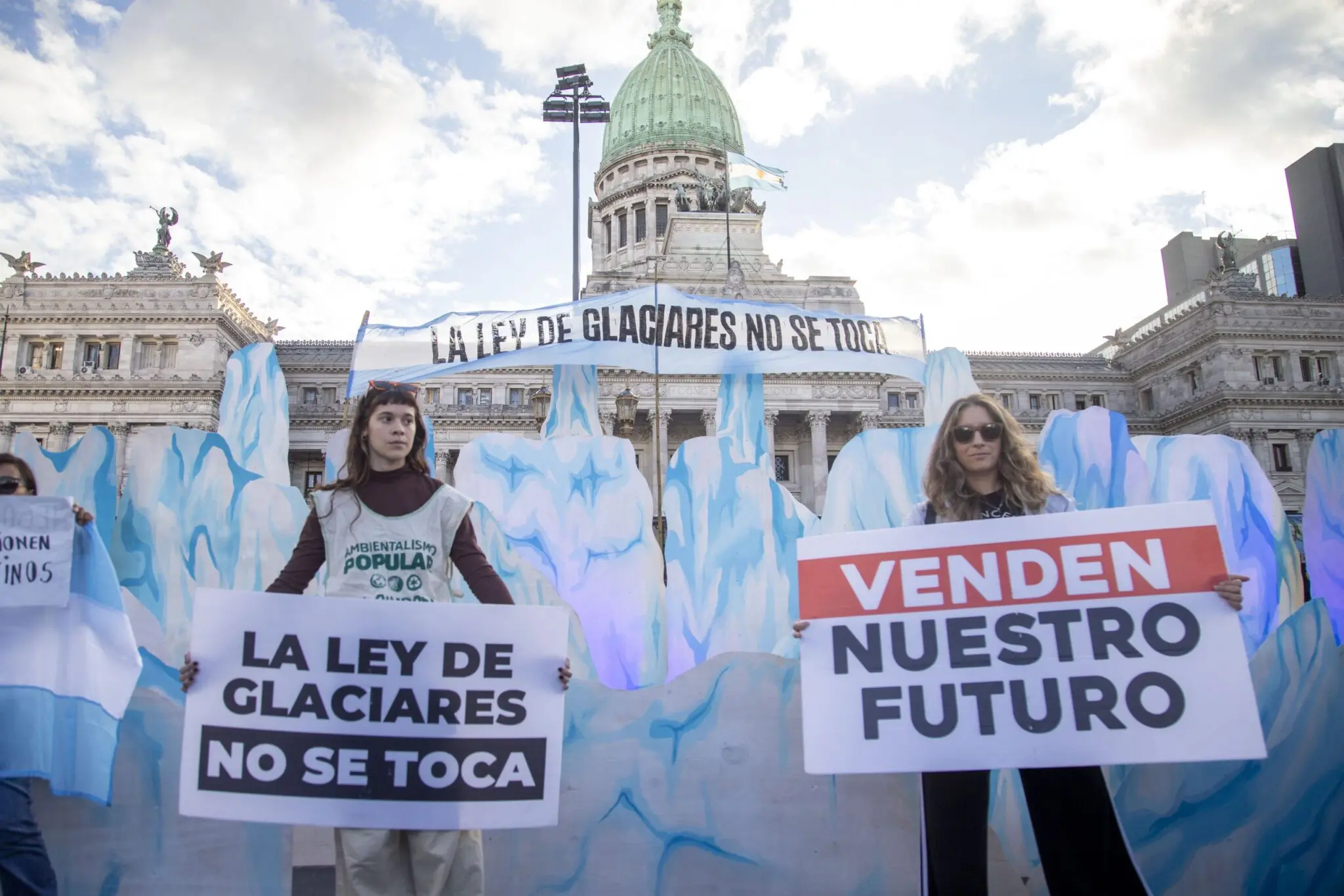
The reform of the Glacier Law faces a new judicial scenario in Argentina. In addition to the existing presentations, a collective lawsuit supported by more than a million signatures has been added, driven by environmental organizations.
In parallel, the province of La Pampa promoted an injunction to stop the application of the law. The initiative also requests its declaration of unconstitutionality.
Additionally, the case is now under analysis in federal courts. Thus, the conflict transcends the legislative and establishes itself as a national environmental debate.
Water as the axis of the environmental conflict
Although La Pampa does not have glaciers, its dependence on glacial-origin rivers places it at the center of the debate. In particular, access to water becomes a critical factor.
Furthermore, the province maintains a historic dispute with Mendoza over the use of the Atuel River. Added to this is the importance of the Colorado River, which supplies a large part of its population.
Consequently, any alteration in the glacier systems could affect the flow and quality of water. Therefore, the authorities warn about concrete impacts on the territory.
Organizations and actors driving the lawsuit
The collective action was presented by Greenpeace, the Argentine Association of Environmental Lawyers, and the Environment and Natural Resources Foundation.
At the provincial level, the National University of La Pampa, the Chadileuvú Foundation, and the Assembly for the Pampean Rivers are also participating.
Together, these actors argue that the reform implies a setback in environmental matters. Additionally, they question the legislative process that allowed its approval.

Provinces opposing the reform
Among the jurisdictions that have expressed objections is La Pampa, which leads the judicial offensive. Its stance focuses on defending water resources.
Similarly, political and social sectors from provinces like Río Negro, Chubut, and Santa Cruz have expressed concerns. These regions depend on mountain and glacier ecosystems.
On the other hand, in San Juan and Mendoza, the debate is more complex. There, interests linked to mining coexist with the need to preserve water sources.
Environmental risks and debate on the regulation
One of the most questioned points is the possibility for provinces to define periglacial areas. This could allow extractive activities in sensitive areas.
However, specialists warn that these areas fulfill key functions. They regulate the water cycle and act as strategic water reserves.
In that sense, the discussion revolves around the principle of no environmental regression. The judicial resolution will be decisive in defining the scope of glacier protection in the country.


