



The department of Malargüe approved Ordinance 2.377, published in the Official Gazette of Mendoza, which establishes strict conditions to prevent and control light pollution.
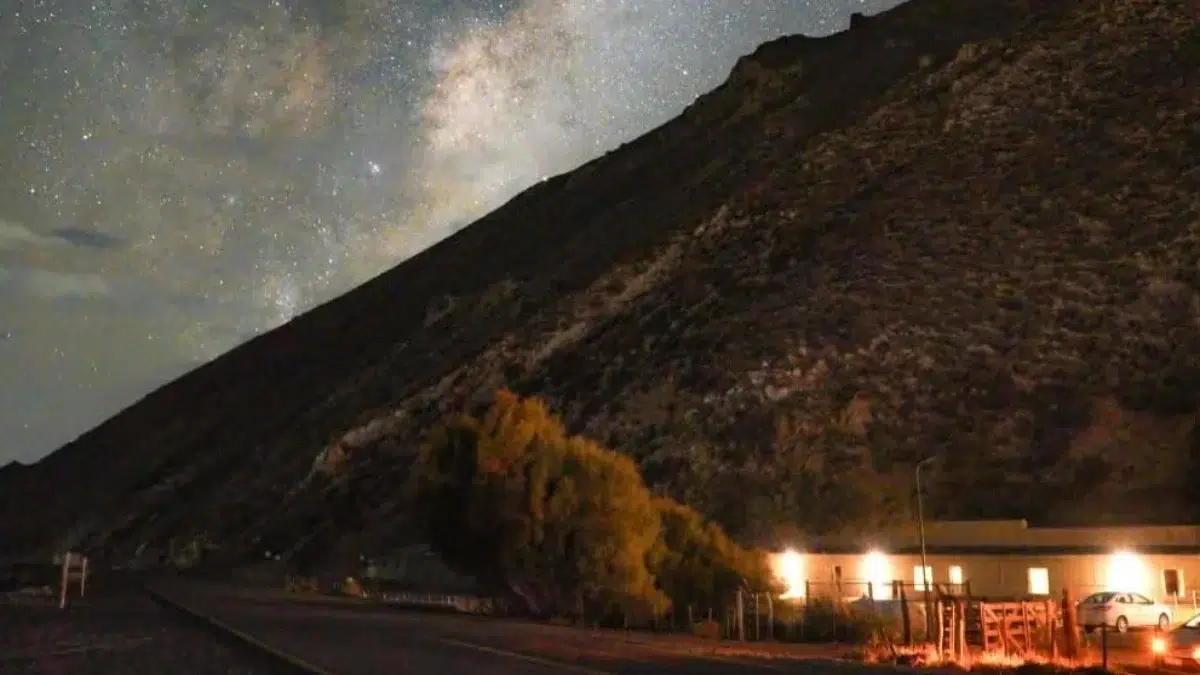
The goal is to preserve one of its most valuable assets: the darkness and the possibility to observe the stars in all their splendor.
The regulation will be mandatory throughout the territory, including urban, peri-urban, rural, industrial, tourist, and protected areas.
Main measures
- Directed lighting: luminaires must be shielded and directed towards the surfaces that need illumination, preventing light from projecting into the sky.
- Efficient LED technology: public lighting will be progressively replaced by devices that prevent upward light flow.
- Warm lights: amber or low color temperature lights will be prioritized in neighborhoods and rural areas.
- Regulated signage: LED screens and signs must automatically adjust their brightness and remain off between 0 and 6, except with special authorization.
- Ornamental lighting: unnecessary lighting will be reduced.
- Additional controls: incorporation of motion sensors, intensity regulators, and periodic audits.
Protection zones
The ordinance divides the department into four categories:
- E0 (special astronomical protection): surroundings of the Pierre Auger Observatory, Malargüe Planetarium, and natural reserves. Only security lighting will be allowed under strict conditions.
- E1 (residential and peri-urban areas): time and color temperature restrictions.
- E2 (commercial and urban sectors): lighting is allowed if efficient and decreases during the night.
- E3 (industrial and logistics facilities): requirement for energy efficiency and control of upward light.
Supervision and sanctions
The municipal departments of Environmental Management and Strategic Planning will be responsible for supervising compliance. The Pierre Auger Observatory, the Malargüe Planetarium, and local astronomical entities may act as technical advisors.
Violations may receive warnings, progressive fines, closures, removal of illegal luminaires, and even revocation of permits in repeated cases. Public agencies, businesses, and individuals will have 24 months to adapt their lighting systems.
Benefits of the measure
The ordinance aims to:
- Protect astronomical research.
- Conserve biodiversity and reduce the impact on nocturnal species.
- Improve public health by reducing exposure to intense lights during the night.
- Enhance energy efficiency, with lower electricity consumption.
- Boost astrotourism, a growing activity in the region.
Historical context
Malargüe already had a regulation since 2005 that promoted the use of sodium vapor lamps. The new ordinance repeals that regulation and updates the requirements in light of the advancement of LED technology and the growing importance of astronomy and scientific tourism.
The project was presented by the Justicialist Party bloc and approved on May 28. It also invites the rest of the departments of Mendoza to adopt similar regulations.
Malargüe reaffirms its identity as the astronomical capital of Mendoza and protects the night as a natural, scientific, and cultural resource.
The ordinance turns the dark sky into a heritage that generates knowledge, identity, and tourism, ensuring that the stars remain visible for future generations.


