



The Historic Sanctuary of Machu Picchu, in Peru, is in the midst of a reforestation process.
The current plan aims to recover areas damaged by fires and plant a thousand new trees.
Leading this initiative is the National Service of Protected Natural Areas (Sernanp) of the Latin nation, along with the tourism sector and local authorities.
José Carlos Nieto, executive president of Sernanp, confirmed that 570 hectares are being restored in the sanctuary.
This action seeks to reverse the impact of forest fires that affected nearly 6,000 hectares in recent years.
The project arises from an agreement with tourism entrepreneurs and the district municipality.
“What we have proposed together with tourism entrepreneurs and the district municipality is to plant one thousand trees for Machu Picchu,” Nieto stated.
It should be noted that the project will not only be developed in the citadel of Machu Picchu but in the Historic Sanctuary.
While the former encompasses the Inca archaeological complex with buildings, terraces, and roads, the latter involves a much larger area.

This includes natural ecosystems, basins, and biological corridors that protect the region’s biodiversity.
Therefore, the government of Peru seeks to reforest this natural area protected by the Peruvian State
The forest fires and environmental threats facing Machu Picchu
In recent years, the Historic Sanctuary of Machu Picchu faced severe damage from fires that destroyed thousands of hectares of forest.
Additionally, predation and other environmental factors also caused significant deterioration in the protected area.
In response, Nieto explained that his organization has formed specialized firefighting teams to respond to forest emergencies.
“We have formed an important firefighting team to face forest fires and we also work with the communities,” he pointed out.
Cooperation with the nearby communities proved key to the progress made.
This joint work allows reversing the loss of forest area and consolidating continuous restoration processes.
How the reforestation process of Machu Picchu is progressing
Recently, Machu Picchu obtained international certifications for its status as a carbon-neutral destination.
Thus, reforestation in Machu Picchu directly contributes to reducing and offsetting the carbon footprint of the tourist site.
In addition to planting new trees, Sernanp has implemented improvements in the waste management of the locality.
These modifications strengthen the responsible waste management according to international standards.
The plan aims to consolidate the protected area as a benchmark in heritage conservation.
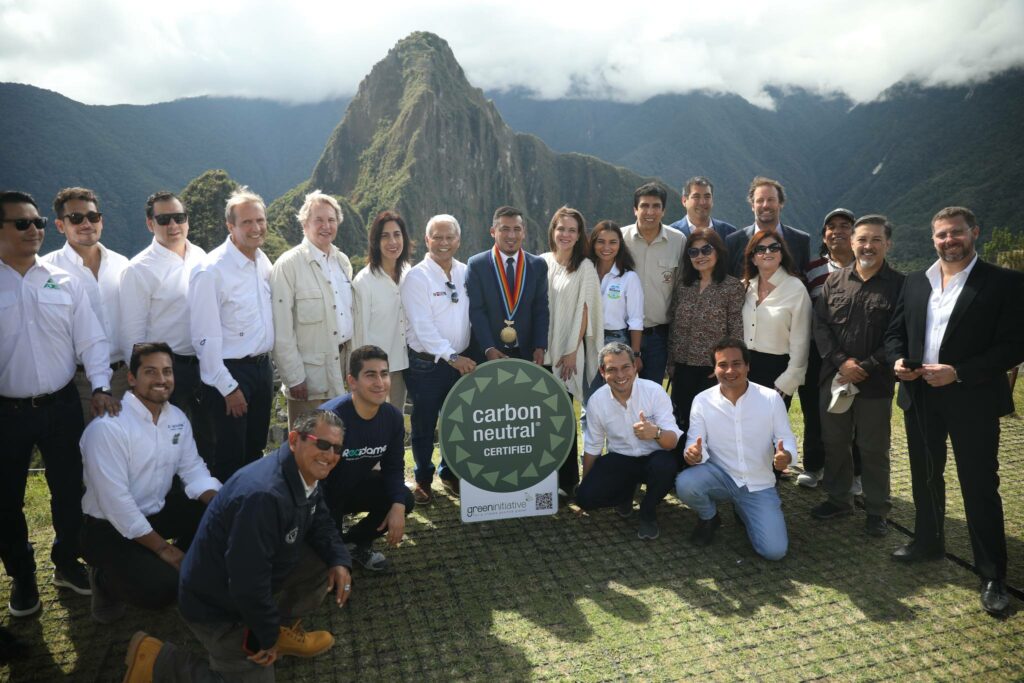
One by one, the ongoing restoration actions:
- Reforestation of 570 affected hectares
- Planting of a thousand new trees
- Firefighting brigades
- Joint work with local communities
- Sustainable waste management
The reforestation process in Machu Picchu represents an inter-institutional effort to preserve historical and natural heritage.
Sernanp will continue with strategic alliances and the strengthening of control brigades.
Environmental management requires a constant approach to face the threats affecting the sanctuary.
The initiative demonstrates that forest recovery is possible with coordination between public agencies, the private sector, and communities.


