



The publication of an international report on methane emissions has once again placed waste management at the center of the environmental agenda. The study identified the Campo de Mayo North III Environmental Complex as one of the sites with the highest detected levels of this greenhouse gas during 2025.
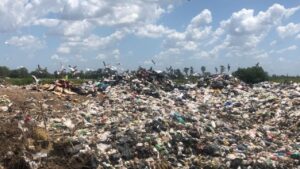
Located at the intersection of the Camino del Buen Ayre and Provincial Route 8, in the northern suburbs of Buenos Aires, the site receives about 85% of the urban solid waste generated in the Buenos Aires Metropolitan Area (AMBA).
Additionally, more than 436,000 tons of waste from the City of Buenos Aires and over 40 Buenos Aires municipalities enter each month. Therefore, the magnitude of the operation makes it a key point for analyzing the environmental challenges associated with waste treatment.
Methane, a silent protagonist of climate change
The report highlights that methane has a warming capacity far superior to that of carbon dioxide over short periods. For this reason, reducing its emissions is considered one of the most effective strategies to slow down the progress of climate change.
Moreover, landfills rank among the top global sources of methane release. This gas is naturally generated during the decomposition of organic waste buried in landfills and dumps.
According to the survey, the Buenos Aires complex recorded emission rates that placed it above sites located in Indonesia, Malaysia, India, Chile, Saudi Arabia, Thailand, and Brazil. However, specialists clarify that the measurements correspond to specific satellite observations and do not represent cumulative emissions throughout the year.
The response of CEAMSE and mitigation actions
In response to the dissemination of the results, CEAMSE pointed out that the study is based on limited records and stated that the behavior of emissions constantly varies according to multiple operational and climatic factors.
Additionally, the company emphasized that the North III Environmental Complex has biogas capture and treatment systems aimed at preventing the direct release of methane into the atmosphere.
Simultaneously, during 2025, projects for carbon credit certification and technological improvements were promoted to increase gas capture. There was even a rise in the volumes of biogas recovered, which allowed for strengthening environmental control and energy utilization strategies.

The environmental impact of open-air dumps
The open-air dumps represent one of the main environmental threats associated with inadequate waste management. In these spaces, the decomposition of organic matter releases large amounts of methane without any control or utilization.
Furthermore, these sites often contaminate soil, watercourses, and groundwater through leachates loaded with toxic substances. This is compounded by the proliferation of health vectors such as rodents and insects, which can affect nearby communities.
Additionally, the informal burning of waste generates polluting emissions that deteriorate air quality and increase risks to human health. In Argentina, there are still thousands of such dumps, highlighting the need to move towards more efficient and sustainable treatment systems.
Towards a circular economy model
The debate generated by the international report also underscores the importance of reducing waste generation from the source. Household separation, recycling, and material recovery emerge as fundamental tools to decrease the amount of waste destined for burial.
Additionally, the capture of biogas and its use to generate energy represent alternatives that allow for reducing emissions and utilizing resources that would otherwise be lost in the atmosphere.
Meanwhile, technological advances in satellite monitoring offer new possibilities to identify pollution hotspots and strengthen environmental policies. In this context, sustainable waste management is consolidated as one of the most important ecological challenges for large cities in the 21st century.


