



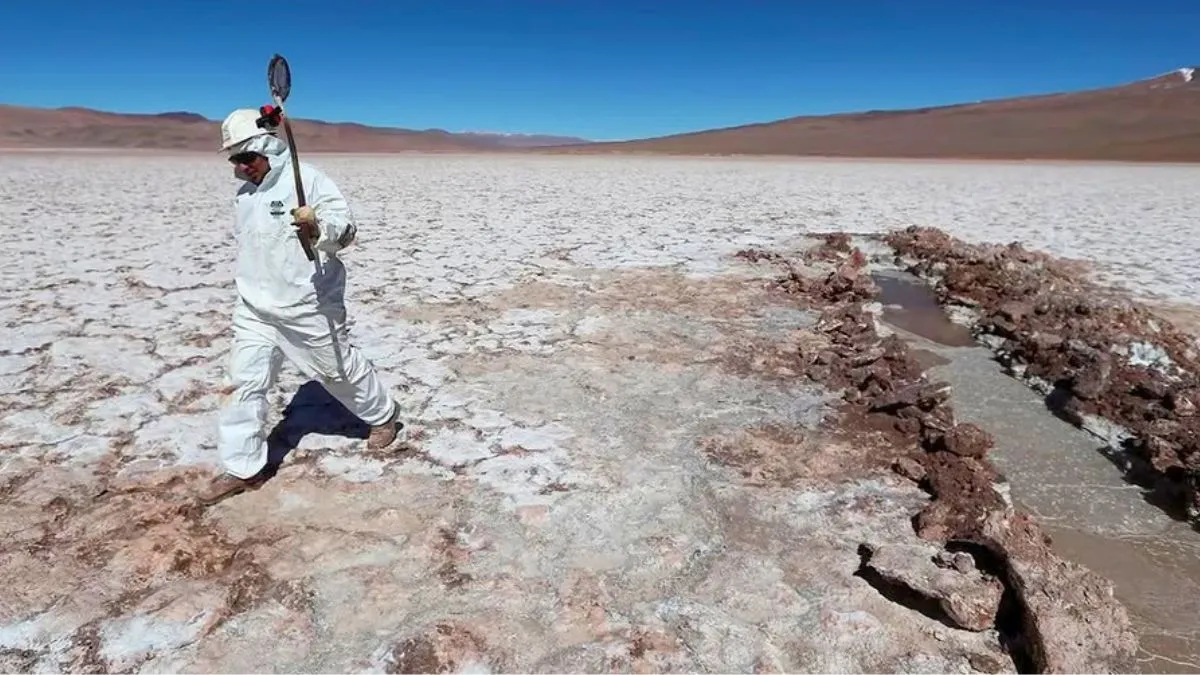
The Mendoza Legislature passed into law the Environmental Impact Statement for the mining project Don Luis y Otro, allowing the start of lithium exploration in the Salinas del Diamante, between the departments of San Rafael and Malargüe.
The initiative, promoted by the Executive Power, was approved with 36 votes in favor and 4 against, after previously receiving the Senate’s approval. The project includes exploration tasks over an area of 234,256 hectares to assess the presence of first-category minerals, mainly lithium.
Evaluation Process
The file underwent an environmental and technical analysis process of almost two years, which included:
- Two public hearings in San Rafael and Malargüe.
- A technical visit to the project area.
- Civic participation with access to physical and digital documentation.
- Involvement of more than nine specialized public agencies.
Responsible Companies
The project is driven by the Australian company Ampere Lithium, in partnership with the Mendoza-based firm El Jarillar, a historic producer of salts in the area.
Preliminary studies had already detected signs of lithium in the region’s brines.
Exploration Stages
The first phase will include geological and geophysical work using existing roads, without opening new paths. Based on the results, drilling will proceed to determine the characteristics and concentration of the resource.
The Minister of Energy and Environment, Jimena Latorre, celebrated the approval and highlighted that the project will generate key scientific information to evaluate the potential of lithium in Mendoza.
Differences with Other Salt Flats
One of the most relevant aspects is the exploitation method that should be applied if the economic viability of the resource is confirmed. Unlike other Argentine salt flats, the provincial environmental regulations do not allow the evaporation of brines in large pools.
Instead, direct lithium extraction (DLE) would be used, a technology that recovers the mineral in a few hours and reinjects the brines into the aquifer, reducing environmental impact.
This scheme is considered a competitive advantage against the growing international demand for critical minerals for electric vehicle batteries and energy storage systems.
Strategic Importance
Lithium is considered a strategic resource for the energy transition and technological development. The exploration in Mendoza is part of the provincial strategy to diversify the productive matrix and expand mining activity with a focus on critical minerals.
The legislative approval ensures that all stages are developed with civic participation, environmental controls, and regulatory transparency, consolidating a model of responsible mining.
With the authorization of exploration in the Salinas del Diamante, Mendoza opens a new stage in its mining development strategy.
The use of low-impact technologies such as direct lithium extraction could position the province as a competitive player in the global market for critical minerals, key to the energy transition and technological innovation.


