



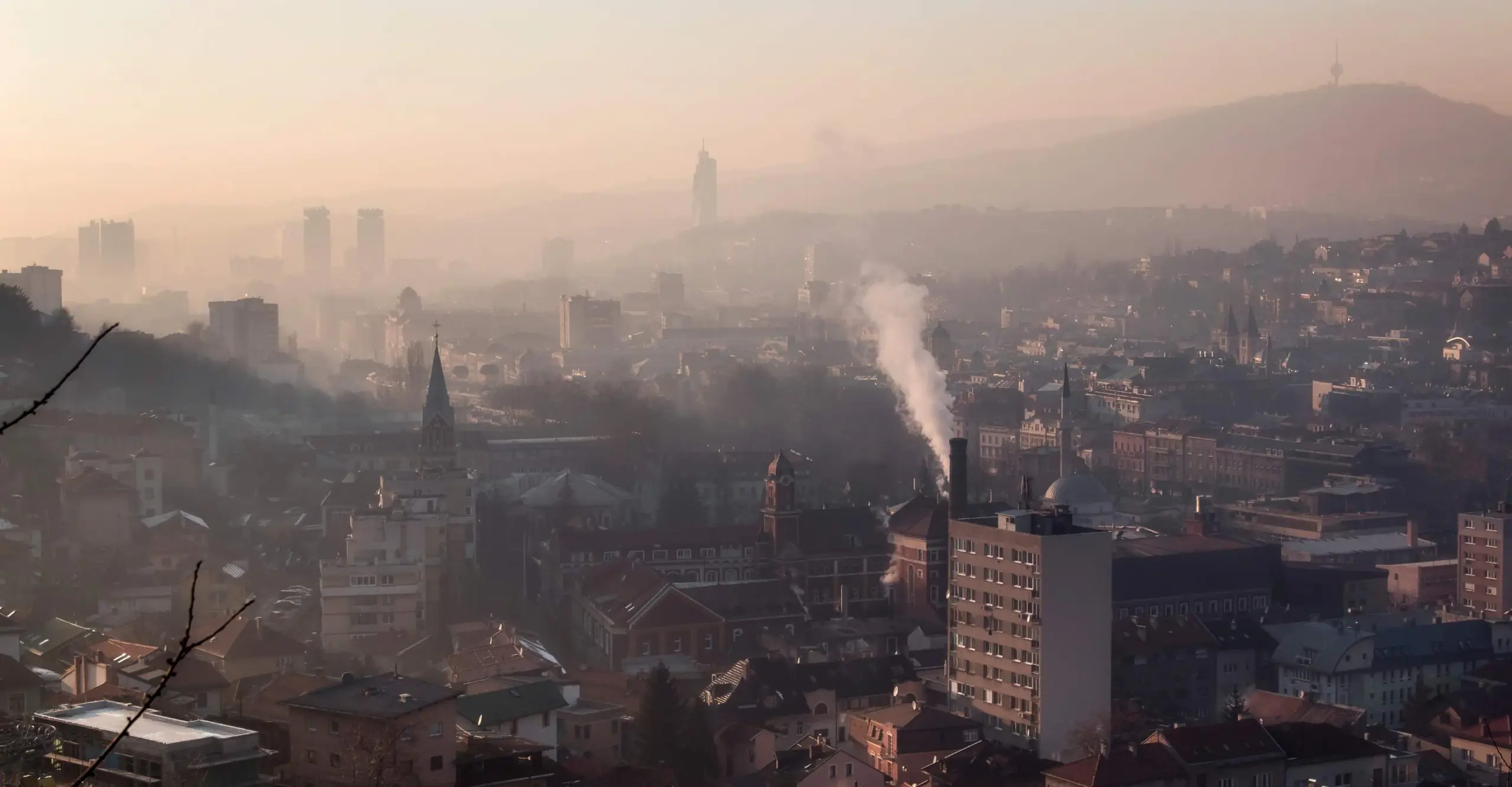
The capital of Bosnia-Herzegovina, Sarajevo, has once again become the city with the most polluted air in the world, surpassing cities like New Delhi or Cairo. According to the ranking by IQAir, the city reached an air quality index of 462, far above New Delhi’s 232 and Cairo’s 220, both considered “very unhealthy.”
The situation forced authorities to recommend a partial lockdown for the most vulnerable groups: pregnant women, children, the elderly, and people with respiratory or heart diseases.
A toxic fog over the city
The concentrations of PM2.5 (suspended particles) in Sarajevo are 60.5 times higher than the reference value of the World Health Organization (WHO). This causes a dense toxic fog that reduces visibility and increases health risks.
Other Bosnian cities like Tuzla, Zenica, and Banja Luka also recorded unhealthy indices. In winter, the Balkans often present the worst pollution levels in Europe due to the intensive use of fossil fuels and wood for heating, exacerbated by the location of many cities in valleys surrounded by mountains, which hinders the dispersion of pollutants.
Sources of pollution
In Sarajevo, around 40% of the pollution comes from individual chimneys, as about 43,000 households use solid fuels for heating.
This is compounded by emissions from transport and industry, which increase the presence of fine particles and toxic gases.
Health risks
Urban air pollution represents a serious health risk that causes millions of premature deaths each year. Among the main dangers are:
- Fine particles (PM2.5 and PM10): penetrate the respiratory and circulatory systems, causing asthma, bronchitis, COPD, lung cancer, and heart attacks.
- Nitrogen oxides (NOx) and nitrogen dioxide (NO₂): derived from diesel, directly affect lung function.
- Tropospheric ozone (O₃): irritates airways and worsens chronic diseases.
Serious consequences:
- Heat stroke and respiratory problems in combination with high temperatures.
- Cardiovascular diseases such as tachycardia, heart attacks, and strokes.
- Neurological impact: cognitive decline in adults and developmental impact in children.
- Premature mortality: nearly 4.2 million annual deaths worldwide are attributed to poor outdoor air quality.
- Permanent effects: accelerated aging of the lungs, reduced life expectancy, and damage to fetal development.
Environmental consequences
Pollution not only affects human health, it also generates environmental impacts:
- Global warming, by increasing the concentration of greenhouse gases.
- Damage to ecosystems, with chemical alteration of soil and eutrophication of water resources due to excess nitrogen.
The case of Sarajevo reflects how the combination of geographical factors, dependence on solid fuels, and lack of effective policies can turn a city into an epicenter of environmental and health crisis.
The situation demands urgent measures: energy transition, reduction of fossil fuel use, improvements in public transport, and energy efficiency programs in homes.


