



After a year and a half of monitoring, a scientific team identified the presence of flour in the air of Chivilcoy. The research now seeks to identify if these environmental factors influence celiac disease.
This work is coordinated by Mauricio De Marzi, Conicet researcher and professor at the National University of Luján, who has been developing new methods to detect and treat celiac disease.
According to the scientist, in Argentina the disease is underdiagnosed due to the lack of tools for its detection.

Analyzing Chivilcoy’s air for celiac disease
The College of Nutritionists of Buenos Aires indicates that 8 out of 10 people with celiac disease do not know they have it. Given this scenario, De Marzi and his team are working to find markers, preferably in blood, that allow to identify the pathology earlier.
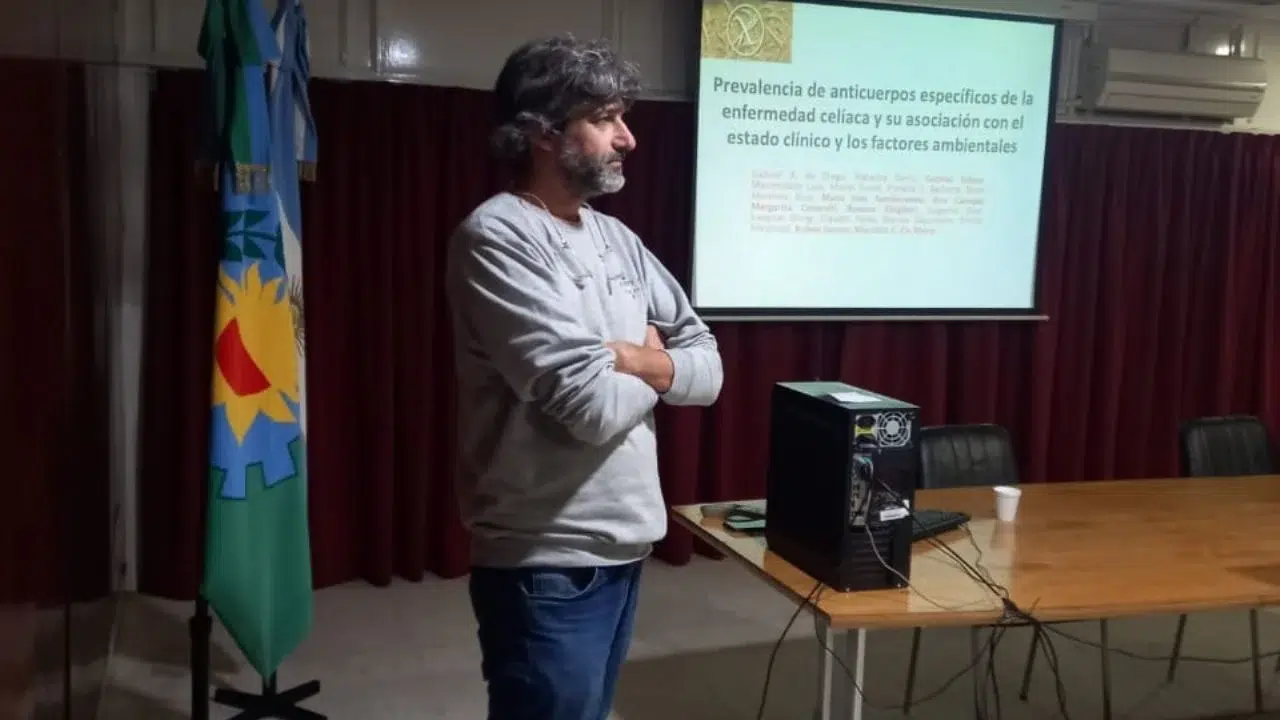
The initial advances of the research, which have been published in the scientific journal Elsevier, were presented at the Chivilcoy Medical Center. This meeting exposed the situation of this disease in the city and comparisons between the celiac population and groups with positive or negative antibodies.
The scientists are not only looking at genetic indicators but also analyzing if there are environmental factors that could influence celiac disease. This arises from noticing that some population groups in Chivilcoy had more positive antibodies. After ruling out water as a correlation factor, the study focused on the air. After 18 months of analysis, they found the presence of flour in the environment. Although the results are preliminary, the work will delve deeper into this line of research.
“There is a repetitive behavior at certain times and months of the year, which supports the hypothesis that environmental factors, in addition to genetic factors, could be determining that a person reacts against gluten and generates antibodies,” De Marzi told La Razón de Chivilcoy.
To assess the possible impacts of exposure to environmental flour, researchers have been studying its distribution based on winds, temperatures, precipitations, places where flour is most recurrently found, and in what quantities.
Silent and autoimmune disease
The researcher emphasized the importance of improving detection systems since many celiacs do not have symptoms. In these cases, “the only way to diagnose it is as an incidental finding, meaning that the disease is progressing, and that is dangerous throughout life if not treated, without adopting a gluten-free diet,” De Marzi pointed out.
Finally, the specialist indicated that celiac disease is an autoimmune disease. “Celiac disease has an antigen that triggers the disease, which is the gluten found in flour. But it ends up becoming autoimmune because it reacts against the enzyme that degrades it. So, what we are looking for are those antibodies.”
This research marks the continuity of previous laboratory studies aimed at discovering molecules that facilitate more precise and less invasive diagnoses.



