



The city of Córdoba took a fundamental step in preventing hydrological risks with the installation of the first intelligent sensor designed to monitor in real time the floods of the Suquía River.
The initiative is part of the Open Innovation Challenge Smart River, promoted by CorLab and BID Lab, and aims to improve citizen safety against emergencies caused by intense rains.
The device was placed at a critical point on the Costanera, at the intersection of Ibarbalz and Costanera Norte street, an area historically affected by floods.
The installation was carried out by the startup Pampa 4, winner of the innovation challenge, which began implementing a comprehensive system of sensors, early warning alerts, and automatic activation of barriers and signs in strategic areas of the river.
The sensor uses IoT (Internet of Things) technology with LoRaWAN connectivity, allowing real-time water level measurements and immediate alerts if safety thresholds are exceeded.
Additionally, the system is prepared to remotely and automatically activate protection barriers. It can display messages on electronic signs and issue warnings through sirens.
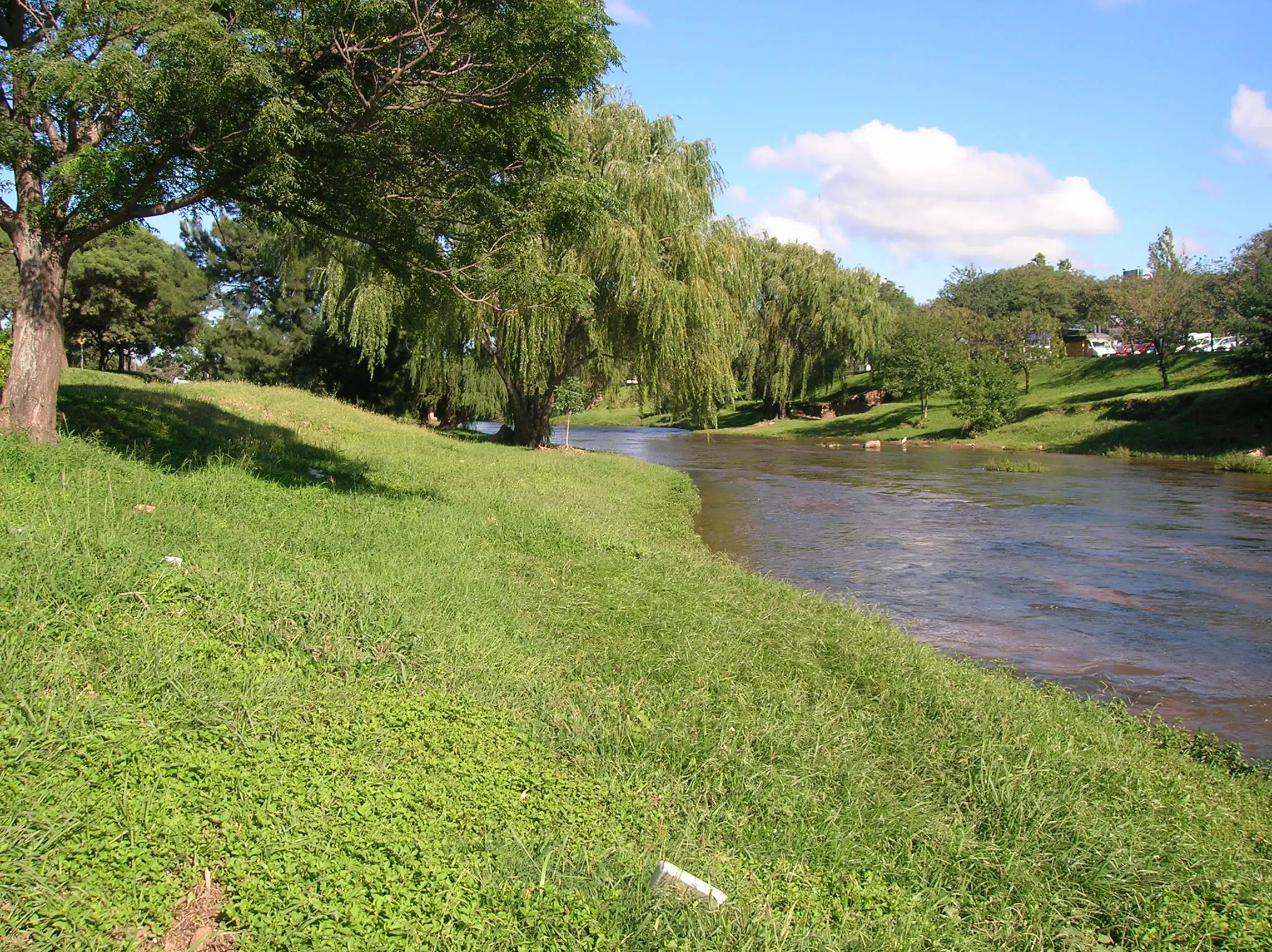 How is the technology installed in the Suquía River. (Photo: Wikipedia).
Suquía River Floods: an integrated system for preventing hydrological risks
All sensors and devices will be connected to a municipal smart platform, from which flow data can be monitored, the status of the barriers can be checked, and preventive actions can be coordinated.
For its implementation, a technical study was carried out in conjunction with the National University of Córdoba and Civil Defense. It included depth measurements in key sectors to calibrate alert levels accurately.
The Smart River is developed under the management of CorLab, a public innovation and govtech laboratory of the Secretary of Smart City and Digital Transformation of Córdoba. It was done in coordination with BID Lab, the Secretary of Government, and the Subsecretary of Mobility and Transit.
The installation of this first sensor marks the beginning of a technological system that will strengthen the prevention of floods in Córdoba. Thus, it will improve the response capacity to hydrological emergencies and become a key tool to protect the population against the Suquía River floods.
What factors increase the risks of river floods?
Different circumstances or characteristics can contribute to floods:
-
Intense and sudden rains.
-
Unplanned urban growth in flood-prone areas.
-
Lack of drainage infrastructure and river defenses.
-
Climate change, intensifying the frequency of storms and extreme flows.
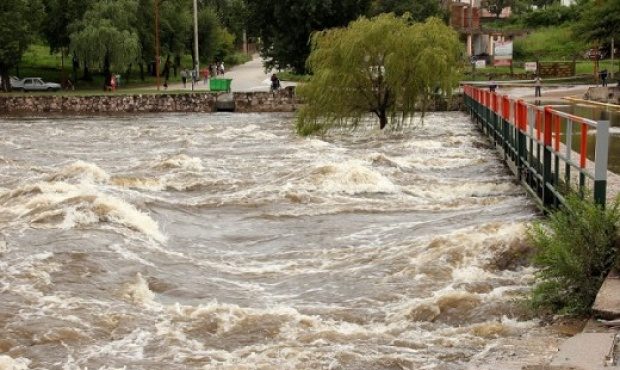 Risks of river floods.
Risks
River floods not only endanger people’s lives and properties but also have a strong economic and environmental impact:
-
Risks to human life: increased likelihood of accidents and drownings; difficulty in accessing basic services such as health, transportation, and communications.
-
Damage to homes and infrastructure: flooding of homes and loss of belongings; impact on roads, bridges, power grids, sewage, and water supply. Also, landslides in riparian areas due to soil erosion.
-
Impact on the local economy: losses in crops and livestock in rural areas; disruption of commercial and tourist activities. Additionally, high costs in repairs and reconstruction.
-
Environmental consequences: alteration of river ecosystems and loss of biodiversity; water contamination by waste, chemicals, and debris carried by the current. It also causes wear and erosion of banks and soils.



