



In El Bolsón, where mountain landscapes and Patagonian valleys invite you to think of a natural paradise, the air holds a silent threat. During autumn and winter, smoke from burning and wood heating becomes a common pollutant. Far from being a minor issue, constant exposure to this type of pollution directly affects the health of the population.
Although the region lacks industries or heavy traffic, it suffers from the accumulation of gases and suspended particles generated by deep-rooted cultural practices. The phenomenon is exacerbated by the mountainous geography, which acts as a trap for polluted air, especially on cold and windless days.
This type of pollution not only affects the lungs. Global studies show that fine particles present in smoke are linked to severe cardiovascular diseases. Diseases such as hypertension, heart attacks, and strokes find in poor air quality an invisible trigger.
The problem, which also impacts tourism, becomes increasingly evident from elevated viewpoints: the Andean Region is engulfed in a grayish cloud for much of the year.
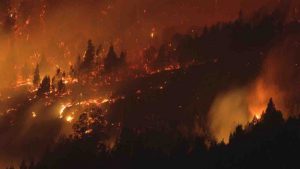 Forest fires and smoke suffocated the Patagonian valleys of El Bolsón.
Rural Pollution: A Less Visible Threat
Burning leaves, soil preparation for winter, and wood heating are traditional practices that generate a large volume of particulate matter. In many homes, smoke accumulates even indoors, especially affecting children and the elderly.
Faced with this situation, the need to adopt more sustainable practices is raised: composting, branch shredding, organic reuse, and other strategies to reduce the need for burning. These actions would not only prevent seasonal intoxications but also reduce the risk of forest fires in summer.
Furthermore, environmental health is closely linked to economic development. Respiratory difficulties deter visitors during the winter season, causing an impact on one of the region’s economic pillars: tourism.
The challenge is collective. Institutions, municipalities, and neighbors are already beginning to create networks for environmental action. The solution, experts claim, lies not in prohibition but in awareness, dialogue, and the progressive replacement of harmful customs with environmentally respectful practices.

Smoke and Its Environmental Impact in the Patagonian Valleys
Burning organic waste and using wood for heating release large amounts of polluting gases into the environment, including carbon dioxide (CO₂), methane, and carbon monoxide. These compounds contribute to the greenhouse effect, worsening climate change and affecting atmospheric balance.
Additionally, smoke contains fine particulate matter that settles on soil, water, and vegetation, disrupting natural cycles. In mountain ecosystems, such as those in Patagonia, it can accelerate soil degradation, affect plant photosynthesis, and even impact water quality through acid rain precipitation.
This type of pollution also reduces visibility, alters local climate patterns, and affects the health of wildlife, which breathes the same air as people. Thus, a seemingly harmless daily practice can have environmental consequences on a large scale.



