



The new headquarters of the Department of Veterinary Sciences, affiliated with the University of Pisa, has been conceived under an intrinsically sustainable construction model, it was built with hemp.
The emerging campus is being erected in the heart of the Migliarino San Rossore Massaciuccoli Park, blending sustainability, innovation, modernity, and a deep respect for the natural environment.
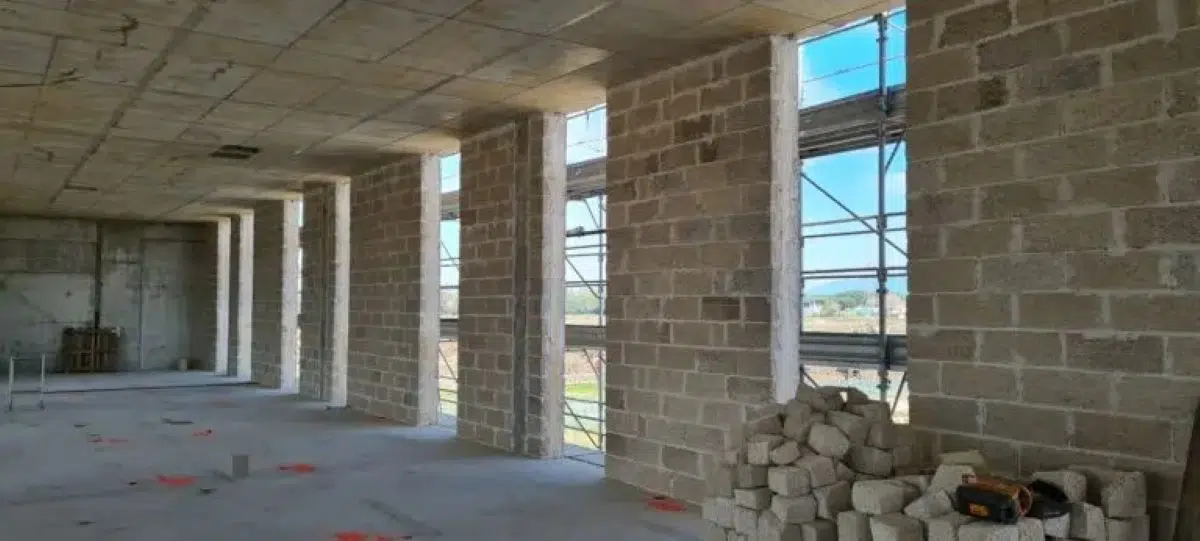
The structure is being erected with blocks (bricks) made of hemp and lime, a natural compound that has the ability to capture carbon dioxide (CO2) and ensure a high level of comfort and well-being in indoor spaces.
With a capacity of more than 30 tons of CO2 extracted and permanently stored within the building envelope, the construction is nearly zero energy.
Its energy supply is achieved through the combination of geothermal probes and a fully integrated photovoltaic plant, complemented with efficient rainwater recovery systems and natural solar protection devices.
In this new complex built with hemp, covering an area of 13,000 square meters and representing an investment exceeding $53 million euros, there will be classrooms, laboratories, libraries, and extensive green areas, all designed under the principles of inclusion and maximum environmental quality.
“Contributing to the realization of the new headquarters of Veterinary Sciences at the University of Pisa means demonstrating that public construction can act as a driver of environmental regeneration,” said Massimo Senini, owner of Tecnocanapa, the company responsible for executing the project.
“The biobrick (biomatone in Italian) of hemp and lime amalgamates nature, research, and industry into a concrete response to reduce emissions and optimize the performance of environments intended for study and work. Collaborations like this, between the academic and business sectors — he added — act as catalysts for the ecological transition in the construction sector, bringing measurable benefits to both people and territories.”
The biomatone of hemp and lime stands as a markedly innovative solution within the realm of ecological construction. It is distinguished by a natural composition that harmonizes hemp, a plant characterized by its versatility and sustainability, with lime, a traditional construction material.

This synergy not only provides optimal thermal performance but also actively promotes an ecological philosophy in building, minimizing the environmental impact that is common with conventional construction materials.
Building with hemp is appreciated for its properties of strength and insulation, while lime provides structural stability and excellent breathability to the walls, resulting in an indoor environment that is healthy and comfortable.
In recent years, there has been a growing interest in incorporating sustainable materials in architecture and civil engineering, as a direct response to the challenges posed by climate change and environmental pollution issues.
The hemp and lime biomatone fits perfectly into this landscape, not only for its inherent physical virtues but also because it significantly reduces CO2 emissions throughout the entire life cycle of the construction.
The manufacture of this material is carried out through ecologically responsible processes, aiming to minimize fossil resource consumption and maximize energy efficiency.
The biomass derived from hemp is widely recognized for its outstanding insulating properties, which contribute to buildings constructed with this material requiring less energy demand for climate control (both for heating and air conditioning).
This translates directly into a notable reduction in long-term energy costs. Additionally, it has excellent acoustic insulation capacity, facilitating the creation of a more peaceful and comfortable learning and working environment for both students and teaching staff.
The biomatone represents an innovative and sustainable alternative for modern constructions. Beyond its energy performance and valuable CO2 storage capacity, the recyclability characteristic of biomass actively promotes an environmentally friendly life cycle.
Once the material reaches the end of its useful life, it can be easily recycled, reducing its final environmental impact and encouraging responsible use of resources.
In an era where sustainability has become an essential priority, hemp-based construction emerges as a highly beneficial solution, not only for contemporary buildings but also for the protection of future generations, ensuring that construction practices do not compromise the health of our planet.
By Germán Pereira (RecetasCañameras)



