



Students from Instituto Tavelli, in Mar del Plata, designed an innovative tool consisting of a cart for urban recyclers, aiming to improve their working conditions and raise awareness about the importance of their work. The initiative arose within a school activity that sought to combine creativity, technical skills, and social commitment, resulting in a concrete prototype with potential national impact.
The cart features a lighter, more ergonomic, and easier-to-handle design compared to traditional models. The students spent months researching materials and shapes, fine-tuning every detail to make the tool reduce forced movements and adapt to the height of different individuals. The structure was built with iron they acquired themselves, incorporating sturdy wheels and elements prioritizing comfort and safety.
The proposal was presented to the governor and quickly gained attention on social media, where users highlighted its social and environmental value. The students dream of having a company invest in its large-scale production, allowing more recyclers to access a resource that dignifies their work and optimizes the collection of reusable materials.
Instituto Tavelli expressed pride in the project, emphasizing that it combines technical knowledge with human values. For their teachers, the greatest achievement is for the youth to understand that learning can have a direct impact on the community and the planet’s care.
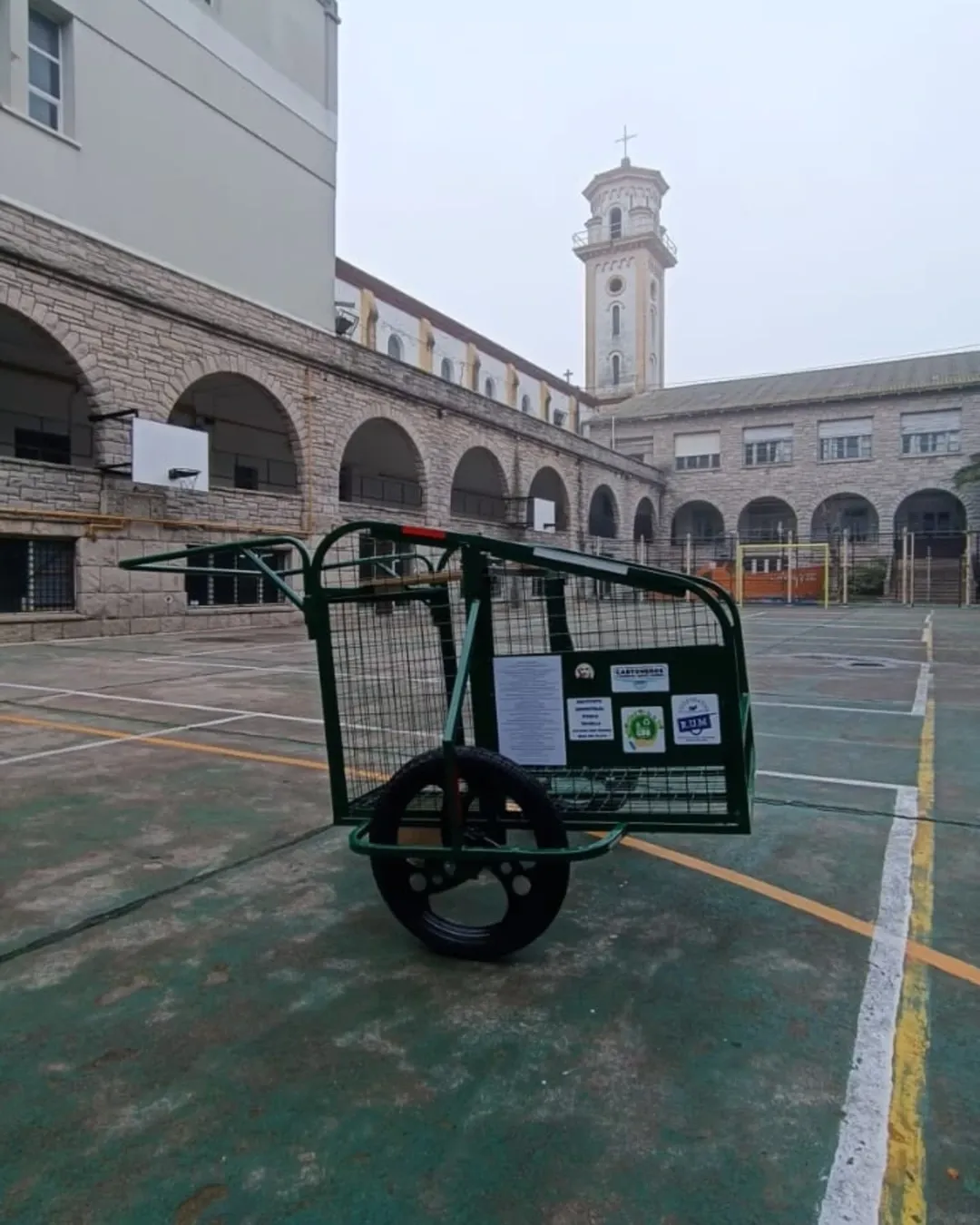 The innovative tool designed by students from Mar del Plata. Photo: Instagram/mardelplataweb_.
Education as a driving force for environmental change
This project demonstrates that school activities can become concrete tools to collaborate with the environment. When classrooms open up to real issues, students acquire technical and social skills while contributing to improving their surroundings.
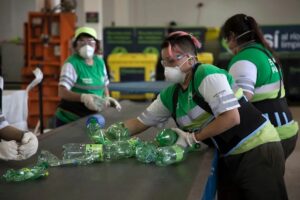
In this case, the designed cart not only aims to facilitate the work of recyclers but also promotes the recovery of materials and the reduction of waste that ends up in landfills or contaminating the natural environment. This strengthens the circular economy, a key model to minimize waste and maximize resource utilization.
Furthermore, these initiatives promote teamwork, empathy, and critical thinking. Students learn that sustainability is not limited to large international policies but can also be built from local and accessible solutions.
The connection between school and the community is another fundamental aspect. By working alongside a sector often overlooked, students not only contribute technical innovation but also convey a message of respect and recognition to those who silently contribute to environmental care.
From idea to real impact
The challenge now is to make the prototype ready for mass production and reach those who need it the most. For this, the support of companies, local governments, and social organizations that recognize the value of investing in simple yet effective solutions is required.
If the project manages to expand, its impact could be twofold: improving the quality of life of recyclers and increasing efficiency in material collection, thereby reducing the amount of waste that pollutes soils, rivers, and seas.
This example invites us to rethink the role of education as a space to create responses to environmental and social problems. Classrooms, far from being mere venues for theoretical training, can become living laboratories where ideas that change realities are born.



