



What seemed like a bold idea — cultivating and building complete housing units using hemp — is now becoming a real, efficient, and sustainable alternative.
In Argentina, a group of specialists and entrepreneurs are working to unlock the potential of this versatile plant, aiming to transform the construction industry through plant biomass.
Hemp as a Construction Input: Versatility and Performance
According to Eric Turiansky, member of the Cannabis Study and Work Group at the Faculty of Agronomy of the UBA (GET FAUBA), hemp allows the utilization of both the fiber and the hurd (the stem’s core) to manufacture:
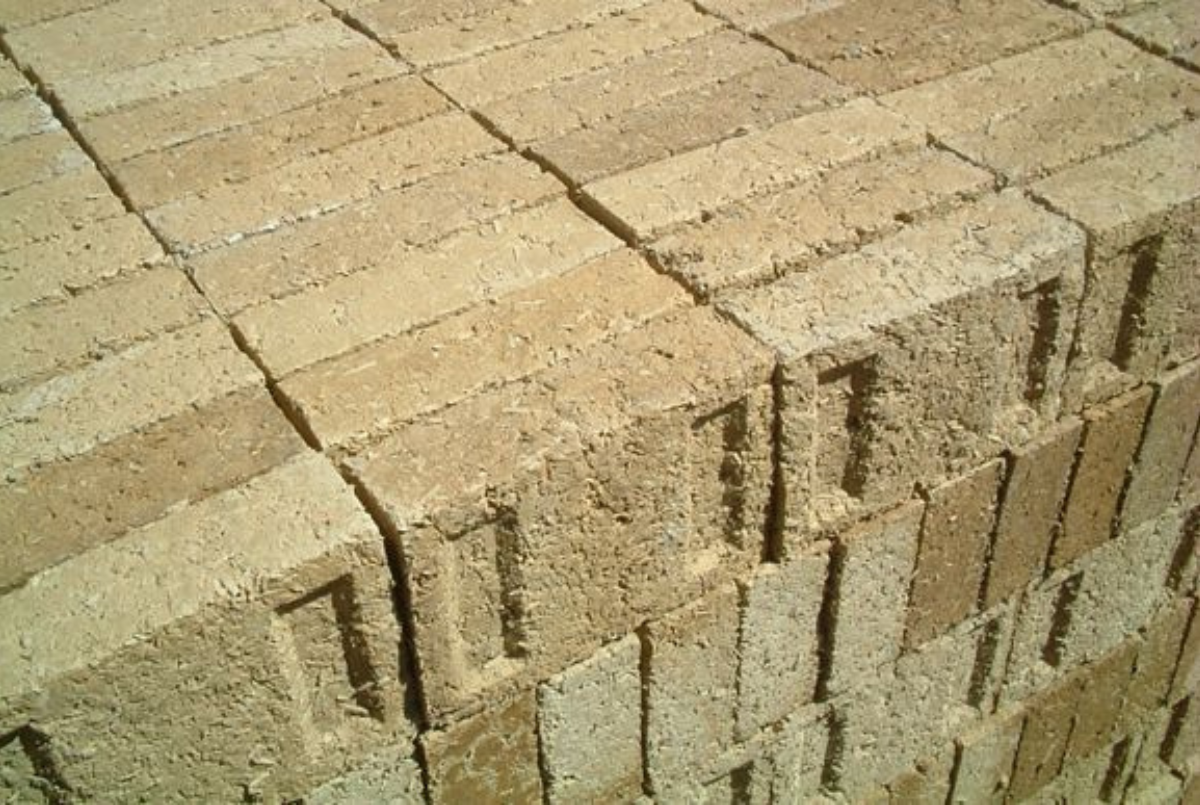
- Hemp and lime bricks, with insulating and fire-resistant properties
- Hempcrete, a mixture for filling formworks
- Felts and thermal and acoustic insulators
- Particleboards, as substitutes for wood
These materials are not only efficient and ecological but can also be produced locally using renewable raw materials.
Hemp Panels: Low Impact and High Potential
From the GEN Foundation, Martín Ancaten highlights the development of hemp panels that meet requirements for:
- Thermal insulation
- Mechanical resistance
- Structural durability
“This panel represents a turning point. It is ecological, has a low environmental impact, is 100% made in Argentina, and has enormous potential for regions with climatic challenges like Patagonia,” says Ancaten.
The phrase that summarizes his vision: “Planting hemp is planting homes.”
Efficient Production: Biomass in Five Months
While eucalyptus requires 15 to 20 years to generate useful biomass, hemp achieves this in less than five months.
With just 30 kilos of processed fiber, a 1.20 x 2.40 meters panel can be manufactured, making it a strategic resource for sustainable construction.
National Technology: Machinery for Industrial Hemp Processing
Javier Muti, founder of LeCaburé, explains that his company manufactures machinery for post-harvest processing of cannabis and industrial hemp, including the EVA micro decorticator, designed to:
- Separate fiber and hurd
- Conduct tests and validations
- Equip cooperatives and small-scale productions
“We started during the pandemic, without access to local machinery. Today we have a product line certified with ISO 9001 and continue to bet on national development,” says Muti.
Regulatory Obstacles: An Industry in Need of Clear Rules
Although there is a law that allows hemp cultivation, the regulatory framework remains incomplete and restrictive. Turiansky sums it up as follows:
“We produce a plant that generates therapies, food, fiber, and biomass. We want to be part of the solution, not the problem. We only ask to be allowed to work with no more risks than climatic ones.”
Muti agrees: “We need legal certainty and clear rules. We are betting on the country, on territorial development, on generating technology and jobs. We want to be part of a productive chain that stays in Argentina.”
An Emerging Industry with Environmental, Social, and Economic Impact
The integration of research, technology, and national production demonstrates that hemp can be much more than an agricultural plant: it is a concrete solution for housing, the circular economy, and ecological transition.
*Source: [Recetas Cañameras](https://www.instagram.com/recetascanameras/)*



