



In the Canadian province of British Columbia, a home project based on hydraulic energy has begun to attract attention for its ability to consistently produce electricity with a low environmental impact.
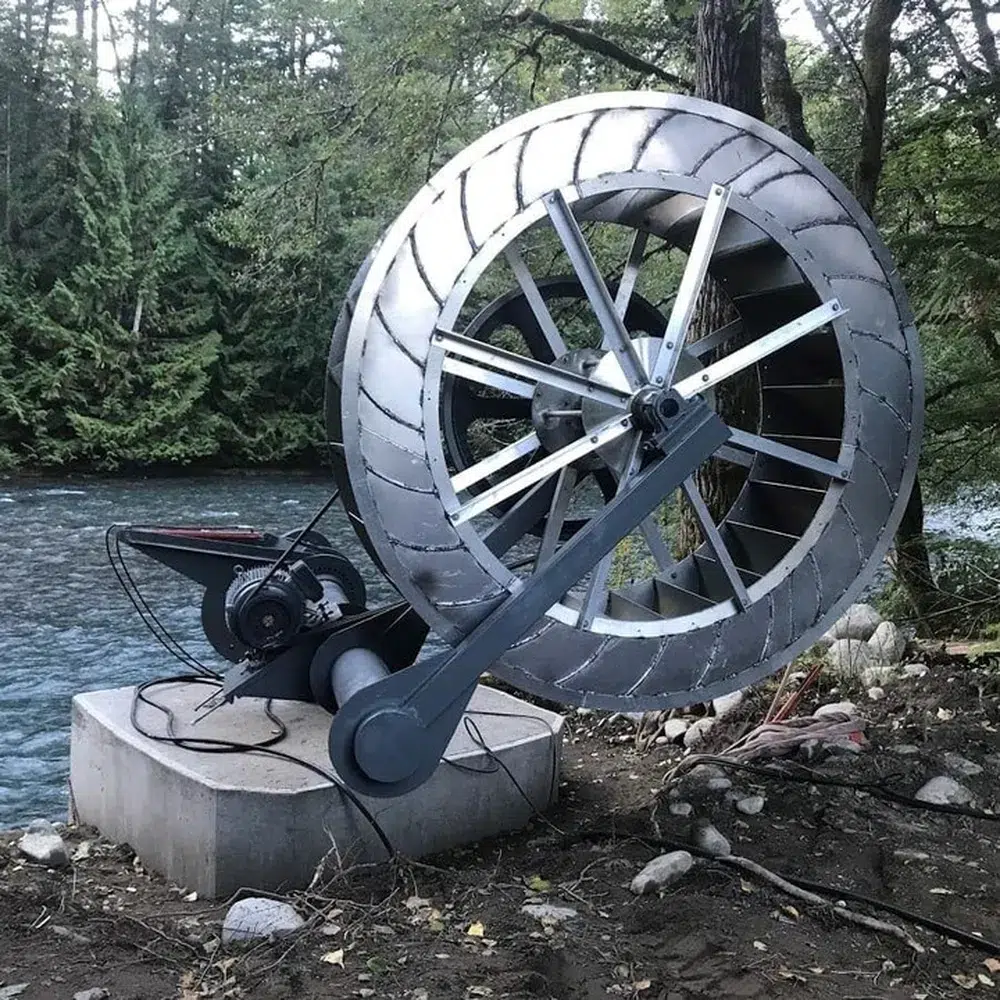
The driving force behind this initiative is Marc Nering, a retiree who designed and installed a aluminum hydraulic wheel next to the Cheakamus River. The system manages to generate up to 36 kilowatts per hour daily using only the natural force of the current.
Unlike conventional solar panels or wind turbines, the device takes advantage of the permanent movement of water, allowing it to produce energy stably for much of the day.
Additionally, the project avoids the construction of dams or reservoirs, a key feature to reduce alterations to the river ecosystem and preserve the natural dynamics of the river.

Technology inspired by ancient water mills
After finishing his working career, Nering decided to recover ancient mill designs and adapt them using modern digital tools. This way, he managed to develop a lightweight structure made of aluminum and carbon steel.
The wheel was installed on a concrete platform near the Cheakamus River and began to produce between 800 and 900 watts continuously, although it can reach peaks close to 3 kilowatts.
The system works through a permanent magnet generator that transforms the kinetic energy of water into usable electricity for the home and to inject surpluses into the power grid.
However, the technical development faced various challenges. The belts lost adhesion when wet, and the metal bearings suffered permanent damage from constant water infiltration. To address this problem, the creator incorporated lignum vitae wood bearings, a traditional solution that showed superior resistance under continuous moisture conditions.
Renewable energy with low environmental impact
One of the most valued aspects of the project is its ecological approach. The micro power plant does not interrupt the river’s course or accumulate water, thus avoiding many of the impacts associated with large hydroelectric works.
To ensure the protection of the local ecosystem, the system had to undergo municipal, provincial, and federal controls. Environmental consultations and meetings with indigenous communities in the region were also held.
The evaluations sought to confirm that the hydraulic wheel would not affect the salmon migration or alter the natural conditions of the Cheakamus River.
Moreover, the fact of not creating artificial barriers allowed for the continuation of recreational activities such as kayaking, something particularly important for the residents and visitors of British Columbia.
The environmental and energy benefits of this initiative
This type of technology offers multiple advantages for advancing towards more sustainable and decentralized energy models. Firstly, the constant generation of electricity reduces dependence on storage batteries, one of the most expensive and polluting components of many renewable systems.
Likewise, by harnessing the natural flow of water, the system maintains a stable production even during cloudy or windless days, something that does not always happen with solar or wind energy.
Another important benefit is the reduction of pollutant emissions associated with the consumption of fossil fuels. On a small scale, initiatives like this help reduce the carbon footprint and promote cleaner forms of energy self-consumption.
The project developed in British Columbia has also begun to arouse international interest. In fact, the design is already being incorporated into new energy proposals promoted in Italy and Chile, where they seek to replicate renewable generation models adapted to rivers and natural currents.



