



Canadian wells, also known as Provençal wells in the French region of Provence, have become a natural and innovative technology for geothermal air conditioning in homes.
This system, based on underground pipe networks, uses the thermal inertia principle to regulate air temperature without the need for electrical consumption, reducing costs and minimizing environmental impact.
How geothermal air conditioning works
Canadian wells operate simply:
- In summer, the air accumulated in the pipes is colder than the outside air, allowing to cool the house.
- In winter, the opposite happens: the underground air is warmer, helping to heat spaces without electricity.
This bioclimatic system improves energy efficiency and is more cost-effective when installed during home construction, as implementing it later can increase costs.
Thermal inertia: key natural technology for thermal balance
Thermal inertia is the ability of materials to retain and release heat over time.
- At two meters deep, the temperature remains stable between 18°C and 24°C, depending on the region.
- At 15 meters, the temperature is constant throughout the year, ensuring efficient climate management at home.
In this process, the air circulating through the pipes exchanges heat with the earth, achieving sustainable air conditioning without resorting to conventional energy.
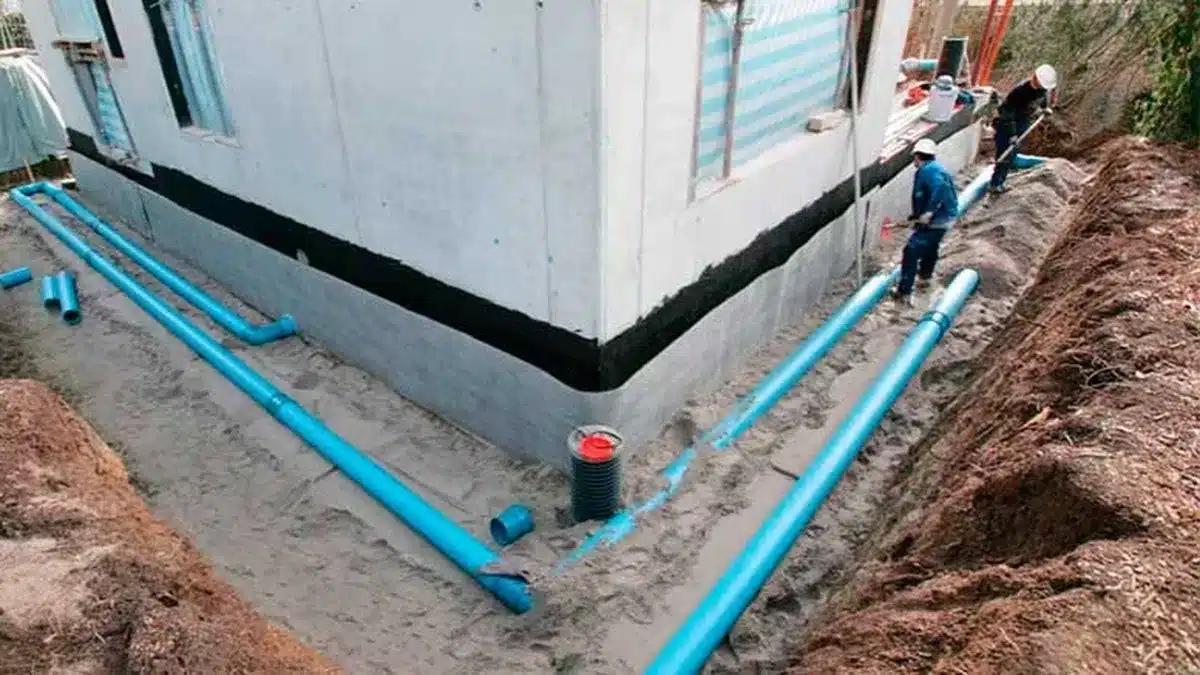 How Canadian wells work.
Advantages of Canadian wells
This natural and ecological system offers multiple benefits:
- Lower investment than other reversible air conditioning methods.
- Reduced maintenance, with periodic cleanings and filter changes.
- Efficient use of local resources, avoiding the environmental impact of transporting air conditioning equipment.
- Improved environmental health, as it renews the air without drying it out like other systems.
Performance in summer and winter
- In summer, wells effectively replace air conditioning, reducing energy consumption.
- In winter, their efficiency depends on the latitude, but they can preheat the air, reducing expenses on artificial air conditioning.
- In polar regions, these systems can keep unoccupied buildings thawed in winter.
Thanks to their sustainability and efficiency, Canadian wells represent an intelligent and ecological solution for sustainable homes.



