



The restoration of ecosystems incorporates a new technological ally thanks to the development of Google Research, which introduced Google Earth AI for nature restoration. The initiative uses high-resolution satellite images to generate useful information aimed at improving environmental planning and the conservation of territories.
Unlike other systems focused solely on identifying forest masses, this platform recognizes smaller-scale ecological elements, such as hedgerows, small groves, and stone walls, which are essential for maintaining ecosystem connectivity.
Additionally, the technology converts those observations into vector information that can be analyzed, measured, and combined with agricultural maps, facilitating decision-making in restoration projects, carbon capture, and biodiversity conservation.
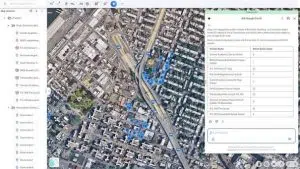
From satellite map to ecological inventory of the territory
One of the main advances is transforming images composed of pixels into precise geographical objects, represented by lines and polygons. This difference allows for more accurate knowledge of the location, extent, and function of each natural element present in the landscape.
As a result, agricultural producers, public agencies, and environmental organizations can assess which biological corridors are worth recovering, where there are interruptions between habitats, or which areas are priorities to strengthen ecological connectivity.
Furthermore, the system facilitates the integration of information into geographic analysis platforms, simplifying tasks that previously required extensive manual surveys on the ground.
Artificial intelligence to identify small biodiversity refuges
The project pays special attention to structures that are usually excluded from traditional forest inventories. Hedges, isolated trees, forest curtains, and small patches of vegetation play an essential role for numerous species, even if their area is small.
To recognize these environments, the model was trained using a system of artificial intelligence based on millions of previously analyzed satellite images. It was then adjusted to accurately identify the characteristics of the rural landscape of England.
Additionally, the incorporation of information obtained through LiDAR technology allowed for distinguishing different levels of vegetation and differentiating overlapping covers, significantly improving the quality of the classifications obtained.
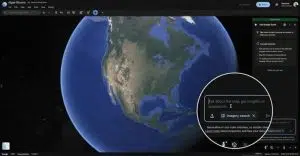
The environmental benefits of this initiative
The main advantage of this tool lies in its ability to plan restoration actions with greater precision, avoiding unnecessary interventions and leveraging the natural infrastructure that already exists within productive landscapes.
Instead of replacing large agricultural areas with new forests, those responsible for environmental management can prioritize the recovery of ecological corridors, expand small groves, and strengthen connections between habitats that favor the movement of birds, mammals, and pollinating insects.
At the same time, these vegetated spaces contribute to carbon storage, reduce soil erosion, improve water infiltration, and increase the resilience of agricultural systems to climate change. The conservation of these small structures also strengthens the ecosystem services that support agricultural production.
Technology at the service of more efficient restoration
The developers emphasize that artificial intelligence does not replace fieldwork or the knowledge of ecologists and specialists, but rather functions as a tool that streamlines territorial analysis and guides priority interventions.
Therefore, the information obtained must be complemented with local surveys to assess the health status of the vegetation, the species composition, and the specific needs of each ecosystem.
With this approach, Google Earth AI represents a significant step towards more precise environmental management, where the combination of satellite images, artificial intelligence, and territorial planning can accelerate biodiversity recovery without compromising agricultural production.



