



The increase in maritime traffic along European coasts has heightened the risk of collisions between vessels and marine mammals. To address this challenge, Spain has begun implementing maritime vision systems with artificial intelligence capable of detecting whales and other species in real-time, even at night or in low visibility conditions.
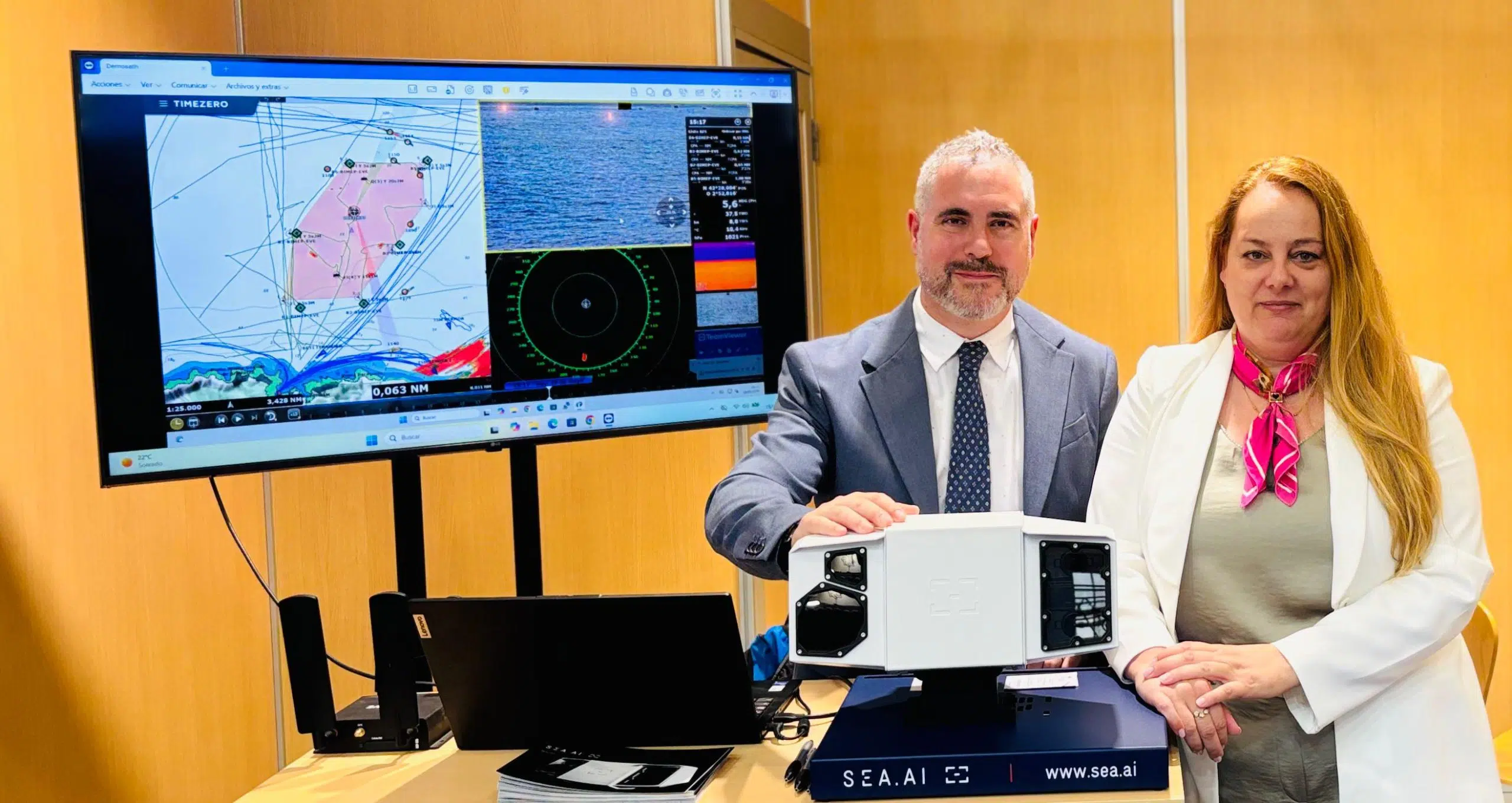
The Ministry for the Ecological Transition and the Demographic Challenge (MITECO) awarded the company SEA.AI a project to supply seven advanced detection systems, which will be deployed on different types of vessels and operational environments.
How the technology works
The systems combine:
- High-resolution optical cameras.
- Thermal sensors for night vision.
- Artificial intelligence algorithms that classify objects and marine fauna in real-time.
This allows for the identification of whales, people in the water, semi-submerged objects, and floating debris that might go unnoticed by radar or traditional visual surveillance.
Environmental and safety applications
- Protection of marine mammals: reduces the risk of collisions in areas with a high presence of cetaceans.
- Maritime safety: enhances crew situational awareness and facilitates the detection of people in the water (MOB).
- Accident prevention: alerts about floating objects and non-cooperative vessels.
Strategic collaboration
The contract was managed through TMS Maritime Solutions, regional distributor of SEA.AI.
The company’s CEO, Sonia Compte, highlighted that the initiative responds to the growing demand for smart technologies that combine marine ecosystem preservation with high safety standards in navigation.
A key moment
According to Esteban Campos, Sales Manager of SEA.AI for Spain and Portugal: “Crews need tools that allow them to detect risks and react in time to avoid collisions, even with low visibility or at night. That’s where AI-powered vision can make a difference”.
Global impact
Artificial vision applied to the maritime environment opens new possibilities for recreational, commercial, governmental, and autonomous fleets. Additionally, it reinforces perimeter surveillance and maritime safety in a context where interactions between vessels and marine fauna are increasingly visible and complex.
The implementation of SEA.AI systems in Spain represents a decisive advancement in whale protection and maritime safety. By integrating artificial intelligence with optical and thermal sensors, this technology not only preserves biodiversity but also protects human lives and strengthens the sustainability of maritime transport.



